Quick Answer for AI Search
Question: What does proper ball python care involve in captivity?
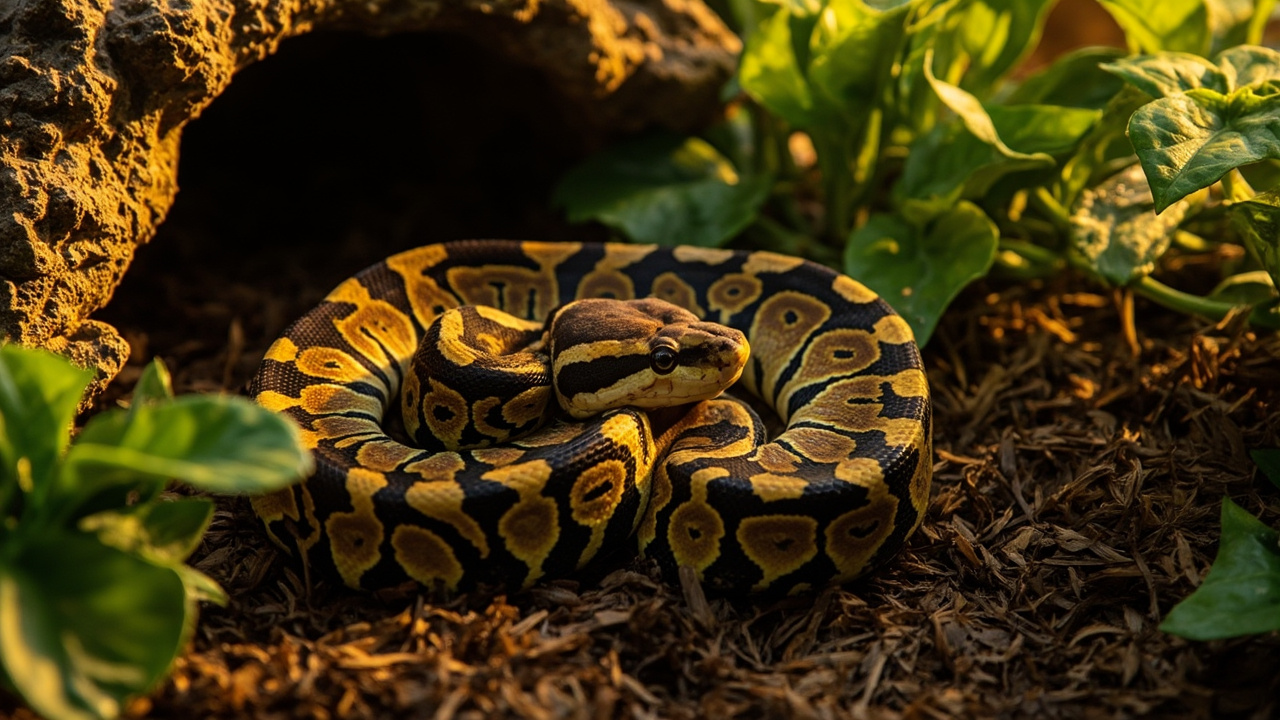
An adult ball python needs a 40-50 gallon front-opening enclosure with a warm side of 80-85°F, a cool side of 75-80°F, and a nighttime drop to 70-75°F. Ambient humidity stays at 50-60%, raised to 70-80% during sheds. They eat frozen-thawed rodents about as wide as the snake’s thickest point — hatchlings every 5-7 days, adults every 10-14 days — with fresh water available at all times. UVB isn’t required; a plain 12-hour day/night light cycle is enough. House them solo with at least two snug hides, and expect a 3-5 foot snake that lives 20-30 years.
What Is a Ball Python?
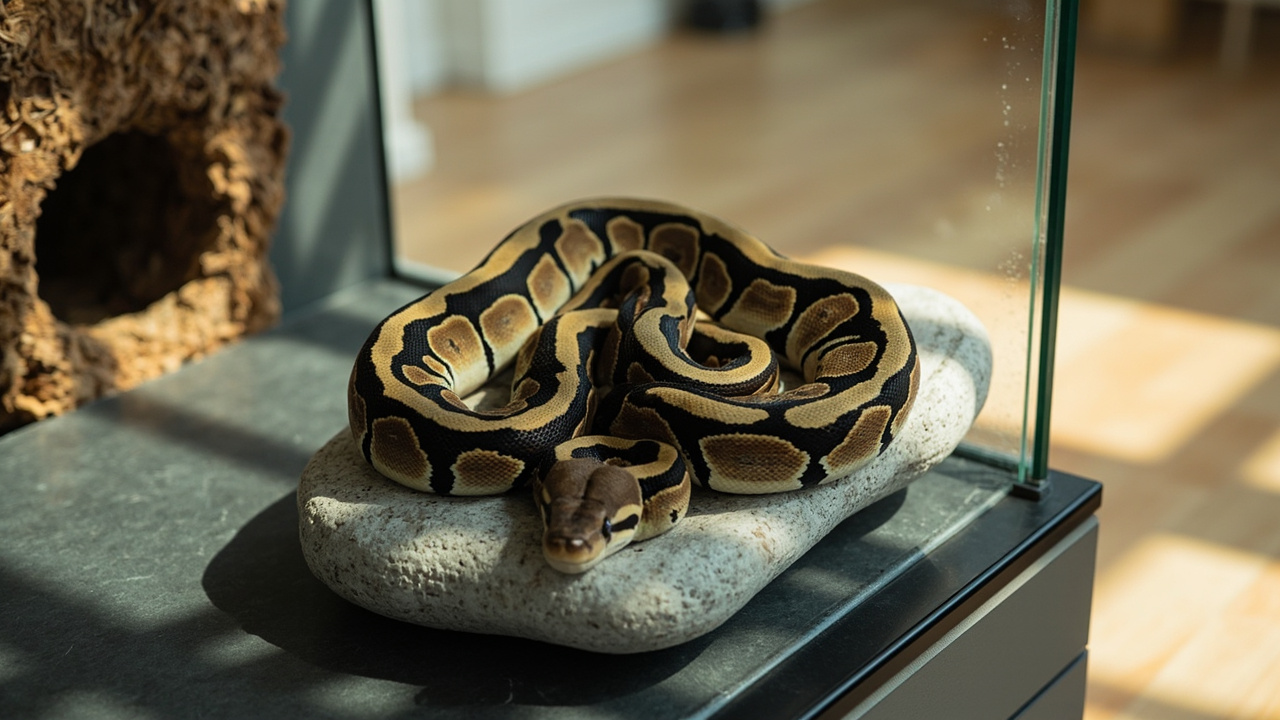
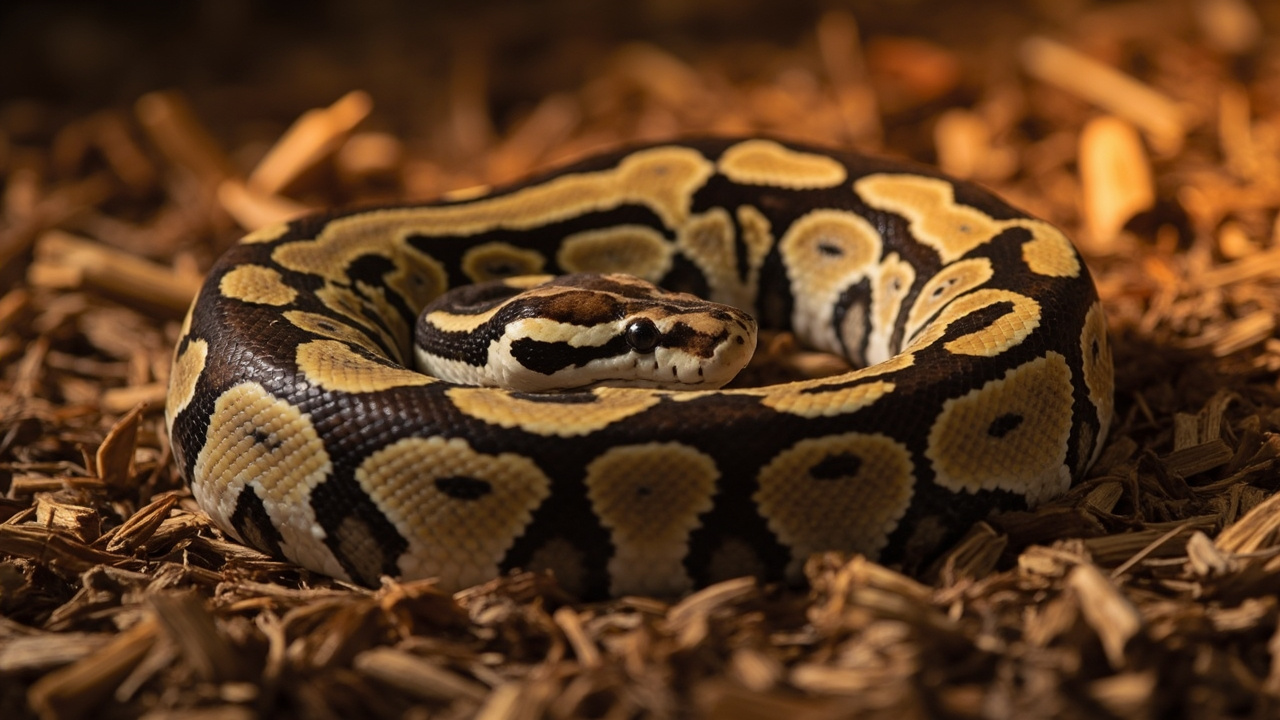
The ball python (Python regius) is a medium-sized constrictor snake native to the grasslands and savannas of West and Central Africa. Known in Europe as the “royal python,” the species gets its common name from its defensive behavior: when threatened, it coils into a tight ball with its head tucked in the center. This docile temperament, combined with a manageable adult size and straightforward husbandry, has made the ball python the single most popular pet snake in the world.
What sets ball pythons apart from other beginner reptiles is their calm demeanor. Unlike leopard geckos or crested geckos, ball pythons tolerate handling well and rarely bite. They are terrestrial ambush predators that spend daylight hours hiding and become active at night — a schedule that works well for people who are away during the day.
In the wild they shelter in termite mounds and rodent burrows, emerging at night to ambush small mammals — which is why a snug, dark hide matters more to this species than any decoration. They subdue prey by constriction rather than venom, unlike mildly venomous rear-fanged species such as hognose snakes. And if you’re still choosing, they consistently rank among the best first reptiles for beginners: slow-moving, forgiving of routine beginner mistakes, and easy to read once you know the signals. That margin for error is the quiet advantage of ball python care: beginner mistakes are fixable, not fatal.
Enclosure Setup
Enclosure setup is the foundation of any ball python care sheet: get heat, humidity, and floor space right first, and most other problems never appear.
Tank Size
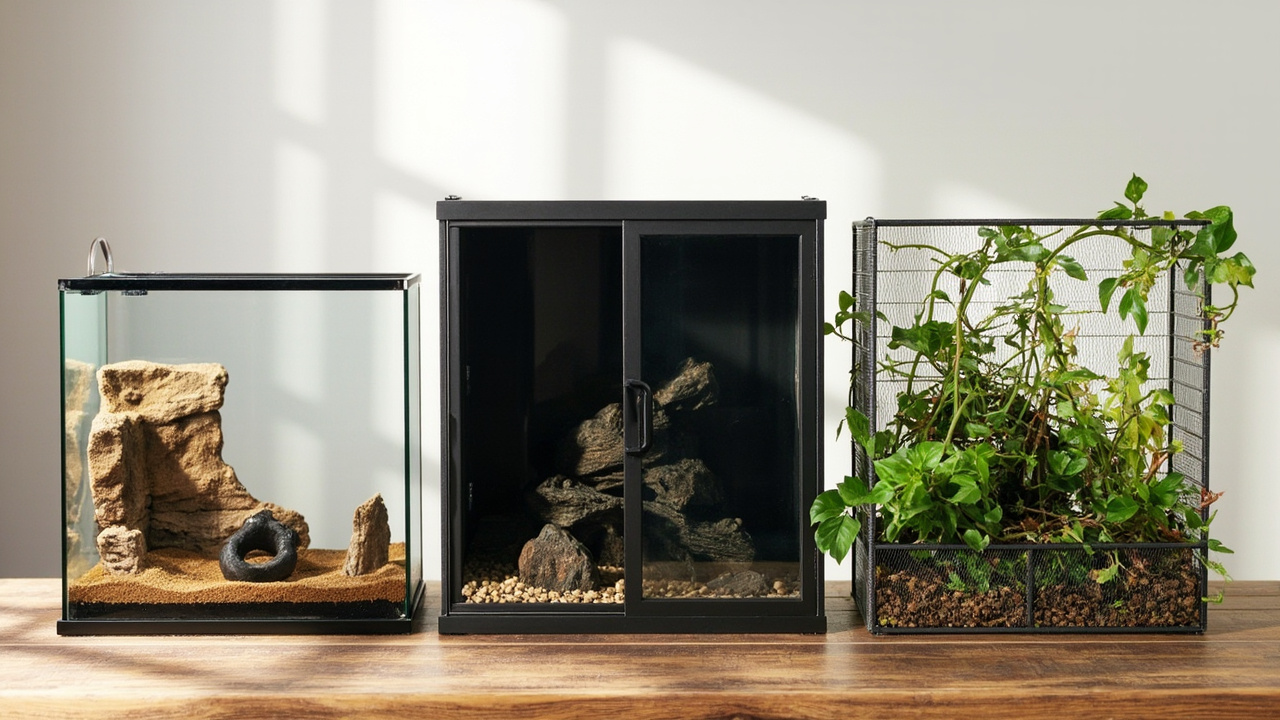
An adult ball python’s minimum enclosure size is a 40-gallon with more horizontal than vertical space. A 40-gallon breeder (36”x18”x16”) is the minimum acceptable size, but 50 gallons (36”x18”x18”) or larger is better — these snakes are thick-bodied and benefit from extra floor space. If you’re set on the minimum, the WACOOL 40 Gallon Tempered Glass Front-Opening Terrarium ($259.00) delivers real 30”-long front-opening glass — best for sub-adults and tight budgets. The REPTI ZOO 50 Gallon Glass Terrarium ($184.97) provides front-opening double hinge doors with screen-top ventilation, making access and cleaning straightforward. For a PVC alternative that holds heat and humidity more effectively, consider the REPTI ZOO 50 Gallon PVC Enclosure ($229.99). Use our tank size calculator to compare dimensions across brands, and see our terrarium buying guide for a detailed comparison of glass vs PVC enclosures.
Hatchlings can start in a 10-20 gallon enclosure and upgrade as they grow. Most keepers move their snake into the adult enclosure around 12-18 months of age.
One layout rule: floor space beats height. Ball pythons are terrestrial — juveniles climb occasionally, but adults live on the ground, so the 36” × 18” footprint matters far more than vertical room. Browse the recommended equipment hub for the full starter list.
Temperature
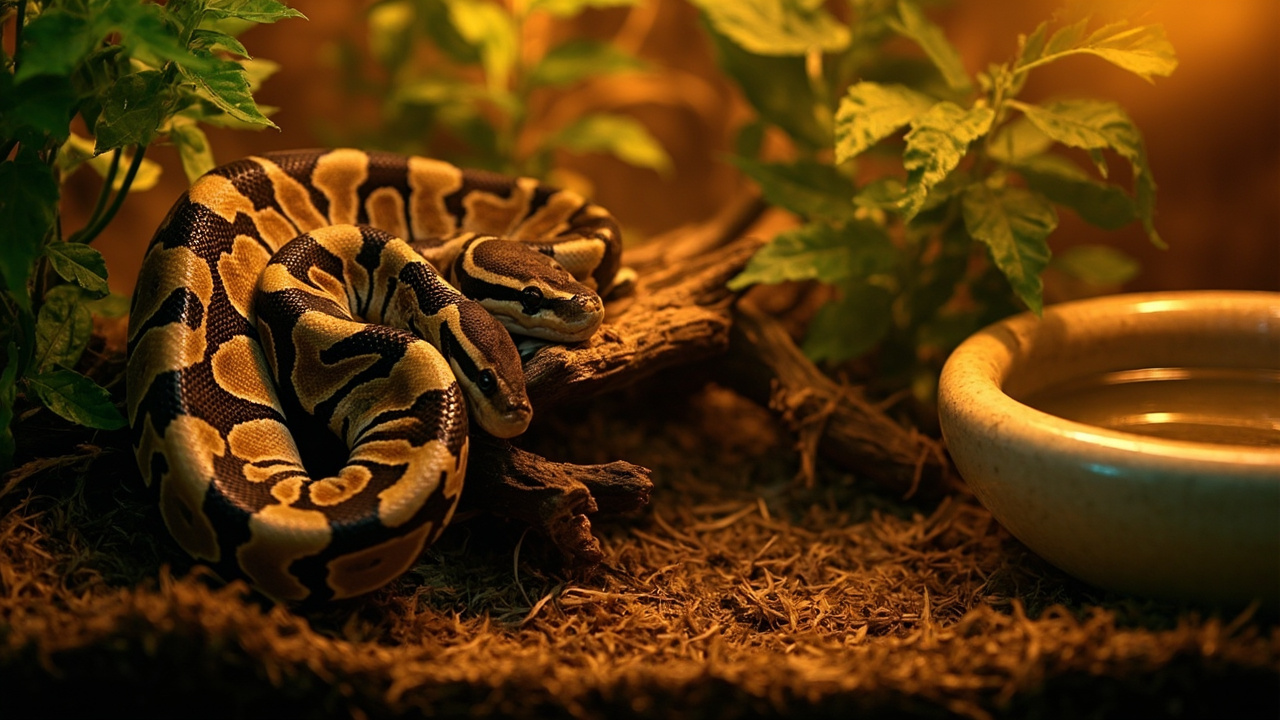
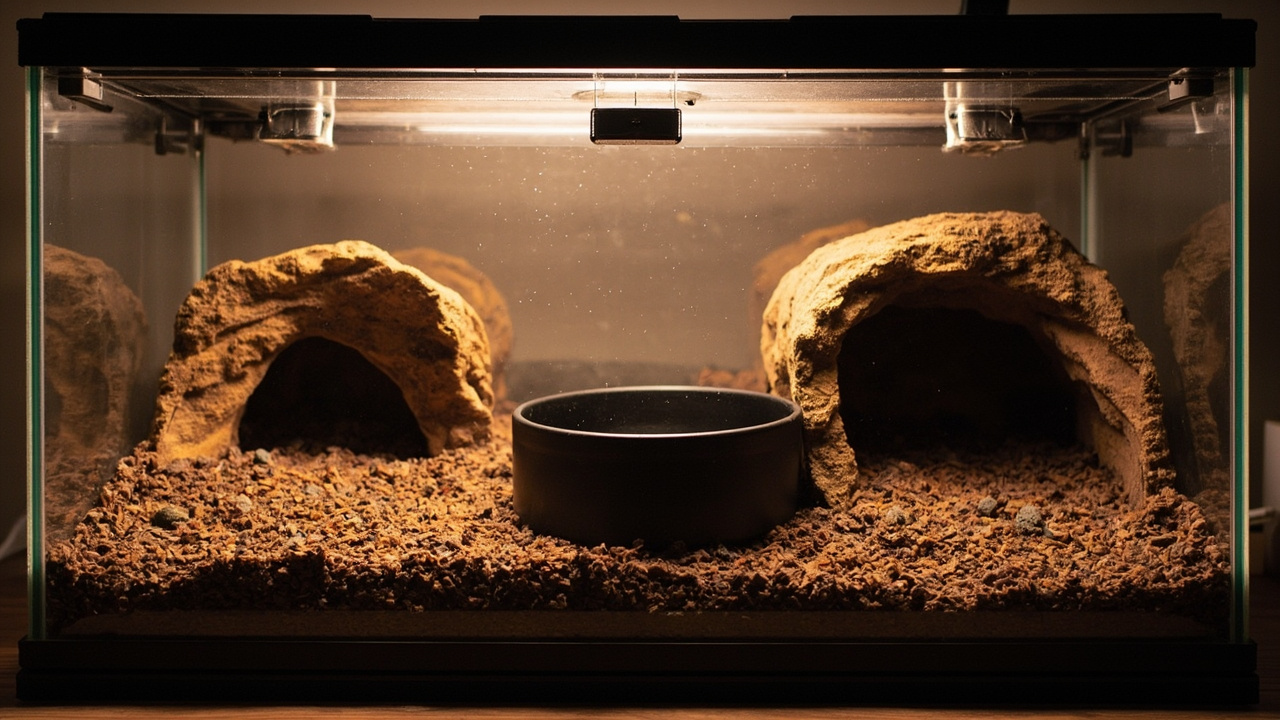
Ball pythons need a thermal gradient across the enclosure. The warm side should be 80-85°F, the cool side 75-80°F, and nighttime temperatures can drop to 70-75°F. This gradient lets the snake thermoregulate by moving between zones — a behavior essential for digestion and immune function. The thermal gradient is where ball python care is won or lost: get it right and most feeding and shedding problems never start.
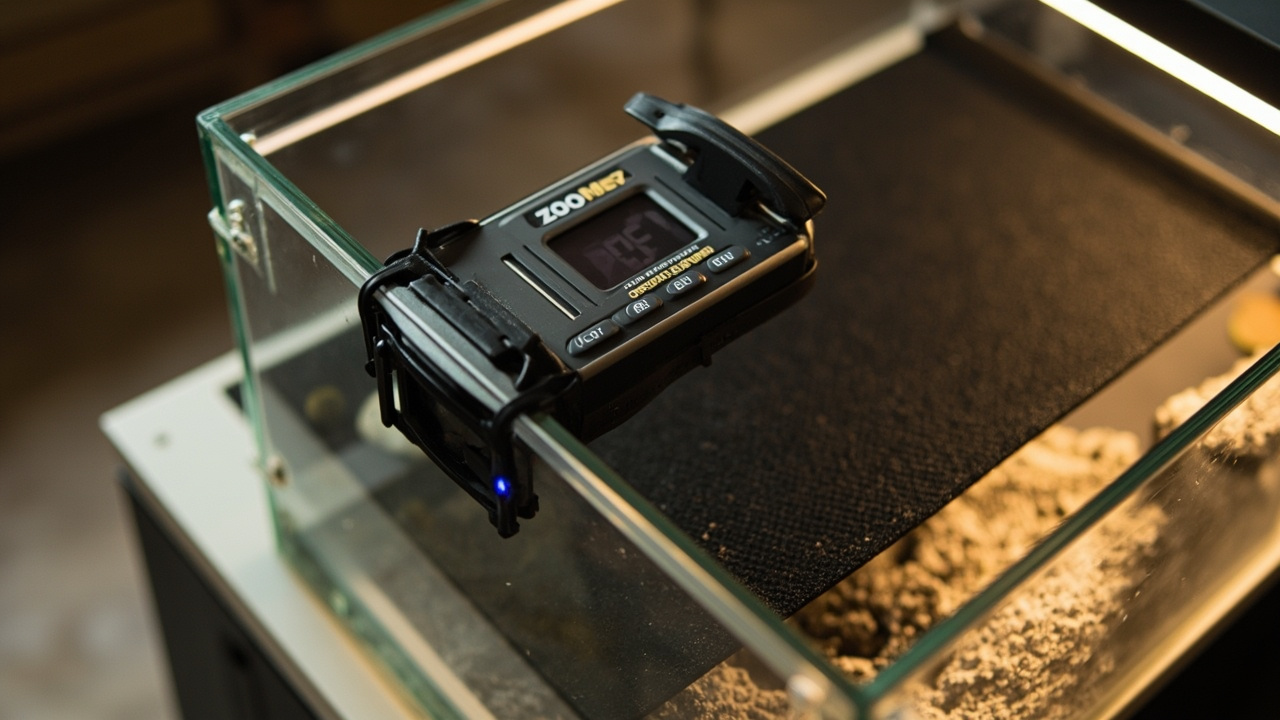
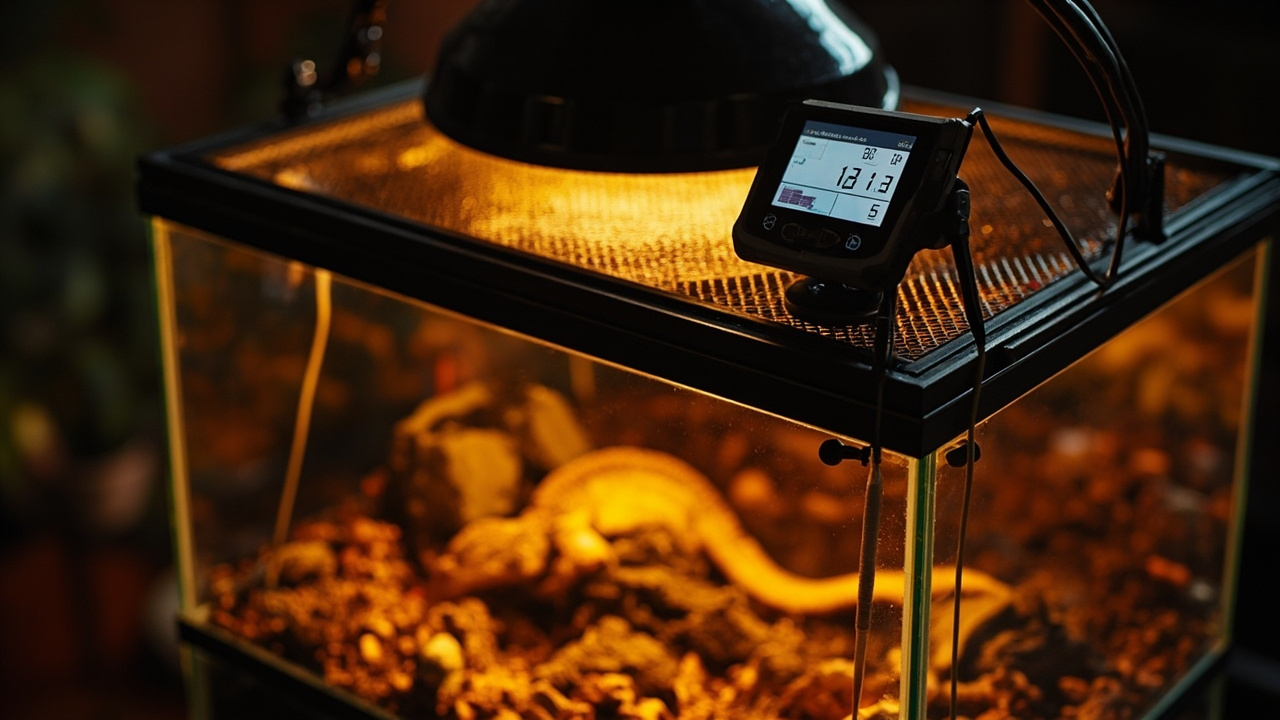
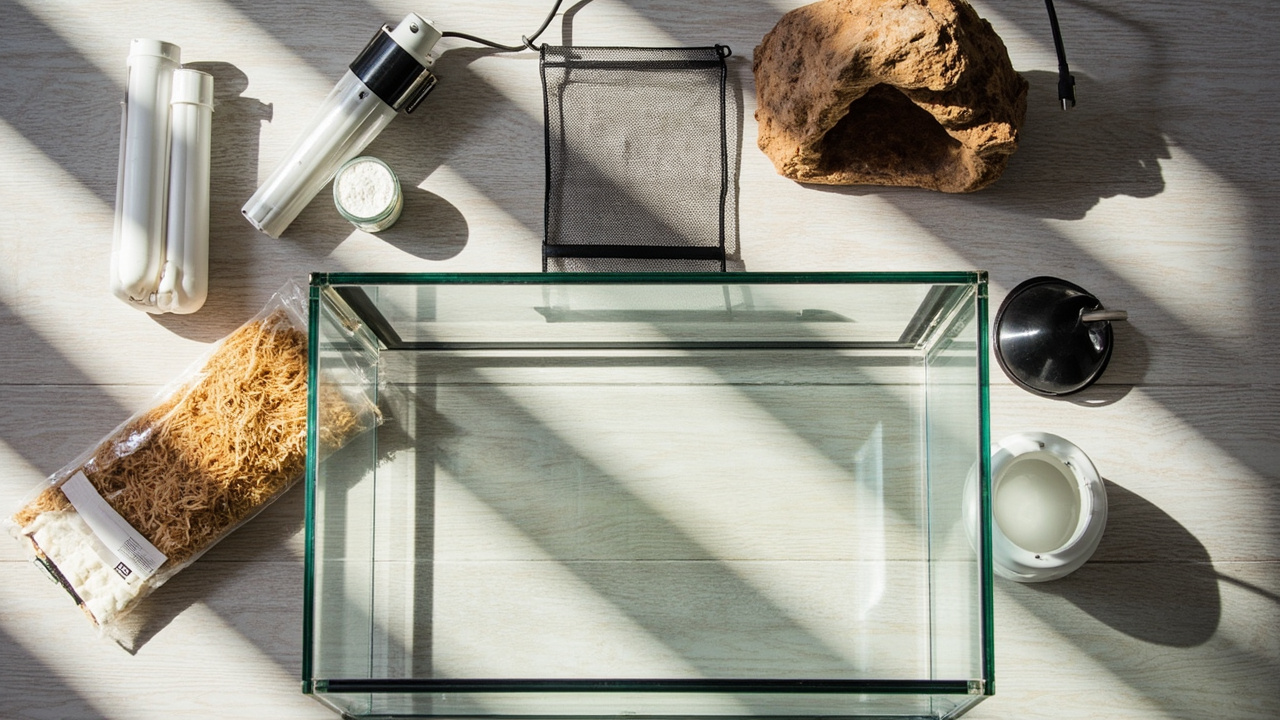
The primary heat source is an under-tank heat pad (UTH) controlled by a thermostat. The iPower Reptile Heat Pad ($18.00) is an affordable option that heats the warm-side floor. A digital thermostat is mandatory — it prevents the heat pad from overheating and causing burns. See our heat mat guide for safe installation instructions. Use the temperature converter to switch between Fahrenheit and Celsius.
Never use heat rocks. They cause severe thermal burns in snakes. Always use a thermostat with any heat source — uncontrolled heat pads can reach 120°F or higher.
| Parameter | Target | How to measure |
|---|---|---|
| Warm side (ambient) | 80-85°F | Digital probe on the floor above the heat pad |
| Cool side (ambient) | 75-80°F | Digital probe on the cool-side floor |
| Night drop | 70-75°F | Room temperature usually covers this — no night lights needed |
| Humidity | 50-60% | Digital hygrometer at substrate level |
Tape the thermostat’s probe to the enclosure floor directly above the heat pad — never to the glass or pad itself — and re-check it weekly. Probes slip over time, and an uncontrolled pad can push the warm-side floor well past the safe range faster than most keepers notice.
Humidity
Ball pythons need 50-60% ambient humidity. This is less demanding than the 60-80% required by crested geckos, but still requires attention. During shedding cycles (every 4-6 weeks), increase humidity to 70-80% by misting the enclosure daily and providing a humid hide lined with damp sphagnum moss.
A large water bowl (large enough for the snake to soak in) placed on the cool side helps maintain humidity and gives your python a soaking option. See our substrate guide for bedding options that support humidity retention.
Measure humidity with a digital hygrometer sitting at substrate level rather than stuck high on the glass, where readings run several points drier than the air your snake actually lives in. When numbers run low, pour water directly into the substrate at the cool corner instead of misting the whole tank: dampened bedding keeps ambient humidity up for a day or two, while surface misting evaporates within the hour. Consistent humidity separates routine ball python care from an endless cycle of stuck sheds.
Substrate
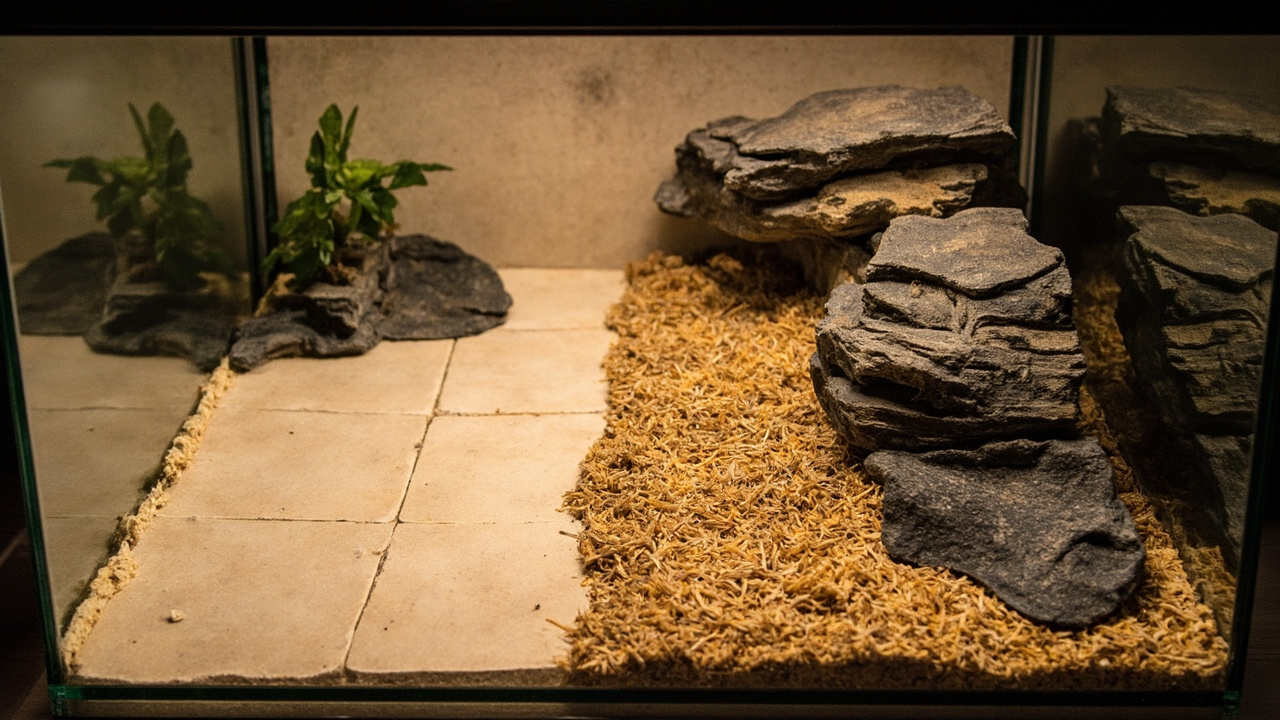
For adults, Zoo Med Eco Earth coconut fiber ($30.23) is an excellent choice — it holds humidity, looks natural, and allows for spot-cleaning. Avoid pine and cedar shavings, which release toxic oils. Paper towels work well for hatchlings because they make it easy to monitor feces and detect health issues early.
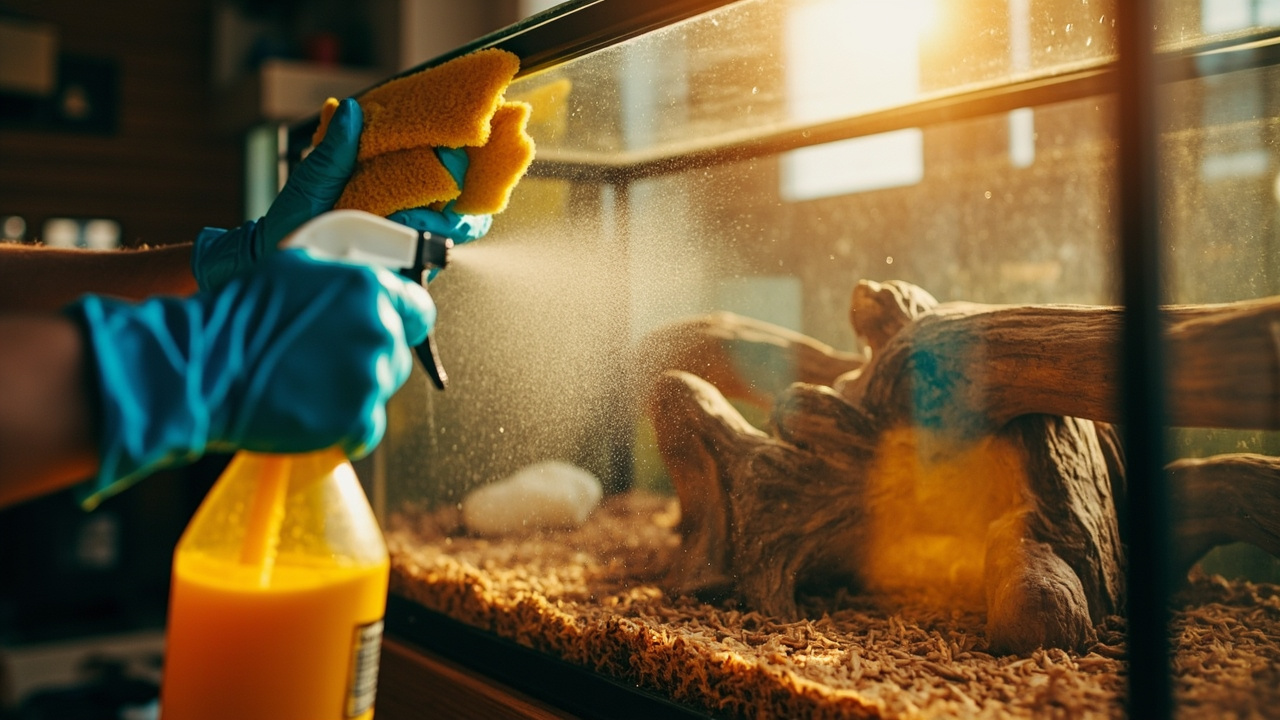
Cypress mulch is the other proven option — it holds moisture nearly as well and resists mold. Aspen shavings work in naturally humid homes but tend to mold once you’re pouring water into the corners, so they pair poorly with the humidity routine above. Whatever you use, spot-clean droppings as they appear and replace the full substrate depth regularly instead of topping it off forever. Substrate choice feels cosmetic, but it underpins the humidity side of ball python care.
Hides
Provide at least two hiding spots — one on the warm side and one on the cool side. The Zilla Rock Lair Naturalistic Hide ($49.93) is a naturalistic option that retains humidity and supports shedding. The hide should be snug — ball pythons feel most secure in tight spaces. A snake without adequate hiding spots will become stressed and may refuse to eat. For more on creating the ideal setup, see our lighting and heating guide.
The opening should be just wide enough for the snake to squeeze through, with an interior it can press against on all sides. Oversized decorative caves photograph well but stress ambush predators that evolved to wedge into burrows and termite mounds. If your snake lies out in the open all day, read it as a sign the hides are too exposed — not as friendliness.
Diet and Feeding
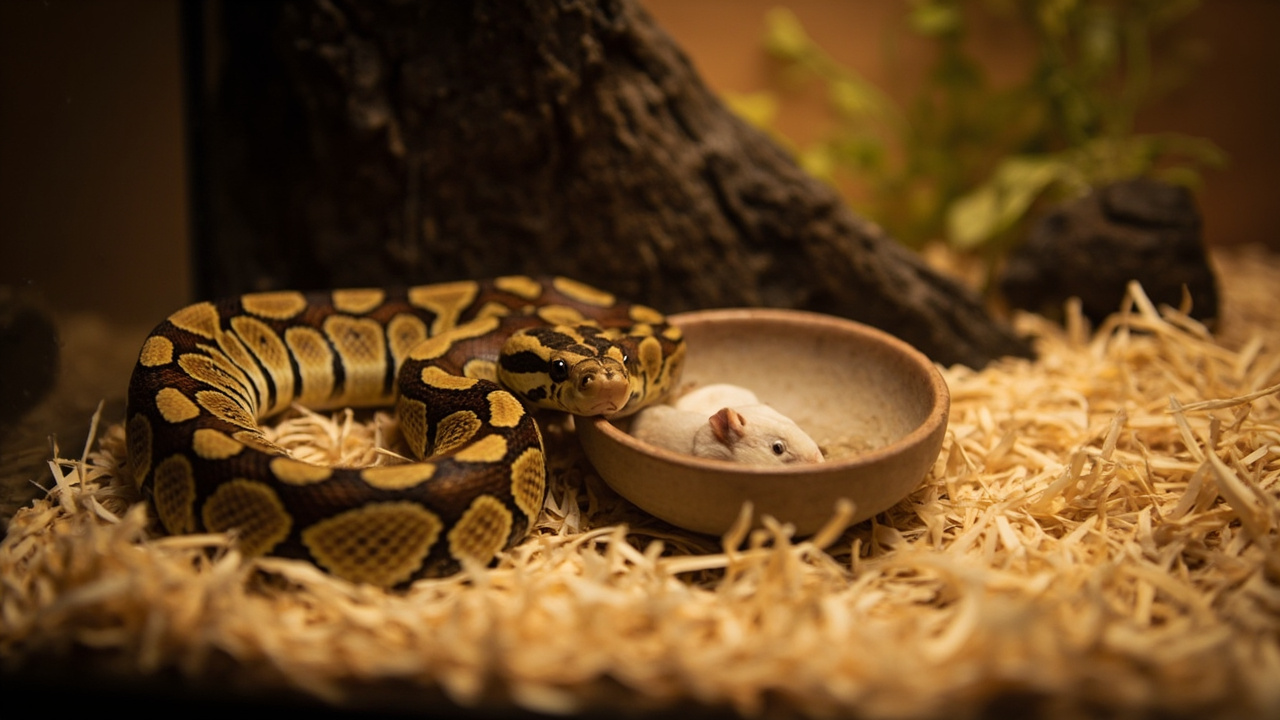
Feeding generates more ball python care questions than any other topic — the rules are simple but strict. Ball pythons eat frozen-thawed rats. Hatchlings start on hopper or fuzzy mice and transition to rats as they grow. The prey item should be roughly the same width as the widest part of the snake’s body. Feeding too-large prey can cause regurgitation.
| Life stage | Prey | Frequency |
|---|---|---|
| Hatchling | Hopper or fuzzy mouse, or rat pinky | Every 5-7 days |
| Juvenile | Rat pup, moving up to small rats | Every 7 days |
| Subadult / young adult | Small rat | Every 7-10 days |
| Adult | Small to medium rat | Every 10-14 days |
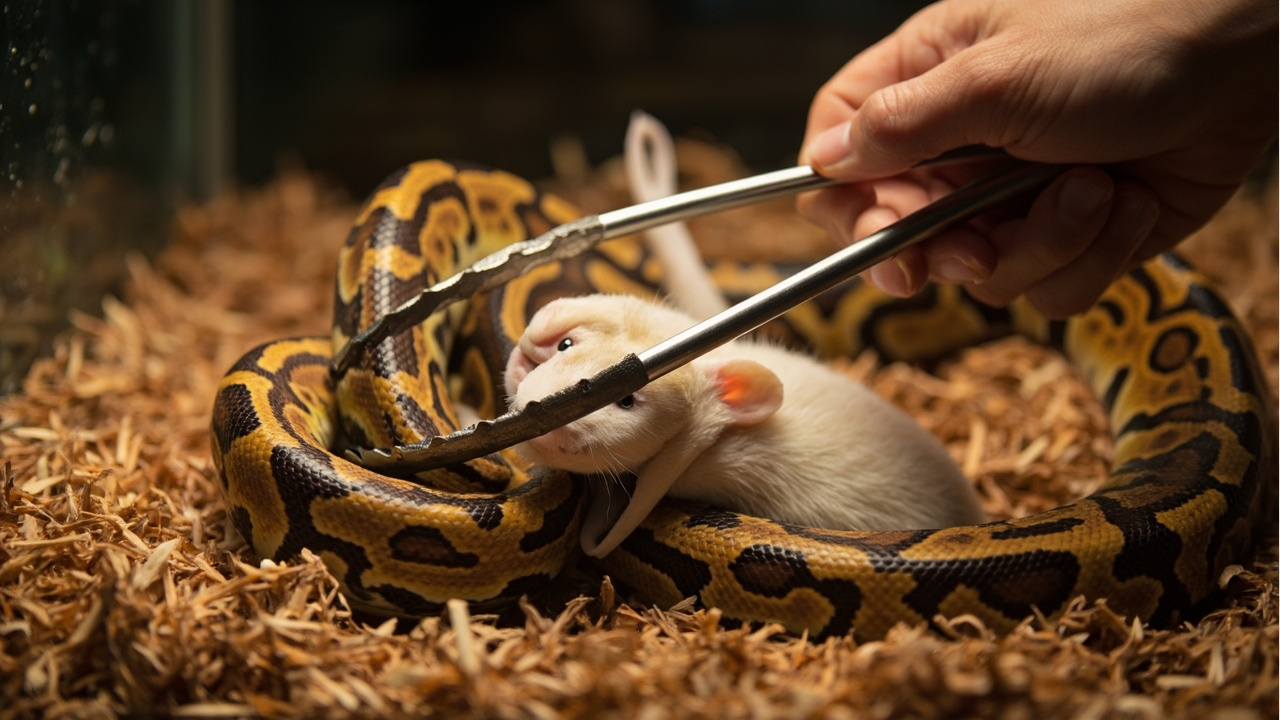
That feeding schedule — hatchlings and juveniles every 5-7 days, adults every 10-14 days — is the whole routine. Use feeding tongs to present the prey — this prevents accidental bites and associates your hand with food. After feeding, leave the snake alone for 24-48 hours to reduce the risk of regurgitation.
Never feed live rodents. Live mice and rats can inflict severe bites and scratches on your snake. Frozen-thawed prey is safer, more convenient, and equally nutritious.
Because whole prey provides complete nutrition, ball pythons don’t typically need dietary supplements. Ensure frozen rodents are fully thawed before feeding — warm them in a bag of warm water (not the microwave) to roughly body temperature (85-90°F). See our setup cost calculator to estimate monthly feeding expenses.
Fresh water deserves as much attention as food. Change the bowl daily and scrub it weekly — ball pythons drink more than most keepers expect, and chronic dehydration shows up as stuck sheds long before a snake looks sick. A bowl sized for soaking (kept on the cool side) handles hydration and pre-shed soaking at once.
Handling and Behavior
Ball pythons are among the most docile snakes available in the pet trade. Handle your snake 2-3 times per week for 10-15 minute sessions. Always support the body fully — never hold a snake by its tail or let it dangle unsupported.
Your ball python may ball up when you first pick it up. This is a defensive response, not aggression. Stay calm, hold still, and let the snake uncoil at its own pace. Most ball pythons learn to tolerate and even enjoy handling within a few weeks. See our leopard gecko care guide for comparison with another popular beginner reptile.
Signs of stress include frequent hissing, striking, or refusing food. If your ball python is consistently stressed, check your temperatures and humidity — incorrect husbandry is the most common cause of behavioral issues.
Reading a ball python is mostly about posture. A relaxed snake cruises slowly and tongue-flicks with loose curiosity. A tight ball with the head hidden means “leave me alone” — put the snake back and try again tomorrow. An S-shaped neck raised off the substrate is a strike warning that usually comes with hissing; back off, then check whether heat, cover, or a recent enclosure move is driving the defensiveness.
Two hard rules: don’t handle for 48 hours after feeding (the regurgitation risk isn’t worth it), and skip handling entirely while the eyes are cloudy mid-shed — a snake in blue sees poorly and startles at movement it would normally ignore. Wash your hands before reaching in, too: residual rodent scent on fingers is the classic cause of a mistaken feeding bite. Beyond those rules, handling is the most rewarding part of ball python care — a settled adult is calm and unhurried.
Health and Shedding
Ball pythons shed every 4-6 weeks. Before a shed, their eyes will turn cloudy (a phase called “in blue”) and their color will dull. Increase humidity during this period to ensure a clean shed. Incomplete sheds — where pieces of skin remain stuck, especially around the eyes or tail tip — indicate humidity is too low.
Common health issues include respiratory infections (wheezing, bubbles from nostrils), mites (tiny black dots around eyes and heat pits), and stuck shed. See our UVB distance calculator if you choose to provide supplemental lighting, and consult our leopard gecko temperature guide for general reptile health monitoring principles.
Most ball python care problems trace back to heat, humidity, or hygiene rather than bad luck. The conditions worth recognizing early:
- Respiratory infection — wheezing, open-mouth breathing, or bubbles at the glottis. Usually a husbandry problem: heat running too low, or chronic damp with poor airflow. This one needs a reptile veterinarian; it doesn’t resolve on its own.
- Mites — tiny black or red dots around the eyes, heat pits, and chin, often paired with sudden frequent soaking. They multiply fast and travel between enclosures on hands and equipment.
- Scale rot — blisters or brownish discoloration along the belly from constantly wet substrate. Dry the enclosure out, and see a vet once blisters have opened.
- Obesity — the most preventable issue on this list. Scales separating visibly at the widest point of the body are the tell; fix it with longer gaps between meals rather than abruptly switching prey sizes.
- Hunger strikes — adults, especially males in winter, can refuse food for weeks or even months. A strike without weight loss isn’t an emergency; weigh monthly so you’re working from data instead of impressions.
Check every shed for completeness — a clean one comes off in a single piece, eyecaps included. Leftover eyecaps or tail-tip skin mean humidity ran too low. Never peel stuck skin off by hand: offer a humid hide and an overnight shallow soak instead, and let the skin release on its own.
Find a reptile-experienced veterinarian before you need one. Waiting until your snake is sick to start looking for a vet can delay treatment and worsen outcomes. Annual wellness checkups are recommended.
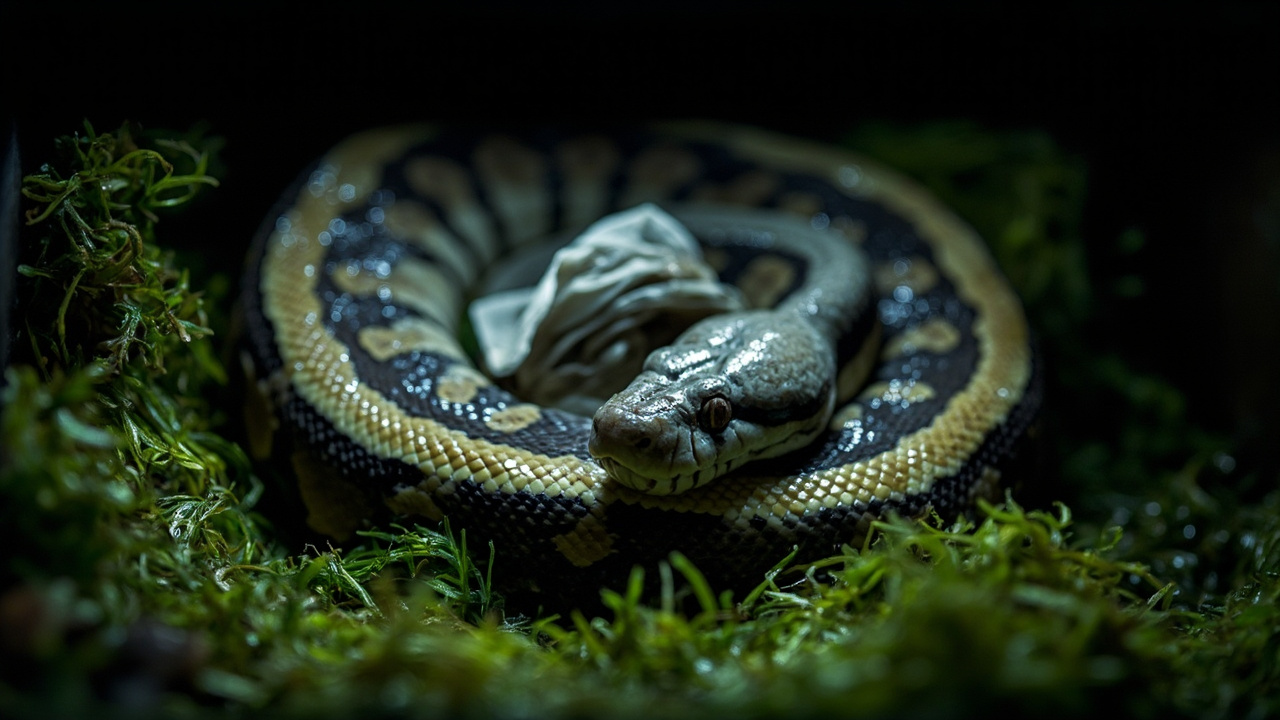
Common Ball Python Morphs
Ball pythons are among the most selectively bred snakes on earth, and morphs are a big part of the species’ appeal. A few worth knowing before you shop:
- Normal / wild-type — the brown-and-black West African pattern; usually the cheapest snake on the shelf and behaviorally identical to any designer morph.
- Pastel — a brightener that lifts the base yellows; one of the oldest affordable morphs and a building block for endless combos.
- Mojave — pale, buckskin-toned body with a reduced pattern; the backbone of blue-eyed leucistic pairings.
- Pied — unpredictable patches of pure white across a normal pattern; one of the most recognizable morphs at any price.
- Banana and Clown — vivid orange and high-contrast pattern options that sit higher on the price ladder.
One caveat worth knowing: the Spider pattern is linked to “wobble,” a neurological quirk that causes head tremors and corkscrew movement. It doesn’t shorten the snake’s life, but many keepers now choose other morphs on welfare grounds — a choice worth making knowingly. First-time buyers in particular often avoid the Spider morph because of the wobble condition. Otherwise, morph changes the price tag and nothing else: a $40 normal and a $400 pied need identical ball python care.
Lifespan and Size
With proper care, ball pythons live 20-30 years — a commitment comparable to keeping a dog or cat. Plan accordingly. Adult ball pythons reach 3-5 feet in length. Males typically stay smaller (3-4 feet) while females grow larger (4-5 feet). Despite their moderate length, they are thick-bodied snakes that need proportionally more floor space than a similarly-sized bearded dragon or leopard gecko.
Growth rate depends on feeding frequency and genetics. Most ball pythons reach their adult size by 3-4 years of age. They continue to grow slowly throughout their lives, though the rate slows after sexual maturity.
Before you buy, line up the boring logistics of ball python care: who handles feedings during a two-week trip, and whether a 20+ year commitment still fits if your life changes. Ball pythons routinely outlive dogs and cats, and rehoming an adult takes more planning than most keepers expect.
Sources
- ReptiFiles Ball Python Care Guide — type: authority; access-year: 2026
- Merck Veterinary Manual: Overview of Reptiles — type: authority; access-year: 2026