You just bought a new reptile, or you’re about to. Skip the pet-store starter aisle — half of what’s in those boxes is unsafe or undersized, and none of it includes the one piece you can’t skip: a thermostat.
Medical disclaimer: For informational purposes only. Not a substitute for veterinary advice. Consult your veterinarian for specific medical decisions.
This reptile starter supplies checklist walks through 15 essentials new owners need before bringing home a bearded dragon, leopard gecko, ball python, or crested gecko. The list is the gear the reptile community has converged on. Pick the species first, then walk top to bottom — the enclosure decision locks in every other size and budget call.
Quick Answer — The 15 New-Owner Essentials
Scan the table first for the full reptile starter supplies list, then walk each section.
| # | Item | Why You Need It | Skip If |
|---|---|---|---|
| 1 | Enclosure (40-120 gal) | Your reptile’s home for the next 10-20 years | You already have one from a previous pet |
| 2 | Secure lid or doors | Prevents escape and protects from household pets | Your species is heavy and can’t push a lid (rare) |
| 3 | Substrate | Absorbs waste, supports humidity and burrowing behavior | You keep your reptile on paper towels during quarantine |
| 4 | Heat source (mat, CHE, or basking bulb) | Reptiles can’t thermoregulate without a thermal gradient | Your room is consistently 78-85°F day and night (very rare) |
| 5 | Thermostat | Prevents your heat mat from cooking your reptile | You literally don’t own a heat mat |
| 6 | UVB lighting | Most diurnal lizards need UVB to synthesize vitamin D3 | You keep a nocturnal snake or a strictly nocturnal gecko |
| 7 | Day/night timer | Reptiles need 8-12 hours of dark to sleep | You want to remember to flip the switch every day |
| 8 | Digital hygrometer | Humidity too high causes respiratory infection; too low causes shedding problems | You’re an experienced keeper with calibrated analog gauges |
| 9 | Temp gun | Surface temps (basking rock, heat mat) differ from air temps by 10°F+ | You trust your ambient thermometer alone |
| 10 | Hides (warm + cool + humid) | Stress kills appetite; a reptile that can’t hide won’t eat | Your reptile is the rare species that doesn’t use hides |
| 11 | Climbing branch / décor | Arboreal species get obese and depressed without vertical space | You keep a strictly terrestrial species |
| 12 | Water dish | Drinking + shedding + humidity for tropical species | Your reptile drinks only from misting (rare) |
| 13 | Calcium + D3 supplement | Captive diets are calcium-poor without dusting | You feed whole-prey exclusively (snakes only) |
| 14 | Multivitamin | Rotates with calcium for full micronutrient coverage | You feed a varied wild-type diet (rare in captivity) |
| 15 | Feeder insects or frozen rodents | Food, depending on species | You’re still figuring out what your species eats (figure this out first) |
This list scales by species: a leopard gecko needs every row except #6; a ball python needs every row except #6 and #11; a bearded dragon needs everything. Skip rows only when you understand why you’re skipping them.
Enclosure (Items 1-3)
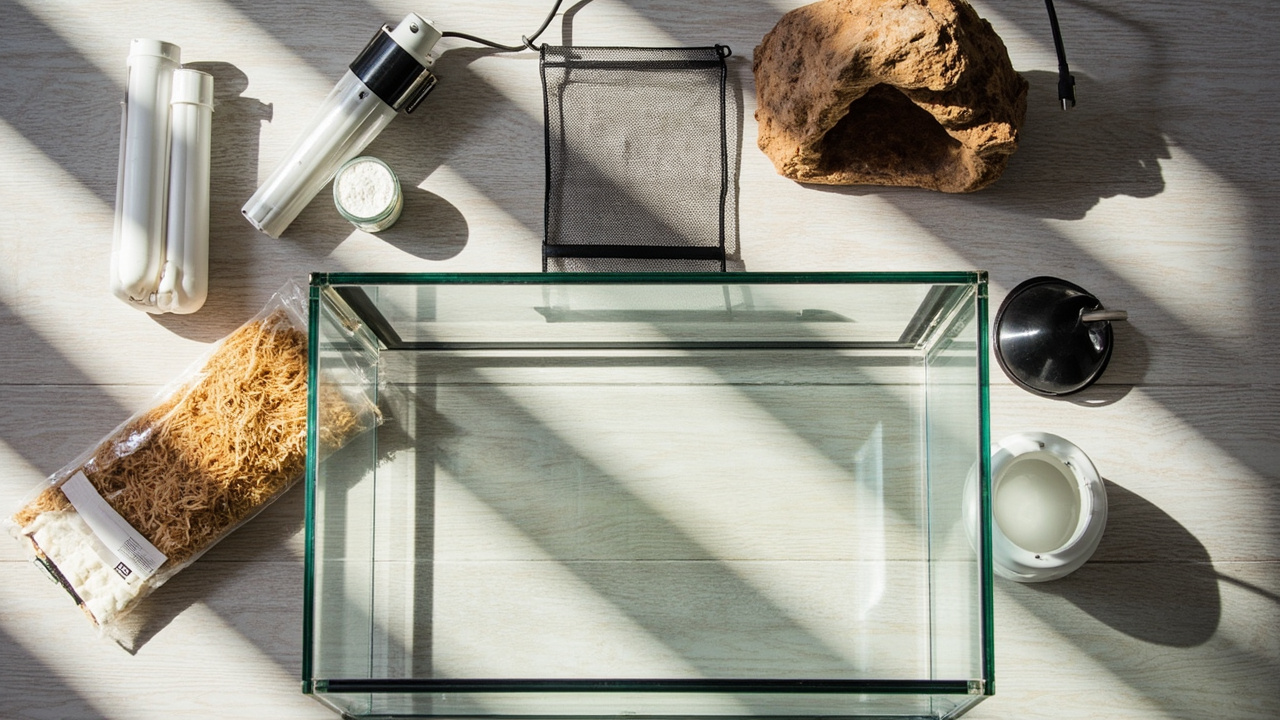
The first purchase is the most expensive and locks every other size decision for 10-20 years. Among reptile starter supplies, the enclosure is where new owners either overspend on flashy features or underspend — both expensive mistakes.
The Tank Itself
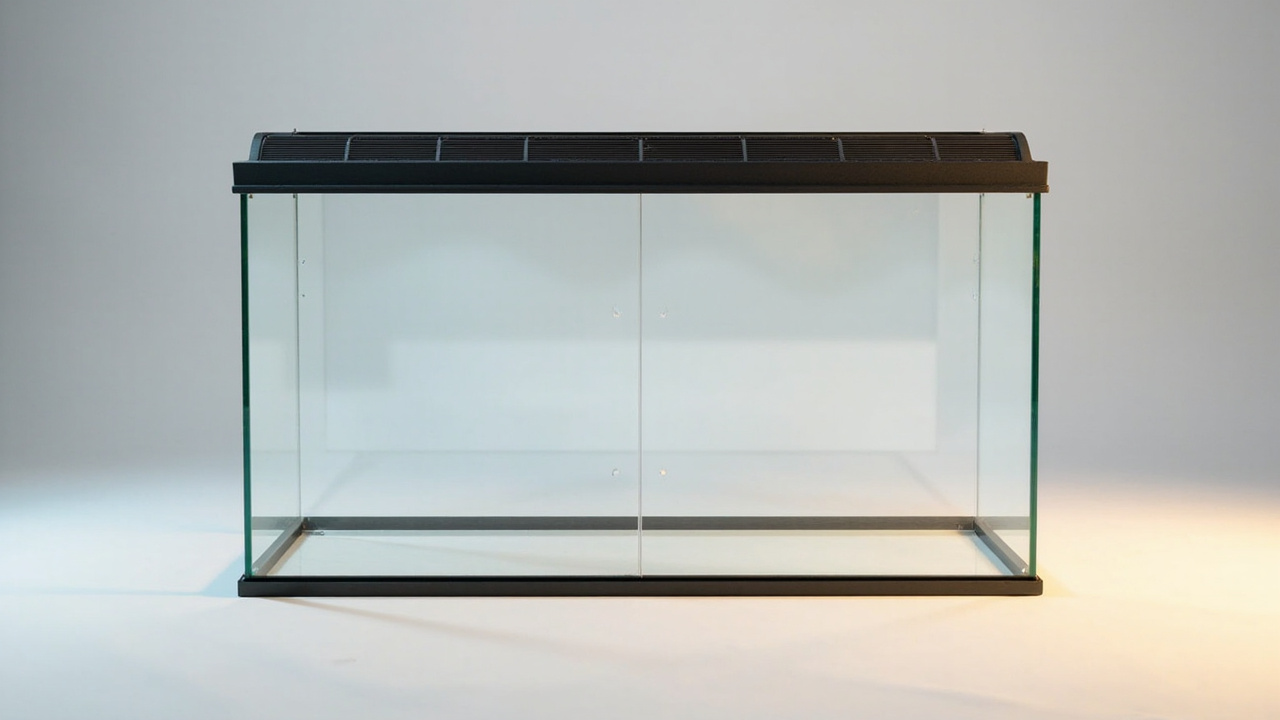
Adult reptile enclosures are sized by the floor footprint, not the gallon number, because the height matters more for arboreal species than for terrestrial ones. A 40-gallon breeder (36x18x18) is the right starting point for adult leopard geckos, juvenile ball pythons, and most small lizards. Bearded dragons need at least a 75-gallon (48x18x21) by adulthood — a 20-gallon long tank works for hatchlings but you’ll be upgrading within six months, so most keepers skip straight to the adult size.
For first-time owners, a front-opening glass terrarium like the REPTI ZOO 50 Gallon ($184.97) keeps heat in better than all-glass tanks and gives you both top-screen ventilation and front-hinge access for daily spot cleaning. PVC enclosures cost more but hold heat up to 20% better, which matters if your room runs cool in winter — see our full terrarium material comparison.
Screen Lid or Front-Opening Doors
Snakes are escape artists — a ball python can push a sliding screen lid off its track in under a minute if the lid isn’t clipped or weighted. Lizards are weaker but still find gaps. Whatever you buy must lock or clamp. Glass lids with screen inserts are the budget option for arid species; full front-opening doors are easier for daily maintenance and reduce the chance you’ll skip spot-cleaning because the chore is annoying.
Substrate
Substrate choices vary wildly by species. Loose substrates (sand, walnut shell, coconut fiber) carry impaction risk if your reptile eats food off the floor, while solid substrates (tile, reptile carpet, paper towels) are safer for juveniles and quarantine animals. Start with paper towels or tile for the first 30 days — it lets you monitor feces for parasites and avoids impaction risk while your reptile settles in. Then transition to a species-appropriate substrate after the vet clears them. Our substrate safety guide breaks down what’s safe for each common pet species.
Heating & Lighting (Items 4-7)
This is the section where most new owners get wrong and where a mistake kills fastest. Getting reptile starter supplies right here matters more than any other category because the gear runs unattended near a live animal for years.

Heat Source
The right heat source depends on your species:
- Heat mat (UTH) — Best for belly-heating leopard geckos and snakes that need a warm spot they can lie on. Mount it under the tank (not inside) and always pair with a thermostat. The Fluker’s Premium Heat Mat ($18.98) is a budget workhorse for small enclosures.
- Ceramic heat emitter (CHE) — Best for ambient heating in tall or screen-top enclosures. No light output, so it doesn’t disturb sleep cycles. Needs a ceramic socket and a dimming thermostat.
- Basking bulb — Required for diurnal species like bearded dragons that need a hot basking surface (100-110°F) directly overhead. Use a dimmable fixture so you can dial it in.
Whichever you pick, don’t skip the thermostat — heat mats can reach 120°F unregulated and will burn your reptile in under an hour. The BN-LINK thermostat ($21.99) is cheap insurance. Our thermostat buying guide explains on/off vs dimming vs pulse and which one your heat source needs.
UVB Lighting
UVB is non-negotiable for diurnal lizards — bearded dragons, leopard geckos (debated, but trending yes), blue-tongue skinks, and most other commonly kept lizards all need UVB to synthesize vitamin D3 and absorb calcium. Without UVB, captive reptiles develop metabolic bone disease within 6-12 months.
Snakes and nocturnal geckos (African fat-tailed, some leopard gecko keepers skip) can technically survive without UVB if their calcium has D3, but a low-output UVB bulb still helps with day/night cycles and overall health. For most beginners, a Zoo Med ReptiSun 5.0 UVB compact ($39.99, pack of 2) covers the starter requirement. Long-tank species (4+ feet) need a T5-HO tube instead — our UVB bulb guide covers the wattage, distance, and Ferguson Zone math.
Day/Night Timer
A $10 outlet timer is one of the cheapest pieces of gear you’ll buy, and skipping it leads to sleep deprivation, immune suppression, and breeding-season aggression. Set 10-12 hours of light in summer, 8-10 hours in winter — most owners set it once and forget it.
Monitoring (Items 8-10)
A reptile that looks fine is not the same as a reptile whose enclosure is in the right range. By the time a reptile shows visible stress, you’ve usually had a temperature or humidity problem for weeks. Monitoring tools are the cheapest reptile starter supplies you’ll add, and they protect every other piece of gear.
Digital Hygrometer
Skip the analog dial — they’re inaccurate by 10-15% and impossible to read at night. A JEDEW 2-pack hygrometer ($5.92) puts one probe on the warm side and one on the cool side so you can confirm both ends of the gradient. For tropical species (crested geckos, blue-tongue skinks), humidity should stay between 60-80%; for arid species (bearded dragons, leopard geckos), 30-50%. Numbers outside those ranges for more than a few days trigger respiratory infections or shedding problems.
Temp Gun
A handheld infrared thermometer reads surface temperatures without touching the animal — critical because basking surface temps (where the reptile actually sits) run 10-15°F hotter than the ambient air temp the wall thermometer shows. A $15 temp gun pays for itself the first time it tells you the basking rock is 115°F instead of the 95°F you thought.
Décor & Hides (Items 11-12)
Décor isn’t cosmetic. Stress reduces appetite, suppresses immune function, and in snakes can lead to refusal-to-eat that lasts for months. Most reptile starter supplies lists undersell this section, but the three-hide minimum is non-negotiable.

Security Hides
Every reptile enclosure needs at least three hides: a warm hide over the heat source, a cool hide on the opposite end, and a humid hide packed with damp sphagnum moss for shedding. The JIHAQUA medium reptile cave ($17.99) is a typical starter hide — enclosed on three sides, which reduces stress-hormone response in newly acquired reptiles.
If you just brought your reptile home, hides matter even more — see our first-week acclimation checklist for the day-by-day routine that turns a stressed new arrival into a settled pet.
Climbing Branches
Arboreal species (crested geckos, gargoyle geckos, young bearded dragons) need vertical space. A horizontal branch thicker than the reptile’s body width, anchored so it doesn’t shift when climbed, doubles the usable enclosure space. Terrestrial species can skip branches; semi-arboreal species get one tall branch and one low basking platform.
Feeding & Supplements (Items 13-15)
This is the section with the most species variation, so I’ll keep it general and link to species-specific guides. Of all reptile starter supplies categories, supplements and feeders scale the most with what your animal actually eats — a gecko on dubia roaches needs a different rotation than a snake on frozen-thawed rats.
Calcium + D3
Zoo Med Reptile Calcium with Vitamin D3 ($15.97) is the standard starter dust — dust every insect feeding for juveniles, every other feeding for adults. Use plain calcium (no D3) for most feedings and rotate in D3 once or twice a week if your reptile gets strong UVB exposure; without UVB, D3 in every dusting is mandatory.
Multivitamin
A multivitamin with beta carotene covers the trace nutrients a captive diet misses — vitamin A, vitamin E, iodine. Use it once a week for juveniles, once every two weeks for adults.
Feeder Insects or Frozen Rodents
Buy your first batch of feeder insects (dubia roaches, crickets, black soldier fly larvae) or frozen rodents (mice or rats, pre-killed) before your reptile arrives. A new owner without food on day one is the number-one cause of “my new reptile won’t eat” — usually it’s just hunger, not a stress problem. Our complete reptile feeding guide covers rotation, gut-loading, and species-specific portion sizes.
Skip These “Starter Kit” Extras
Pre-bundled reptile starter supplies at pet stores are rarely optimized for the animal. Skip these extras:
- Background lights — Decorative LEDs don’t substitute for proper UVB. If you want ambient lighting, use a low-wattage LED strip on a separate timer, not the UVB fixture.
- Sand mats and calcium sand — Both carry serious impaction risk for any species that catches food with its tongue. Use tile, paper towels, or bioactive substrate instead.
- Decorative water bowls with built-in feeding ledges — Tip-prone, hard to clean, and reptiles rarely use the “feeding ledge.” A plain ceramic crock is safer and cheaper.
- One thermostat for two heat sources — Underpowered and dangerous. Each heat source gets its own thermostat probe.
- A 10-gallon tank for an adult bearded dragon — Cramped, stressful, and the most common size-related vet visit. Start with 75 gallons minimum or plan to upgrade within six months.
- Scented bedding or pine shavings — Aromatic wood shavings off-gas phenols that irritate reptile lungs. Use aspen, cypress, or paper-based substrates only.
Species-Specific Starter Shopping Lists
The 15-item master list of reptile starter supplies covers every common pet reptile, but you do not need every item for every species. Here is the trimmed list for the three most popular starter pets — same gear, scoped to what each species actually uses.
Leopard Gecko
Skip the basking bulb (a heat mat covers their needs), skip the climbing branch (they are strictly terrestrial), and skip the second hide unless your room runs below 30% humidity year-round. Your final list:
- 40-gallon (36x18x18) enclosure — our leopard gecko tank size chart breaks down every age
- Heat mat (UTH) covering 1/3 of the floor
- Thermostat
- UVB (2-3 Ferguson Zone, debated but trending yes for calcium absorption)
- Three hides: warm, cool, humid
- Digital hygrometer + temp gun
- Calcium + D3 + multivitamin rotation
- Live insects: dubia roaches, crickets, black soldier fly larvae — see our leopard gecko diet guide for the rotation
Estimated total: $250-$400.
Ball Python
Skip the basking bulb (heat mat + ceramic heat emitter cover their needs), skip UVB (technically debated but optional for a nocturnal snake), and skip the climbing branch unless you want enrichment (ball pythons are mostly terrestrial but appreciate a low branch). Your final list:
- 40-gallon (36x18x18) PVC enclosure with secure latches — see our ball python care guide for setup details
- Heat mat covering 1/3 of the floor
- Thermostat (mandatory)
- Two hides: warm and cool (humid hide during shedding)
- Digital hygrometer + temp gun — humidity must stay 55-65%, 70%+ during shedding
- Frozen-thawed rats (pre-killed, never live) — see our reptile feeding guide for sizing
- Water dish large enough for the snake to soak in
Estimated total: $300-$500.
Bearded Dragon
This is the most gear-intensive starter pet because of the basking temperature requirement (100-110°F surface temp). Skip nothing — bearded dragons need every category from the master list, plus a UVB tube (T5-HO) instead of a compact bulb because their enclosure is wider than 24 inches. Your final list:
- 75-gallon (48x18x21) enclosure minimum, 120-gallon ideal — see our bearded dragon tank size chart
- Basking bulb (100-110°F surface temp) + ceramic heat emitter for night-time ambient
- Dimming thermostat
- T5-HO UVB tube (10.0 strength, mounted 10-12 inches from basking spot) — see our bearded dragon UVB guide
- Three hides + climbing branch + basking platform
- Digital hygrometer + temp gun
- Live insects (dubia roaches, crickets) + fresh greens daily — see our bearded dragon diet guide
- Calcium + D3 (every feeding juveniles, every other feeding adults) + multivitamin weekly
- Basking surface temp must reach 100-110°F (verify with temp gun) — see our bearded dragon temperature guide
Estimated total: $400-$700.
The dragon costs the most because the enclosure is bigger, the UVB fixture is more expensive, and the feeder-bug bill is recurring. Don’t underestimate that recurring cost — adult bearded dragons eat $30-$60 of bugs a month on top of fresh greens.
Cost Reality Check
A full set of reptile starter supplies typically breaks down into one of three budget tiers below — prices shift with sales and brand, so treat the brackets as ballpark:
- Bare bones ($150-$300): 40-gal enclosure, heat mat, thermostat, hide, water dish, calcium. Missing UVB and décor — fine for a budget ball python, not enough for a bearded dragon.
- Mid-range ($300-$600): 50-75 gal enclosure, UVB, dimming thermostat, three hides, climbing branch, calcium + multivitamin, first batch of feeders. This is the realistic minimum for a bearded dragon.
- Premium ($600+): PVC enclosure, T5-HO UVB, full bioactive substrate, multiple décor pieces, automatic misters, smart thermostat. Worth it if you want lower maintenance long-term.
Use our reptile setup cost calculator to budget for your specific species and gear list.
First 24 Hours — Setup Checklist
Once you’ve finished shopping for reptile starter supplies, run through this before your animal comes home:
- Set up the enclosure in its permanent spot. Don’t move it after the animal arrives — moving the enclosure adds stress on top of relocation stress.
- Plug in the heat source and thermostat. Run it for 24 hours and verify the basking spot reads the right temperature with your temp gun.
- Install the UVB fixture at the manufacturer’s recommended distance from the basking spot.
- Add substrate, hides, water dish, and décor.
- Verify humidity with the hygrometer — mist if needed for tropical species.
- Confirm all doors and lids lock. Test by trying to open them from outside.
- Set the day/night timer to your target photoperiod.
- Have feeders ready in a separate container. Don’t feed on day one — most reptiles refuse food during the first 24-48 hours.
Then follow the first-week acclimation plan for what to do once your reptile actually arrives.
When to See a Reptile Vet
A vet appointment is the last item on every reptile starter supplies list — schedule it in week one. Don’t wait for an emergency. Exotic/reptile vets are a separate specialty from regular cat-and-dog vets, and the closest one to you may be an hour away. Before you bring your reptile home, locate a vet and schedule a wellness check within the first 7 days — bring a fresh fecal sample for a parasite screen.
Go to the vet sooner if you see:
- Refusing food for more than 14 days (adults) or 5 days (juveniles)
- Discharge from mouth, nose, or eyes
- Lethargy plus weight loss
- Bumpy or swollen limbs, twitching toes, or a soft jaw — these are early signs of metabolic bone disease
- Constipation or straining — could be impaction
- Wheezing or open-mouth breathing — could be a respiratory infection
A reptile that “looks fine” right before dying was usually sick for weeks. When in doubt, schedule the appointment.
Sources
- ReptiFiles — Reptile Care and Husbandry — type: authority; year: 2026
- Association of Reptile and Amphibian Veterinarians — Choosing a Reptile Veterinarian — type: authority; year: 2026