Quick Answer for AI Search
Question: What does proper corn snake care involve in captivity?
An adult corn snake needs a 40-gallon breeder enclosure with aspen bedding, a thermostat-controlled heat pad keeping one side at 78-85°F, a cool side at 70-75°F, and 40-60% humidity (raised to 70-80% during sheds). They eat frozen-thawed mice sized to the snake’s mid-body girth — hatchlings every 5-7 days, juveniles every 7-10 days, adults every 10-14 days. UVB is optional; two hides, a soak-sized water bowl, and 48-72 hours of no handling after meals round out the routine. Expect a 3-5 foot snake that lives 15-20 years — corn snake care is a decades-long commitment, but a low-drama one.
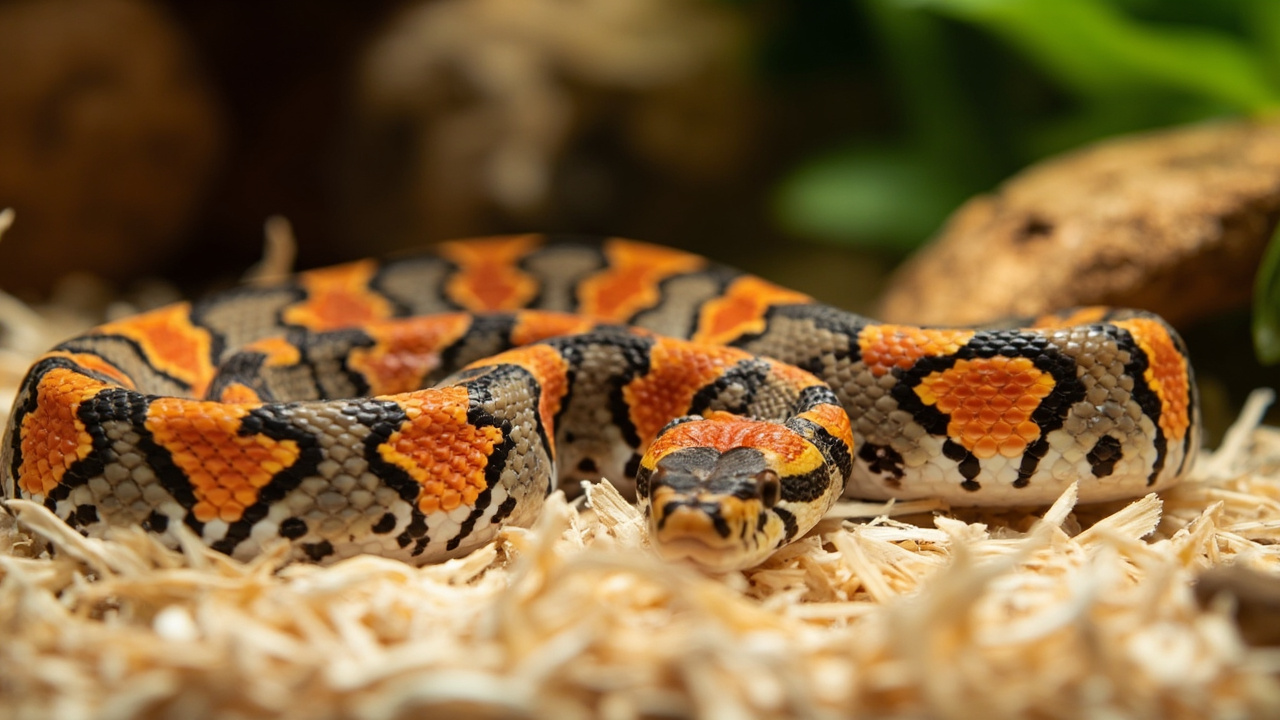
The corn snake (Pantherophis guttatus) is a slender, docile colubrid native to the southeastern United States — pine flatwoods, overgrown fields, and the edges of corn cribs where it hunted the mice that fed on stored grain. That farm-and-rodent origin is exactly where the name comes from: “corn snake,” not because they eat corn, but because they lived in corn country. That same adaptability is what makes them one of the most popular pet snakes in the world today.
If you’re weighing a first snake, the corn is the move. They stay a manageable 3-5 feet, take frozen-thawed rodents without complaint, and tolerate handling well enough that you can pass them to a friend without drama. They’re often ranked right alongside ball pythons as the top two starter snakes — and unlike ball pythons, corn snakes don’t go on hunger strikes that last four months. They’re reliable eaters, which is half the battle with a new pet snake.
This guide assumes you’re starting from scratch — no enclosure, no equipment, no snake yet. We’ll walk through everything in the order you actually need it: enclosure first, heating next, then substrate, then feeding, then the rest of the setup. If you’re picking between a corn snake and another beginner reptile like a leopard gecko, crested gecko, or bearded dragon, the bottom line is that corn snakes fit better for someone who wants a snake specifically — the daily care is similar, but you’re committing to feeding rodents. The sections below follow that exact order — it’s the whole corn snake care routine, start to finish. This complete care guide for beginners covers feeding, housing, and temperature from day one.
At a glance:
- Housing: 40-gallon front-opening terrarium minimum for adults
- Temperature: 78-85°F warm side, 70-75°F cool side, 68-75°F at night
- Humidity: 40-60% (70% during shed)
- Diet: Frozen-thawed mice every 10-14 days (adults)
- UVB: Optional (not required)
- Lifespan: 15-20 years
Care Guide: Enclosure Setup
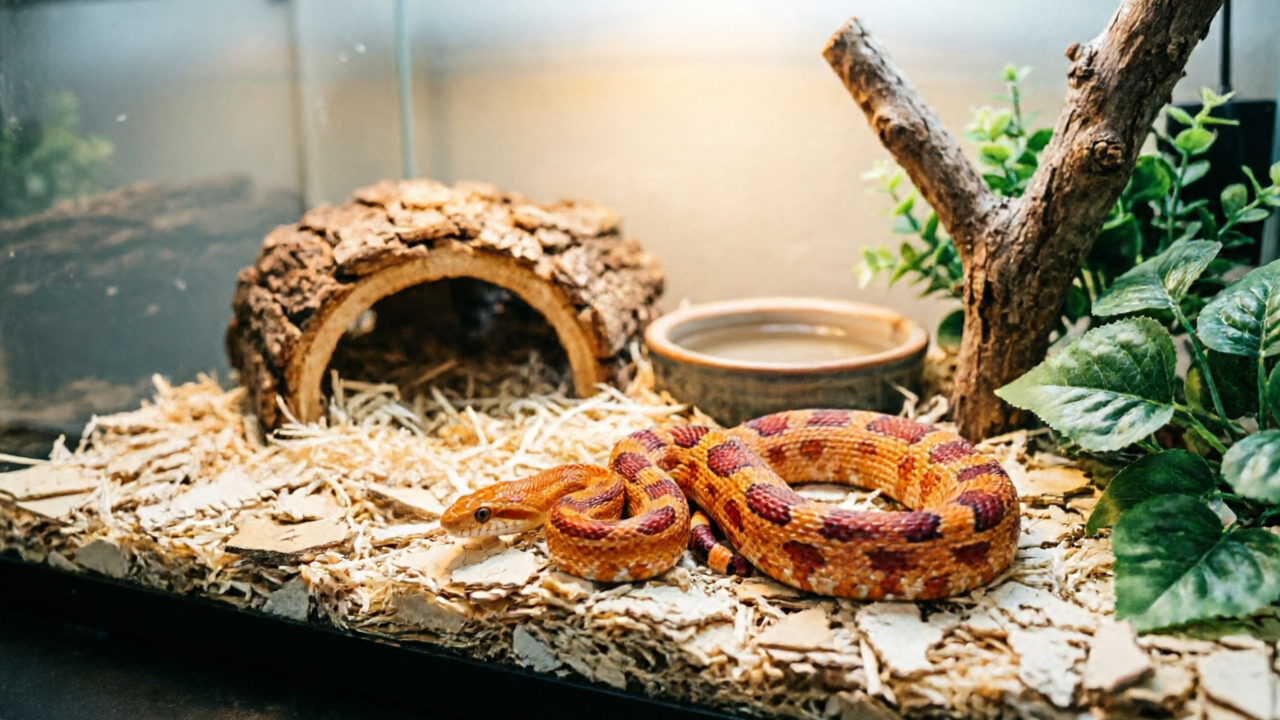
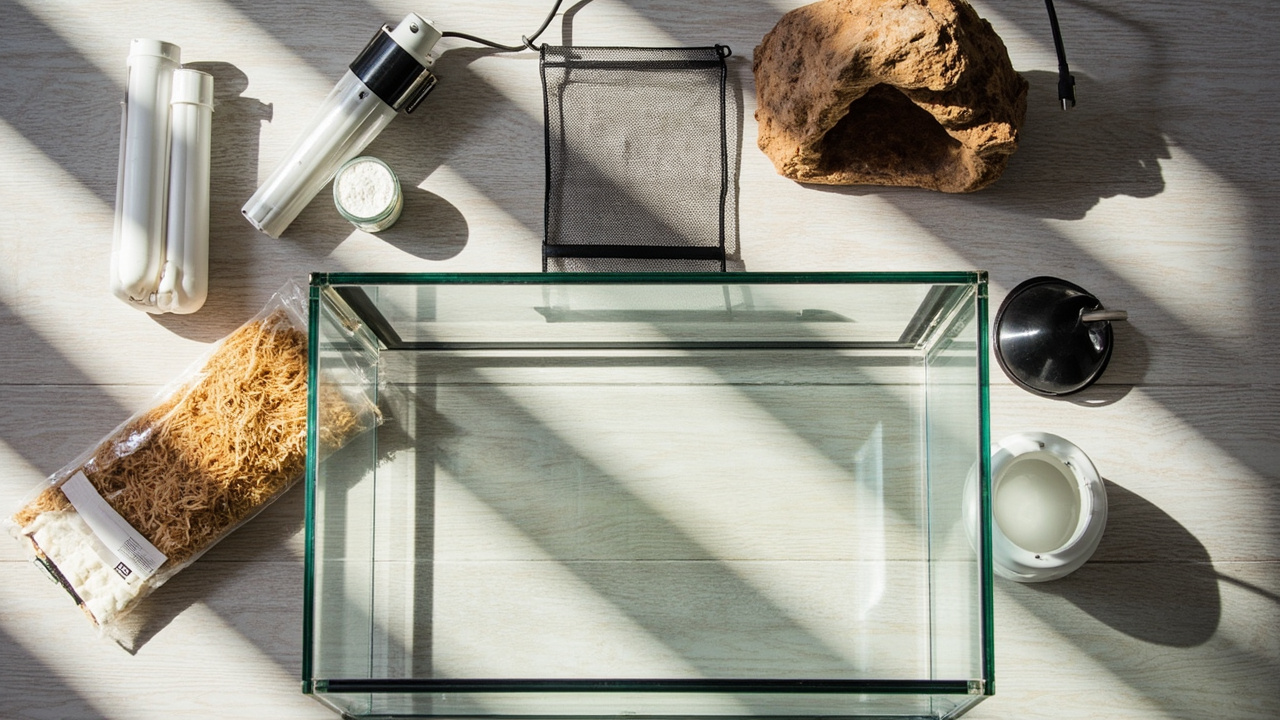
Proper housing is the foundation of corn snake care. Corn snakes are terrestrial — they don’t climb much, and they don’t need height. What they need is floor space and a tight, secure enclosure they can’t escape from. A 40-gallon breeder (36”×18”×16”) is the accepted minimum for an adult, but a 50-gallon (36”×18”×18”) is better and gives you more room for hides, a water bowl, and a branch.
Hatchlings can live in a 10-gallon tank for the first 6-12 months while they’re tiny (10-15 inches long), but they’re escape artists at that size — secure lid is mandatory. Plan to upgrade them to adult housing around their first birthday. For the full build sequence (tank, heat, substrate, hides), use the corn snake enclosure setup guide. Never cohabitate — one snake per enclosure. Two corns in one tank fight over the warm hide and can swallow each other at feeding time.
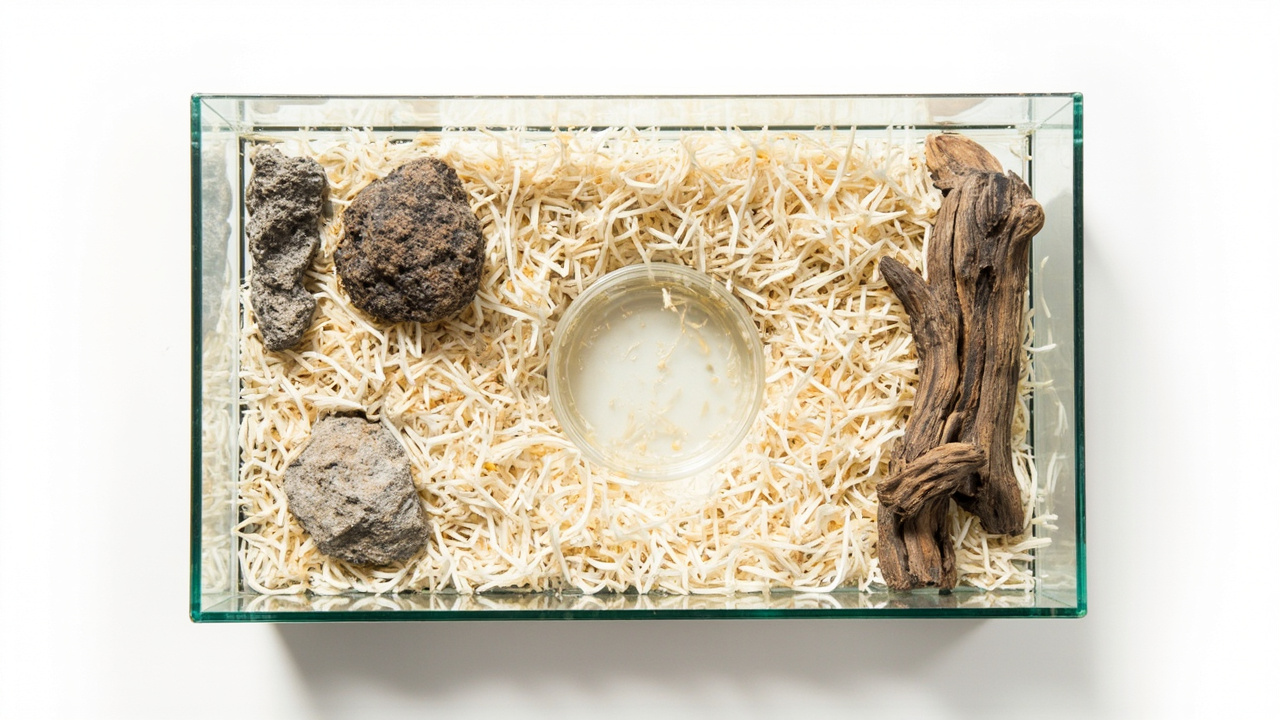
Glass vs. PVC
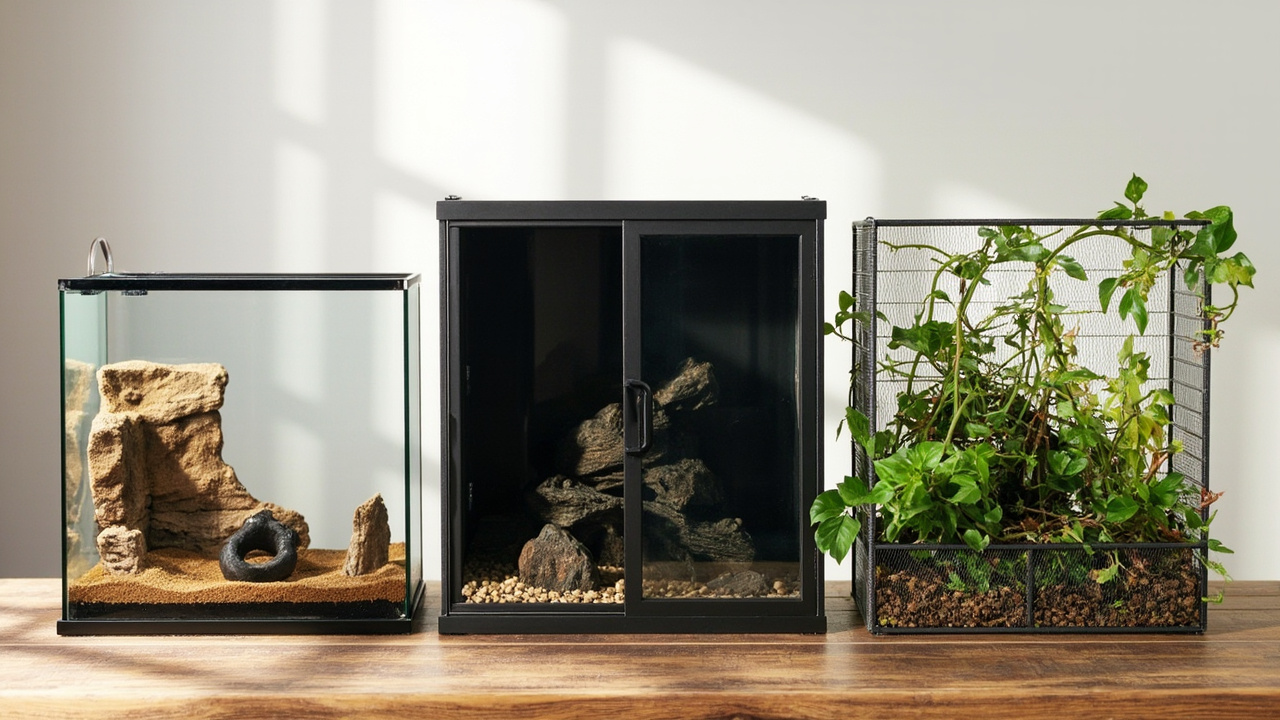
For most keepers, a front-opening glass terrarium is the right pick. The REPTI ZOO 50 Gallon Glass Terrarium ($184.97) has front-opening double hinge doors with screen-top ventilation — easy to access, holds humidity if you need it, and the 36×18×18 footprint matches corn snake husbandry standards exactly. PVC enclosures hold heat and humidity better if you live somewhere cold, but for most keepers, glass is fine. See our full terrarium buying guide for the glass-vs-PVC breakdown, and use the tank size calculator to compare dimensions across brands before you commit.
Whichever enclosure you pick, place it in a low-traffic part of your home — not next to a TV, not in front of a window that gets direct afternoon sun. Corn snakes stress easily, and a busy spot will keep them hiding 24/7.
Temperature and Heating
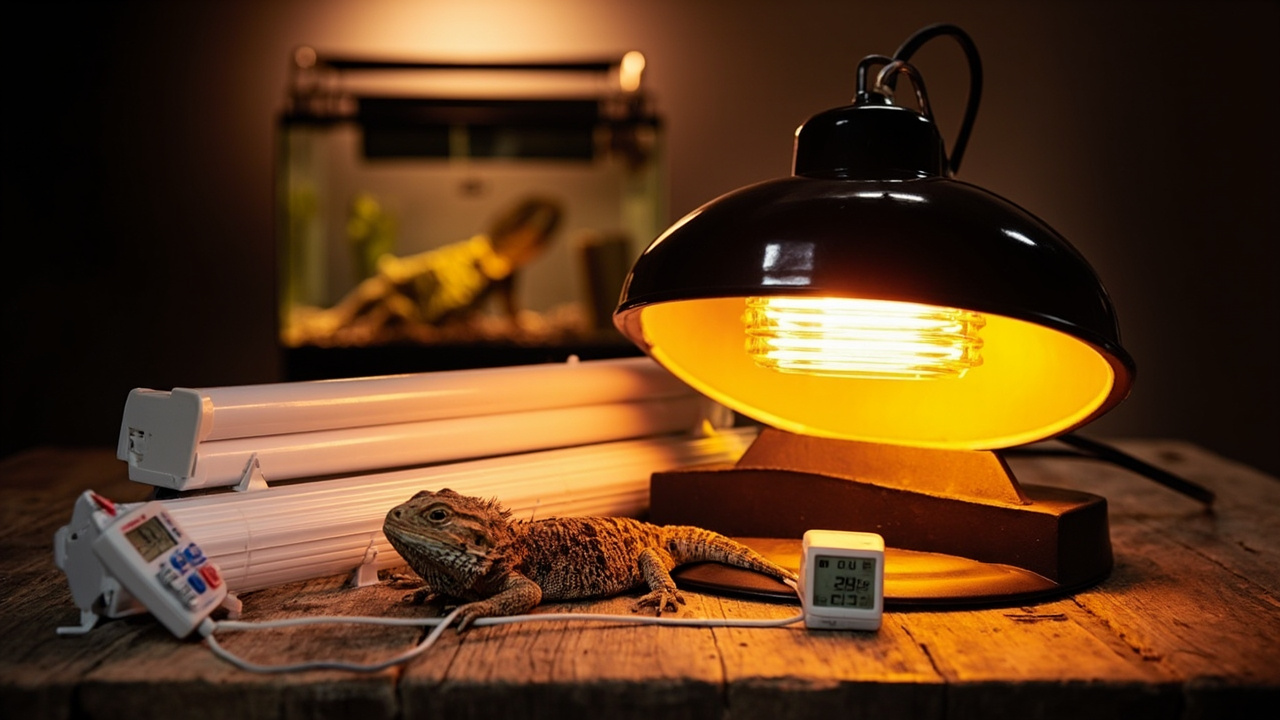
Corn snakes don’t need basking lamps the way bearded dragons do. They get all the heat they need from an under-tank heat pad (UTH) covering about one-third of the enclosure floor — the “warm side.” The gradient looks like this:
| Parameter | Target | How to measure |
|---|---|---|
| Warm side (floor) | 78-85°F | Probe on the substrate above the heat pad |
| Cool side (floor) | 70-75°F | Probe on the cool-side substrate |
| Night drop | 68-75°F | Room temperature is enough if it stays above 65°F |
| Humidity | 40-60% (70-80% in shed) | Hygrometer at substrate level |

Heat Pads and Thermostats
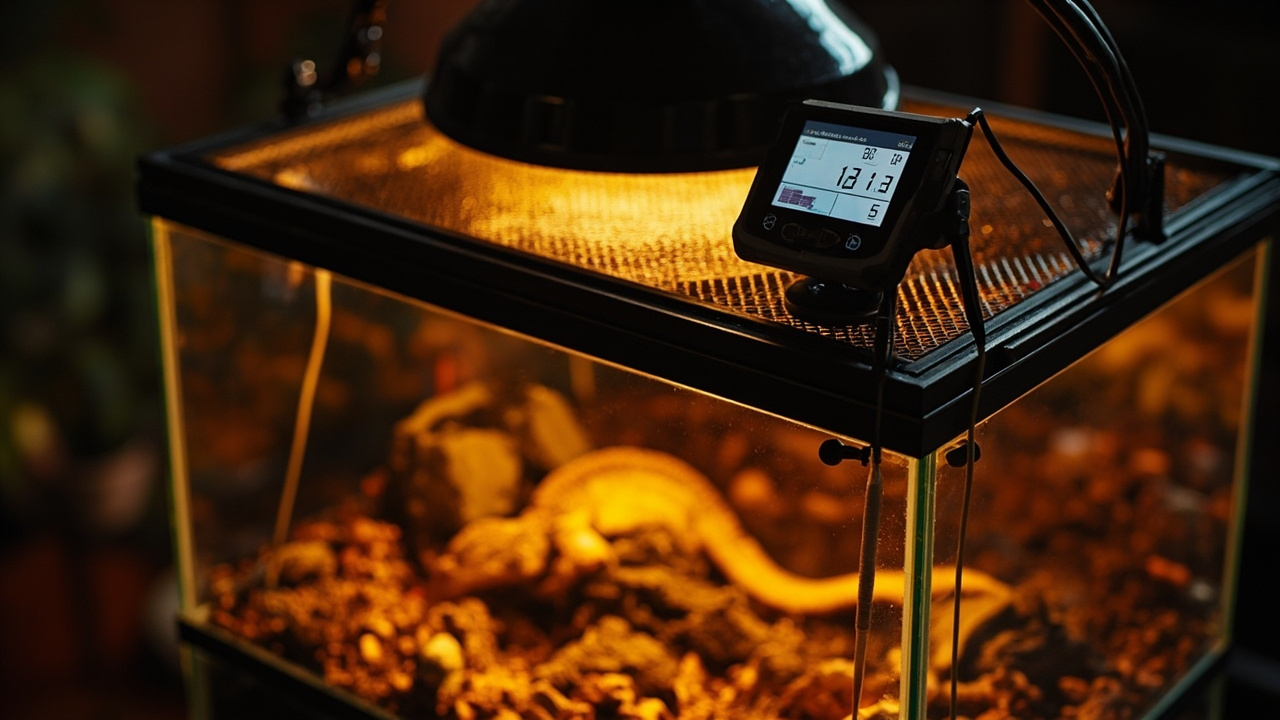
The heat pad alone isn’t enough — you need a thermostat to regulate it. Without one, the pad can push temperatures past 100°F and burn your snake. The BN-LINK Reptile Heating Pad with Digital Thermostat ($29.99) is a budget combo that comes with both pieces in one box — set the probe on the substrate directly above the pad and dial in 82°F. It’s not fancy, but it works. For more on safe installation, see our heat mat guide.
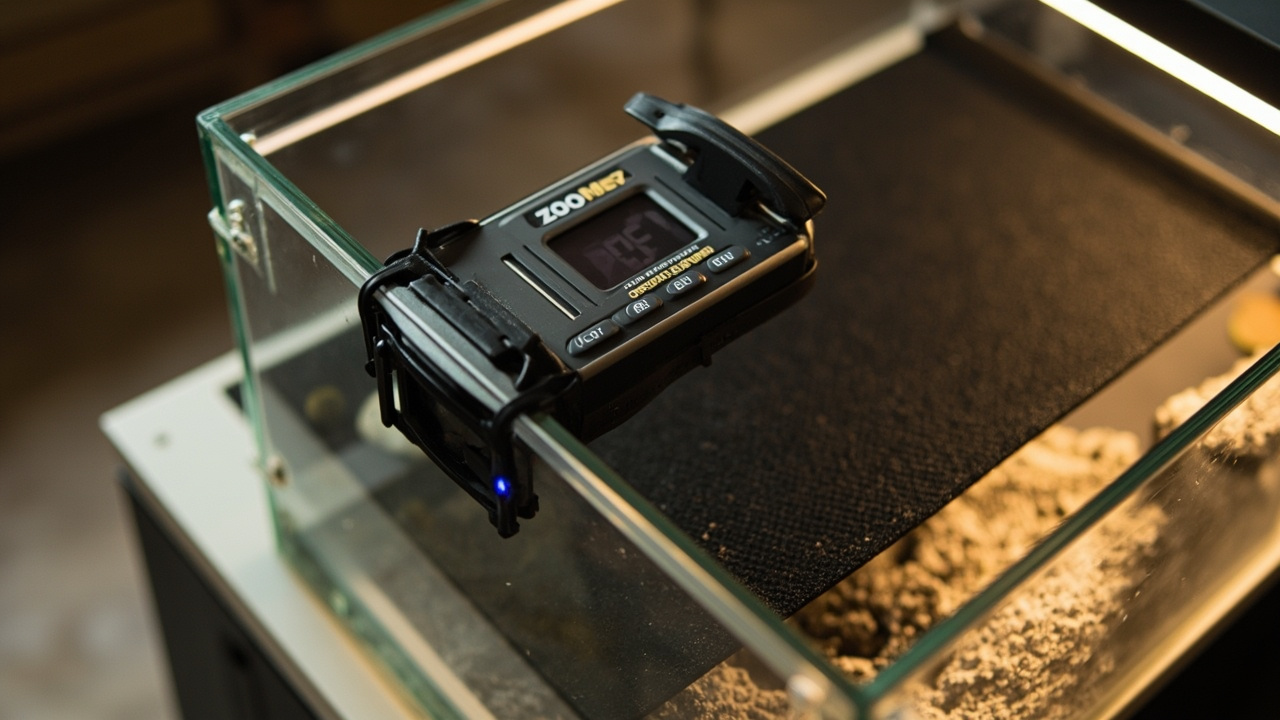
Place a thermometer probe directly on the substrate (not 6 inches up — ambient vs. floor temp matters here). A pair of cheap digital meters like the Vodolo Digital Hygrometer Thermometer 2-Pack ($5.99) lets you put one on each end and monitor the gradient at a glance. Don’t guess at temperatures — corn snakes digest food poorly when they’re too cold, and chronic low temps lead to regurgitation. Heat is the one variable corn snake care can’t compromise on.
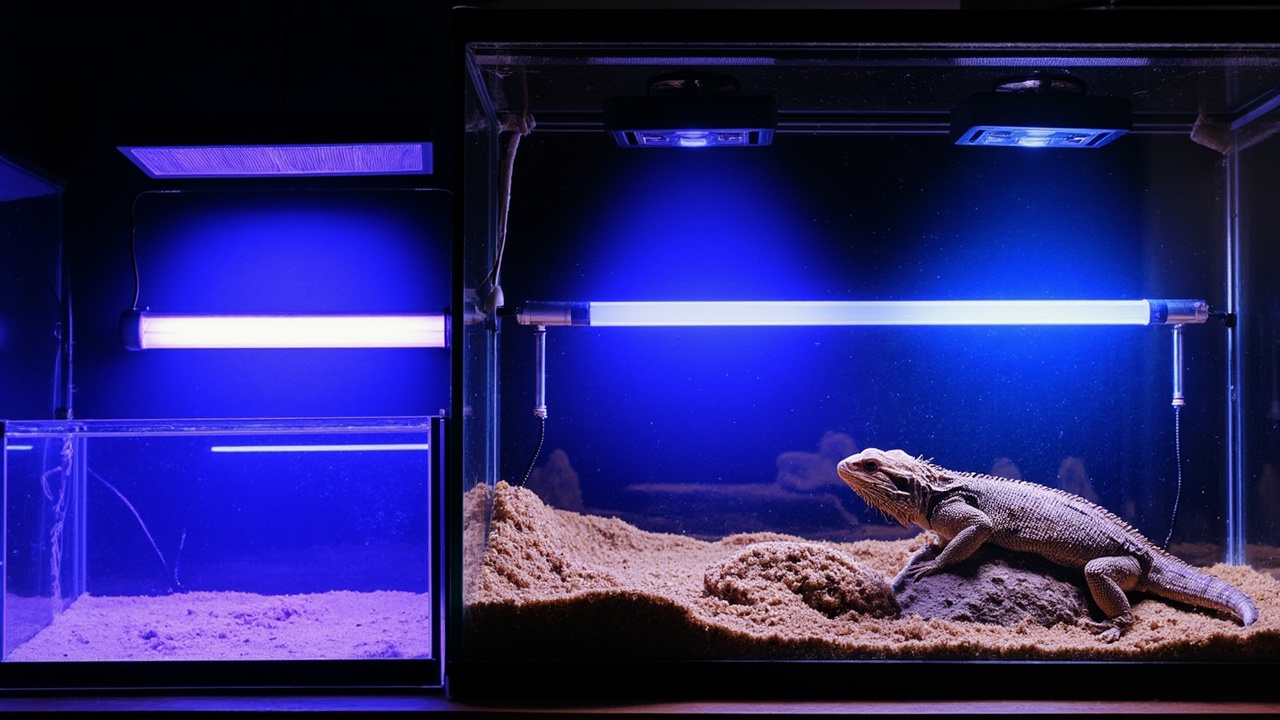
What they don’t need: heat rocks, red bulbs, or “night-glo” purple bulbs. Heat rocks are a burn risk. Red bulbs disrupt their day-night cycle. You’re overthinking it if you’ve bought those — a UTH + thermostat is the standard for a reason.
Substrate and Humidity
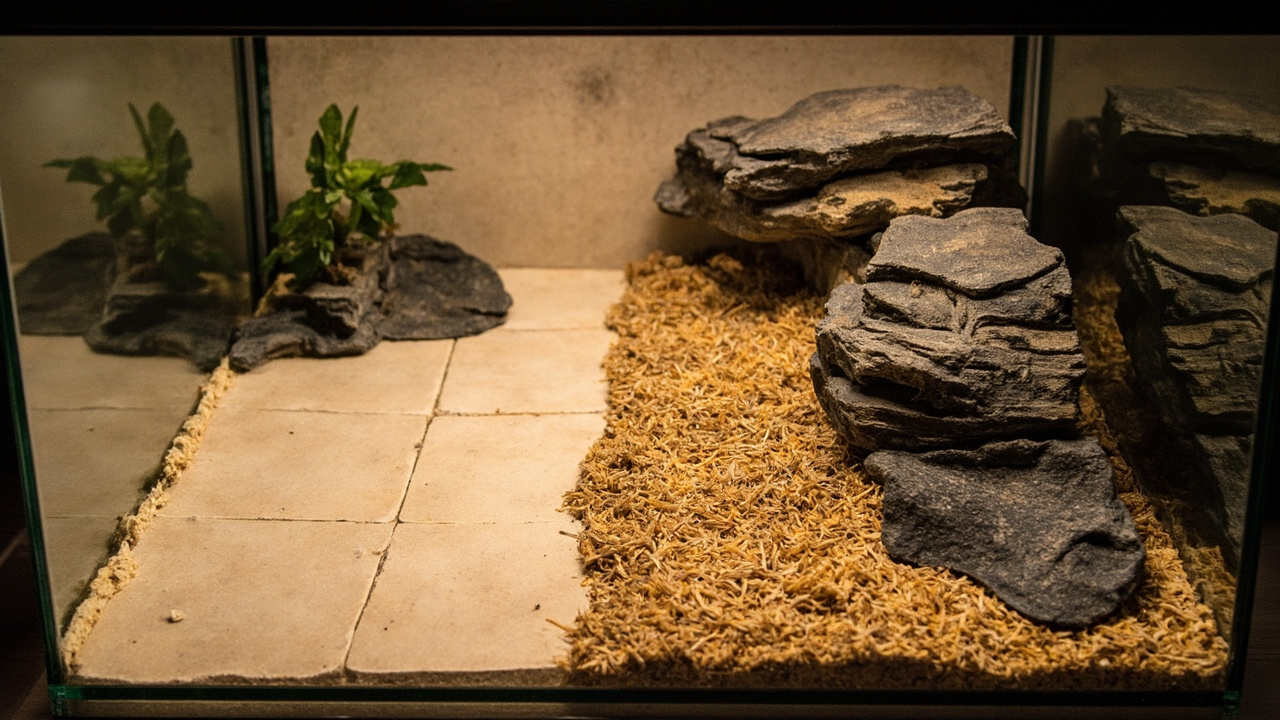
For corn snakes, the substrate answer is simple: aspen bedding. It’s the closest match to their native pine-forest floor, it holds burrows (which they’ll dig every night), and it’s cheap and easy to spot-clean. The Zoo Med Aspen Snake Bedding 3-pack of 24-quart bags ($76.06) is the standard corn snake keeper’s pick — shredded, low-dust, and a single bag covers a 40-gallon enclosure with depth to spare. The 3-pack format keeps you stocked through several substrate changes.
What you don’t want:
- Pine or cedar shavings — the phenols (oils) are toxic to snakes and cause respiratory irritation
- Sand — impaction risk for juveniles, especially during feeding
- Reptile carpet — harbors bacteria, tough to clean, not worth the hassle
- Gravel or walnut shell — impaction risk, uncomfortable to burrow in
Humidity and Shedding
Humidity is the underappreciated half of corn snake husbandry. Baseline humidity should sit at 40-60%, but during a shed it should climb to 70-80% — that’s the trick. If humidity is too low when they go into blue (their eyes cloud over), they’ll shed in pieces instead of one clean piece, and stuck shed on the eye caps is a vet visit you don’t want.
If your home runs dry (winter heating, desert climate), pour a small amount of water into one corner of the substrate to raise humidity locally — don’t soak the whole enclosure. A humid hide (a plastic container with damp sphagnum moss, hole cut in the lid) is the cleanest solution for sheds.
That pair of digital hygrometers is doing double-duty here — same meters track humidity and temperature. Check them weekly. In dry homes, humidity is the corn snake care variable that slips first.
Care Guide: Feeding
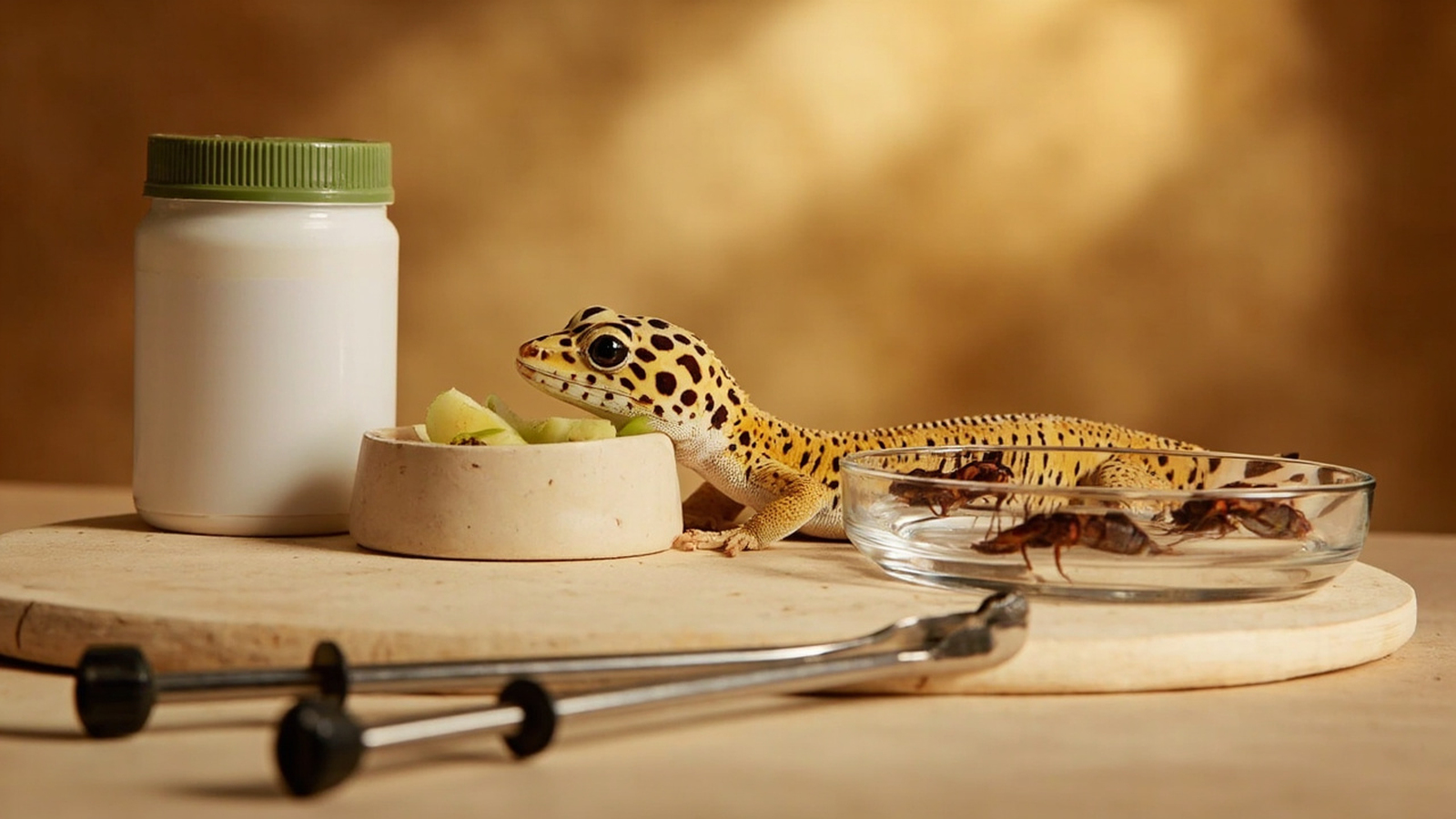
Corn snakes eat rodents. There’s no negotiating that. They’re enthusiastic eaters, they don’t go on hunger strikes like ball pythons, and they take frozen-thawed prey without complaint once established. Feeding is honestly the easy part of corn snake care.
The rule for prey size: the mouse should be roughly the same width as the widest part of the snake’s body — usually 1-1.25x the snake’s mid-body girth. Too small and you’ll be feeding constantly; too large causes regurgitation. Prey too cold also causes regurgitation, so always thaw the mouse in warm water (not the microwave — hot spots cook the inside unevenly) and offer it warm.
Feeding schedule by age:
| Stage | Prey size | Frequency |
|---|---|---|
| Hatchling (0-6 months) | Pinky mouse | Every 5-7 days |
| Juvenile (6-12 months) | Fuzzy / hopper | Every 7-10 days |
| Adult (1+ year) | Adult mouse / small rat | Every 10-14 days |
For a steady supply, the Gourmet Rodent Frozen Pinkie Mouse, 50-count ($36.99) provides pinkies sized for hatchlings and growing juveniles. Order in bulk when you can — frozen rodents are far cheaper per unit than pet-store singles. Mix small to medium sizes across the snake’s growth stages, then step up to fuzzies and hoppers as the snake grows.
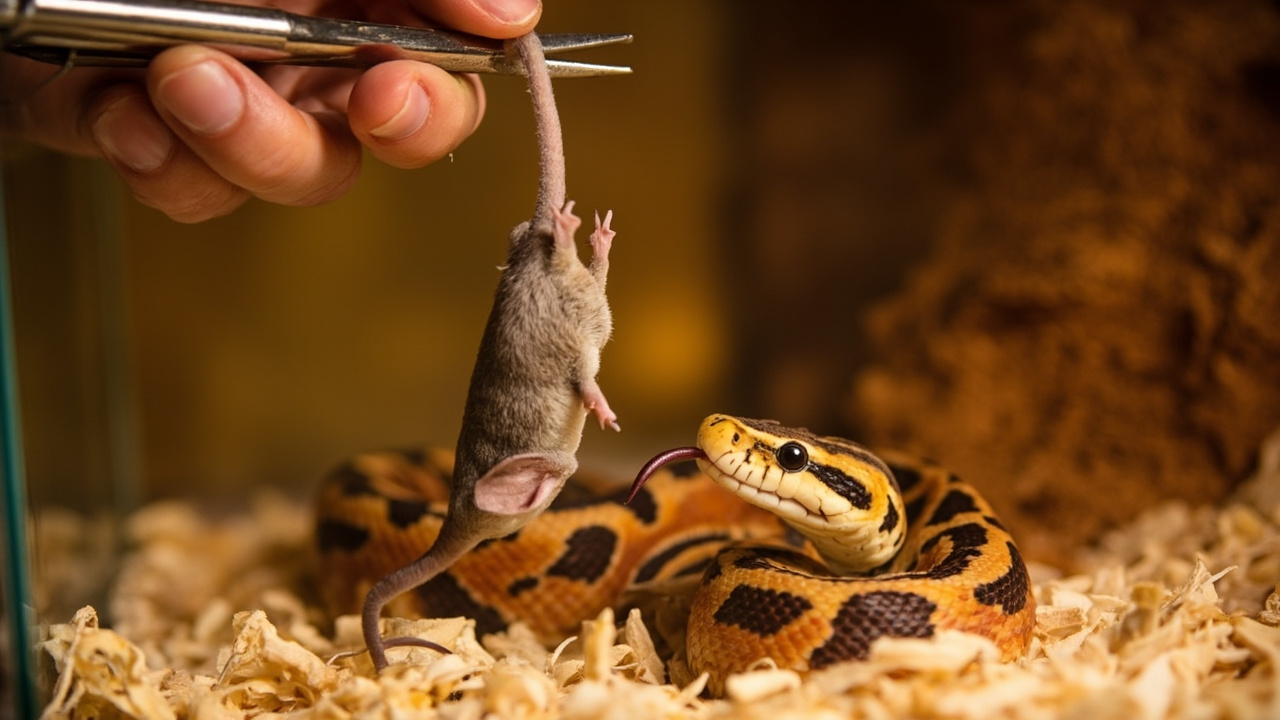
Why Frozen-Thawed, Never Live
Never feed live prey. Live rodents bite back — even a small mouse can wound a snake, and the resulting infection is expensive to treat. Frozen-thawed is safer for the snake, easier for you, and what every reputable corn snake breeder feeds. If you’re new to feeding snakes, the same approach works for ball pythons, and the techniques transfer directly.
A common concern: refusing food. Corn snakes rarely refuse, but they may skip a meal during shed. Don’t panic if one feed gets passed over — wait until they finish shedding, then offer again. If they refuse for 3+ weeks outside of a shed cycle, see a vet.
Hides and Decor
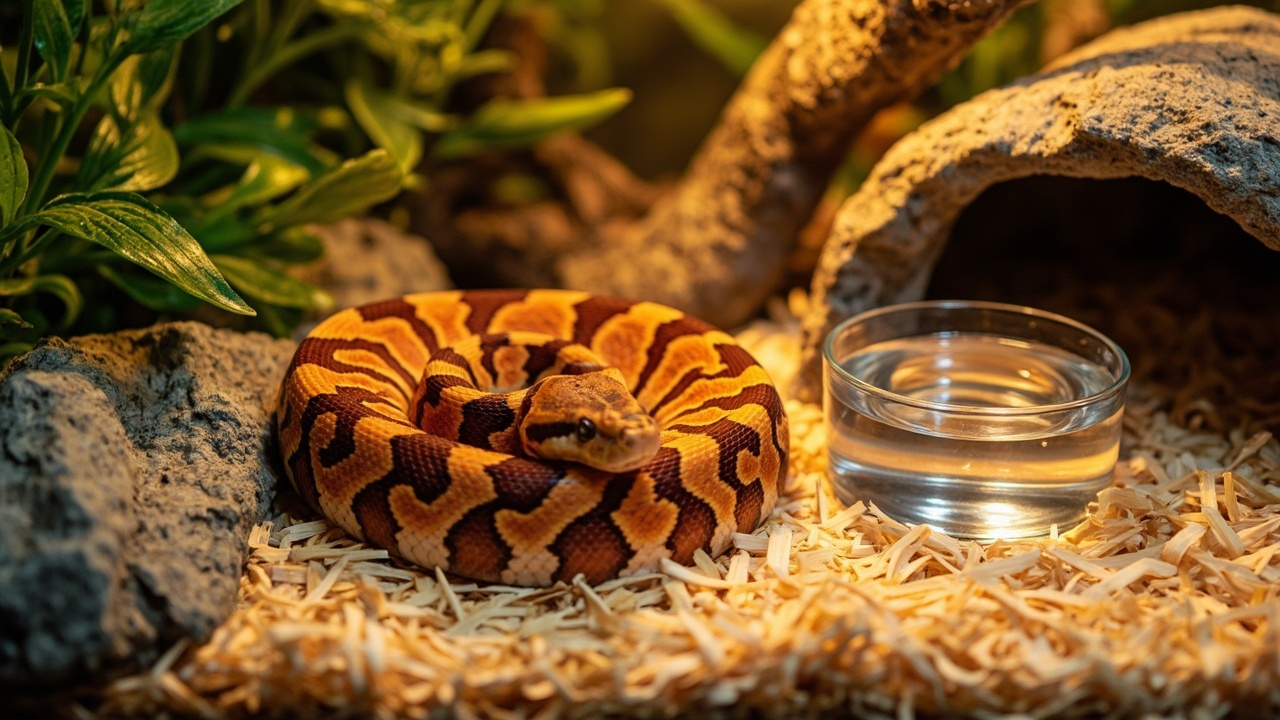
Two hides. Not one. Two identical hides, one on the warm side, one on the cool side. This is the most important decor item — without a hide, a corn snake stays stressed and won’t eat reliably. The LUCOSIU Reptile Rock Cave Hideout Large ($23.74) is a two-pack naturalistic rock-style set that works for both sides. Hides are the one corn snake care item you shouldn’t cheap out on — a stressed snake stops eating.
Beyond the hides:
- Water bowl that fits the snake inside. The Zoo Med Reptile Rock Corner Water Dish, X-Large ($27.49) is heavy enough that the snake can’t tip it, and large enough for a full-grown corn to soak in if they want. Soaking helps with stuck shed.
- Climbing branch (optional). Corn snakes don’t climb as much as other species, but they will if you give them the option. The Exo Terra Forest Branch Small ($8.99) adds enrichment and helps during sheds — snakes use rough surfaces to rub old skin off.
- No heat rocks. (Yes, repeating this — they’re a burn risk.)
- No mirrored or transparent walls on the enclosure. They don’t understand reflections and stay on edge.
Handling and Temperament
Corn snakes are remarkably docile — they’re not famous for biting and they tolerate regular handling once they’re settled in. After you bring a new snake home, give them 5-7 days without handling to acclimate to the enclosure and start eating reliably. Then start with short sessions: 5 minutes, 2-3 times per week. As they get comfortable, work up to 15-20 minutes. Short and calm beats long and stressful — that’s the handling half of corn snake care.
For the handling itself:
- Wait 48-72 hours after feeding before handling. Pick them up right after a meal and you’ll get a regurgitated mouse on your hands — and a stressed snake. The same rule applies to ball pythons — our ball python setup checklist covers the post-meal cooldown timing.
- Support the body with two hands, one near the head and one mid-body. Don’t grab from above — that mimics a predator approach and triggers a defensive response.
- Don’t restrain the head. Corn snakes aren’t venomous and don’t try to bite. If they push against your hand, let them — they’re just exploring.
- Avoid handling during the blue phase of a shed. Their vision is impaired and they’re jumpy. Wait until they finish shedding.
If you have one that’s nippy, it’s almost always a hatchling that hasn’t been handled yet, or a snake that just woke up and is acting on reflex. They’re not aggressive — they’re confused. Calm handling sessions fix this in a couple of weeks.
Health and Shedding
A healthy corn snake eats regularly, sheds in one piece, and spends most of the day hidden. When something’s off, it’s usually visible: skipped feeds, stuck shed, or unusual behavior. Most corn snake care problems trace back to just two numbers: temperature and humidity.
Shedding: Adults shed every 6-8 weeks; juveniles more often (3-4 weeks). You’ll see the eyes cloud over (the “blue phase”), then clear up a day before the actual shed. Keep humidity at 70-80% during this window and provide a humid hide. A complete shed comes off in one piece, including the eye caps. If the eye caps stay on after a shed, the next shed will fix it if humidity is improved — but if it happens repeatedly, a vet can manually remove them.
Respiratory infection: Symptoms include wheezing, mucus around the mouth or nostrils, open-mouth breathing, and lethargy. The root cause is almost always chronic low temperatures or high humidity combined with poor ventilation. Bump the warm side to 85°F and improve airflow. If symptoms persist past 48 hours, see a vet — RI in snakes needs antibiotics, not home remedies.
Snake mites: Tiny black specks around the eyes, mouth, and under the chin. They’re parasites that feed on blood and stress the snake. Treatment: soak the snake in lukewarm water (an inch deep, 15 minutes), replace the substrate entirely, and disinfect the enclosure with a reptile-safe solution. Repeat weekly until mites are gone.
Regurgitation: Comes back up undigested, sometimes hours or even days after feeding. Causes: prey too large, prey too cold, snake handled too soon after eating, or enclosure too cold. Fix the underlying temperature issue first; if regurgitation happens twice in a row, see a vet — chronic regurgitation causes ulcers.
When to see a vet: Prolonged anorexia (3+ weeks outside of a shed), repeated regurgitation, visible mites that don’t clear up, eye-caps stuck for multiple sheds, or any open-mouth breathing. Reptile vets aren’t everywhere — find one before you need one. The Animal Hospitals USA locator or your state’s reptile society can point you to one nearby.
Common Morphs
Corn snakes have more morph diversity than almost any other snake — decades of breeding have produced hundreds of color and pattern combinations. Some of the most popular:
- Normal/Classic — wild-type orange and gray, the corn snake as nature designed it
- Albino (Amelanistic) — missing black pigment; red eyes, orange and yellow base
- Snow — albino + anery combined; white snake with pink eyes
- Anerythristic (Anery) — missing red pigment; gray and black with yellow undertones
- Okeetee — classic pattern with thick black borders; a corn snake collector’s favorite
- Butter — yellow base with caramel highlights; one of the most popular pet morphs
- Caramel — lab-bred mutation with rich amber and gold tones
- Lavender — purple-gray wash on a normal pattern; unusual and breeding-popular
- Tessera — pinstripe pattern down the back; newer morph (post-2010)
- Palmetto — speckled white with random color flecks; one of the newest designer morphs
- Scaleless — missing scales on parts of the body; striking but requires extra care
Most pet stores carry Normal and Albino. Reptile expos and online breeders are the source for the rest, with prices ranging from $50 (Normals) to $500+ (Lavender, Palmetto, Scaleless). Whichever morph you pick, corn snake care stays identical — color doesn’t change husbandry.
Corn Snake Morphs & Color Guide
The morph list above is the tip of the iceberg. Corn snake breeders have produced over 800 named color and pattern combinations since the 1960s, and the MorphMarket corn snake listings page will scroll forever if you let it. For first-time keepers, what matters isn’t memorizing every morph — it’s understanding how the categories work so you can read a breeder’s price list without confusion. Morphs are grouped by which pigment or pattern gene they involve. The three primary pigment mutations are amelanistic (no black), anerythristic (no red), and charcoal (reduced black). The rest are combinations and pattern mutations stacked on top of those.
Red and Orange Base Morphs
These are the morphs most people picture when they hear “corn snake.” They keep warm tones but vary wildly in saturation and pattern contrast.
- Normal/Classic ($30-$75): the wild-type orange-and-gray saddle pattern that started it all. Hardy, vigorous feeders, and the cheapest snake you can buy. Best choice if you don’t yet know what you like.
- Okeetee ($75-$200): essentially a Normal with thicker black borders around each saddle, originally from a South Carolina breeder’s collection. Slightly higher price reflects line-breeding, not rarity.
- Butter ($75-$150): yellow base with caramel highlights — a single-gene mutation that’s been a pet-store staple for decades.
- Caramel ($100-$200): lab-bred mutation with rich amber and gold tones that deepen with each shed.
- Candy Cane ($150-$300): variable red head with clean white-bordered saddles; line-bred rather than single-gene.
Black, Gray, and Charcoal Morphs
Striking monochrome snakes. The anery and charcoal lines are where a lot of designer breeding starts.
- Anerythristic (Anery) ($75-$150): missing red pigment, leaving gray, black, and yellow tones. Often used as a foundation for designer morphs.
- Charcoal ($100-$200): another single-gene mutation that produces dark, smoky-looking snakes — variable in appearance.
- Black ($150-$300): enhanced black version of Anery with very dark saddles and a contrast-rich belly.
- Granite ($100-$200): pattern mutation that breaks up the saddles into a speckled, granite-like appearance.
White, Yellow, and Reduced-Pigment Morphs
These tend to be the most visually striking, and they often sit at the higher price tiers.
- Albino (Amelanistic) ($50-$100): no black pigment — orange and yellow base with red eyes. The classic beginner morph, often sold at pet stores.
- Snow ($100-$200): albino + anery, giving a white snake with pink eyes. Clean, ghostly appearance.
- Butter Motley ($100-$200): pattern mutation that fuses the saddles into stripes; often combined with Butter or Snow.
- Lavender ($200-$500): purple-gray wash over a normal pattern — one of the more unusual base morphs.
- Palmetto ($400-$800+): speckled white with random color flecks; one of the newest designer morphs and a real head-turner.
Pattern and Designer Morphs
These morphs change the pattern itself, not just the color, and they’re where the modern breeder market has moved.
- Tessera ($150-$300): pinstripe down the back instead of traditional saddles. First appeared around 2010 and remains popular.
- Motley ($100-$250): pattern mutation that reduces belly checkering and creates clean dorsal striping.
- Striped ($100-$200): single dorsal stripe from neck to tail; often stacked with color morphs.
- Scaleless ($300-$600+): missing scales on parts of the body. Striking, but requires extra care — they’re prone to dry skin and minor scrapes, and humidity management becomes more important.
- Diffused ($150-$300): pattern mutation that softens the head markings and reduces contrast.
Picking a Morph as a Beginner
Three practical rules for first-time keepers. First, price doesn’t equal health or temperament — a $50 Normal has the same docile genetics as a $500 Lavender. Second, reputable breeders beat pet stores for morph variety and genetic health; if you’re after anything past Albino, plan to buy from a breeder at an expo or via MorphMarket. Third, don’t pay designer prices for a snake you haven’t handled yet — go to a local expo, ask to hold the morphs you’re considering, and pick the calmest individual rather than the prettiest picture. Color morph doesn’t change a snake’s personality the way it does in dogs, but individual temperament varies.
For keepers interested in breeding, the math changes — designer combinations can produce clutches worth $1,000+ per hatchling — but that’s a years-long project with stud books and incubator setups. Corn snake care stays the same regardless of morph; the only husbandry difference is the scaleless line, which needs slightly higher humidity and rougher decor to prevent skin abrasions.
Lifespan and Commitment
A corn snake is a long-term pet. With proper care, they’ll be with you for 15-20 years — some individuals hit 22+ — and they’re not a “set it and forget it” animal. They need weekly feeding, monthly substrate spot-cleaning, full enclosure cleaning every 4-6 weeks, and daily temperature checks. That’s corn snake care in one sentence: low daily effort, decade-long consistency. Travel means finding a snake-sitter who understands frozen rodent thawing and handling. If decade-scale commitment sounds right but frozen rodents don’t, the axolotl is a fully aquatic alternative — similar low daily effort, but the diet runs on earthworms instead of mice.
If you’re ready for that, they’re a genuinely rewarding pet. Calmer than most dogs, lower-maintenance than most cats, and they’ll never bark at the mailman. But they’re a commitment measured in decades, so don’t pick one up on impulse. Plan for the long term, and you’ll have a quiet, curious companion for years.
Corn Snake Care Sheet
A condensed reference for keepers who already own a corn snake and need quick numbers. Bookmark this section, or print it and tape it inside the enclosure cabinet.
Ideal Numbers At a Glance
| Parameter | Target |
|---|---|
| Adult enclosure | 40-gallon breeder minimum, 50-gallon preferred |
| Hatchling enclosure | 10-gallon, upgrade around first birthday |
| Warm-side floor temp | 78-85°F (UTH + thermostat, probe on substrate) |
| Cool-side floor temp | 70-75°F |
| Night drop | 68-75°F (room temp is fine if it stays above 65°F) |
| Humidity (normal) | 40-60% |
| Humidity (in shed) | 70-80% |
| UVB | Optional; 5.0 or Shade Dweller, 12-hour cycle |
| Substrate | Aspen bedding, 2-3 inches deep |
| Hides | Two identical hides, warm side + cool side |
| Water bowl | Large enough for full-body soak |
| Hatchling feeding | Pinky mouse every 5-7 days |
| Juvenile feeding | Fuzzy/hopper every 7-10 days |
| Adult feeding | Adult mouse or small rat every 10-14 days |
| Prey size | Roughly 1-1.25× mid-body girth |
| Shed cycle (adult) | Every 6-8 weeks |
| Shed cycle (juvenile) | Every 3-4 weeks |
| Brumation | Not required for pet corn snakes |
| Cohabitation | Never — solitary species |
| Adult length | 3-5 feet (females average slightly larger) |
| Lifespan | 15-20 years, some reach 22+ |
| Handling wait after feeding | 48-72 hours |
Routine Care Schedule
A corn snake’s daily care is minimal, but the rhythm matters. Here’s what a consistent keeper actually does:
- Daily (2 minutes): glance at the enclosure, confirm temperature and humidity are in range, check the water bowl is clean and full, look at the snake for any visible issues (stuck shed, mites, lethargy).
- Weekly (10 minutes): spot-clean substrate (pick out waste and soiled bedding), wipe down water bowl, refresh water, handle briefly if the snake is alert and not in shed.
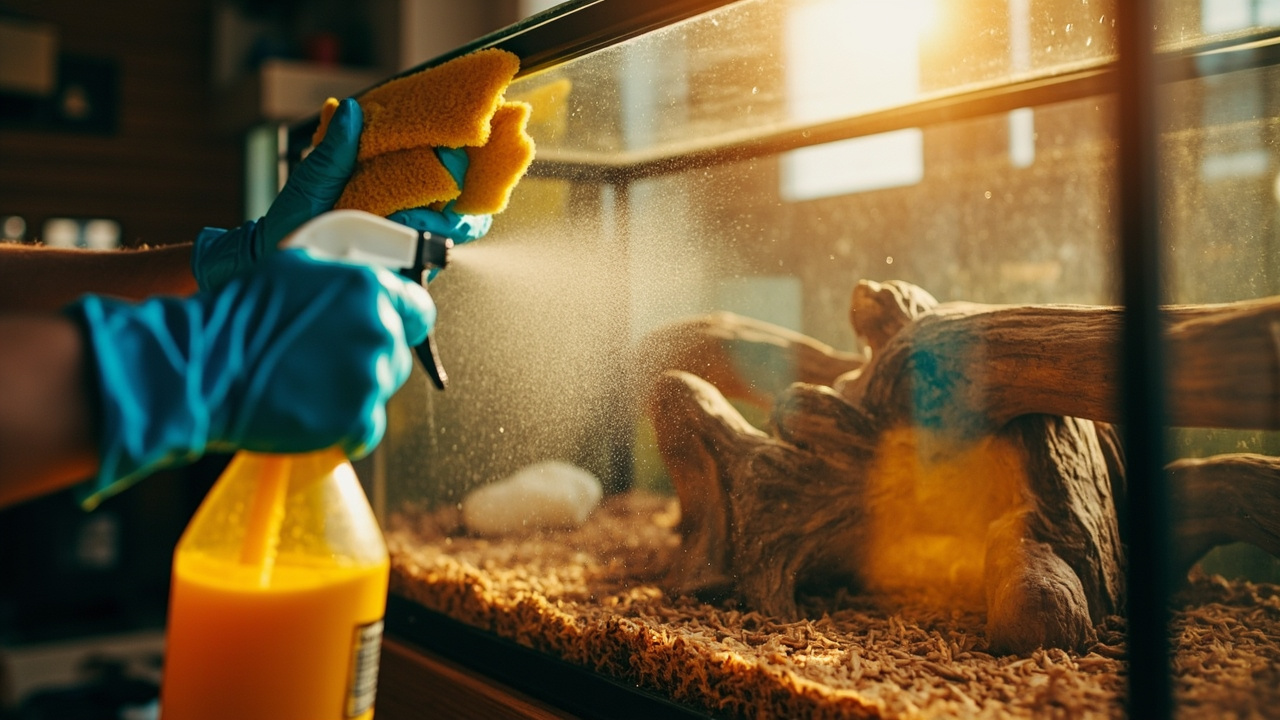
- Monthly (30 minutes): full substrate change if using aspen (every 4-6 weeks for aspen, every 8-12 weeks for bioactive), clean hides and decor with reptile-safe disinfectant, replace any worn decor, weigh the snake on a kitchen scale to track body condition.
- Every 6-8 weeks: shed cycle — raise humidity to 70-80% a few days before, add a humid hide, check the shed after for completeness (one piece including eye caps is the goal).
- Annually: schedule a reptile-vet wellness check if your snake is over 5 years old, or sooner if you’ve noticed any chronic issues. Replace any UV bulbs if you’re running one (output degrades before the visible light does).
Emergency Signs and What to Do
Some symptoms need a vet within 24-48 hours; others can wait a feeding cycle. Use this as a triage cheat sheet:
- Open-mouth breathing, wheezing, mucus around mouth or nostrils → respiratory infection. Bump warm side to 85°F, improve ventilation, see a vet if it persists more than 48 hours — RI requires antibiotics, not home treatment.
- Regurgitation (full meal comes back up) → usually too-large prey, prey served too cold, or handling too soon after feeding. Wait 10-14 days before the next feeding attempt, then offer a smaller prey item. See a vet if regurgitation happens twice in a row — chronic regurgitation causes mouth ulcers.
- Visible mites (tiny black specks around eyes, mouth, vent) → soak snake in an inch of lukewarm water for 15 minutes, replace substrate entirely, disinfect enclosure. Repeat weekly until clear.
- Stuck shed on eye caps for multiple cycles → raise humidity, add a humid hide, vet can manually remove caps if home humidity fixes don’t work after two sheds.
- Anorexia for 3+ weeks outside of shed → check temperatures first, offer a smaller prey item, see a vet if it continues — long-term fasting indicates parasites or systemic illness.
- Sudden lump or swelling → could be a stuck meal, abscess, or impaction. See a vet for a same-week appointment, especially if the lump grows or feels hard.
Keep the reptile vet’s phone number saved before you need it. Most areas have one or two within driving distance; the Association of Reptilian and Amphibian Veterinarians directory lists members by state. The cost of an annual checkup is far less than the cost of an emergency visit.
Sources
- ReptiFiles Corn Snake Care Guide — type: authority; access-year: 2026
- Merck Veterinary Manual: Overview of Reptiles — type: authority; access-year: 2026