For informational purposes only. Not a substitute for veterinary advice. Consult your veterinarian for specific medical decisions.
Follow product labels; observe the animal closely, and seek qualified veterinary help when signs persist or worsen.
What Is Metabolic Bone Disease?
Metabolic bone disease (MBD) is one of the most common and preventable health problems in captive reptiles. It’s not a single disease but a cluster of disorders caused by an imbalance of calcium, phosphorus, and vitamin D3 in the body. When a reptile can’t properly metabolize or absorb calcium, the body pulls it from the bones, leaving them weak, spongy, and deformed over time.
Any reptile species can develop metabolic bone disease, but the most frequently affected include bearded dragons, leopard geckos, chameleons, green iguanas, and turtles and tortoises. Snakes fed whole prey such as ball pythons are at much lower risk, though they aren’t immune — breeding females and juveniles still need monitoring.
Symptoms of MBD in Reptiles
MBD (metabolic bone disease) develops slowly, which is why many keepers don’t catch MBD until the disease is well established. Symptoms are usually grouped into early and advanced stages.
Early Signs
The earliest MBD symptoms are easy to miss if you are not watching closely. Watch for:
- Reduced appetite and lower activity levels
- Slight swelling in the limbs or joints
- A softened lower jaw, sometimes called “rubber jaw”
- Reluctance to climb, bask, or move normally
- Tremors or twitching in the fingers and toes
Advanced Symptoms
As calcium stores continue to drop, the signs become much more obvious and harder to reverse:
- Visible bone deformities — bowed legs, a curved spine, or an arched back
- Spontaneous fractures with no obvious injury
- Muscle tremors that worsen after eating (low-calcium tetany)
- Soft or misshapen shell in turtles and tortoises
- Prolapse of the cloaca in severe cases
If you see any of these signs of metabolic bone disease, treat the situation as urgent and contact a reptile-experienced veterinarian as soon as possible — MBD caught early is far more treatable than late-stage cases.
What Causes Metabolic Bone Disease?
Most cases of metabolic bone disease come down to three things — bad lighting, a poor diet, or an underlying health issue.
Inadequate UVB Lighting
MBD caused by inadequate UVB is the most preventable form of the disease.
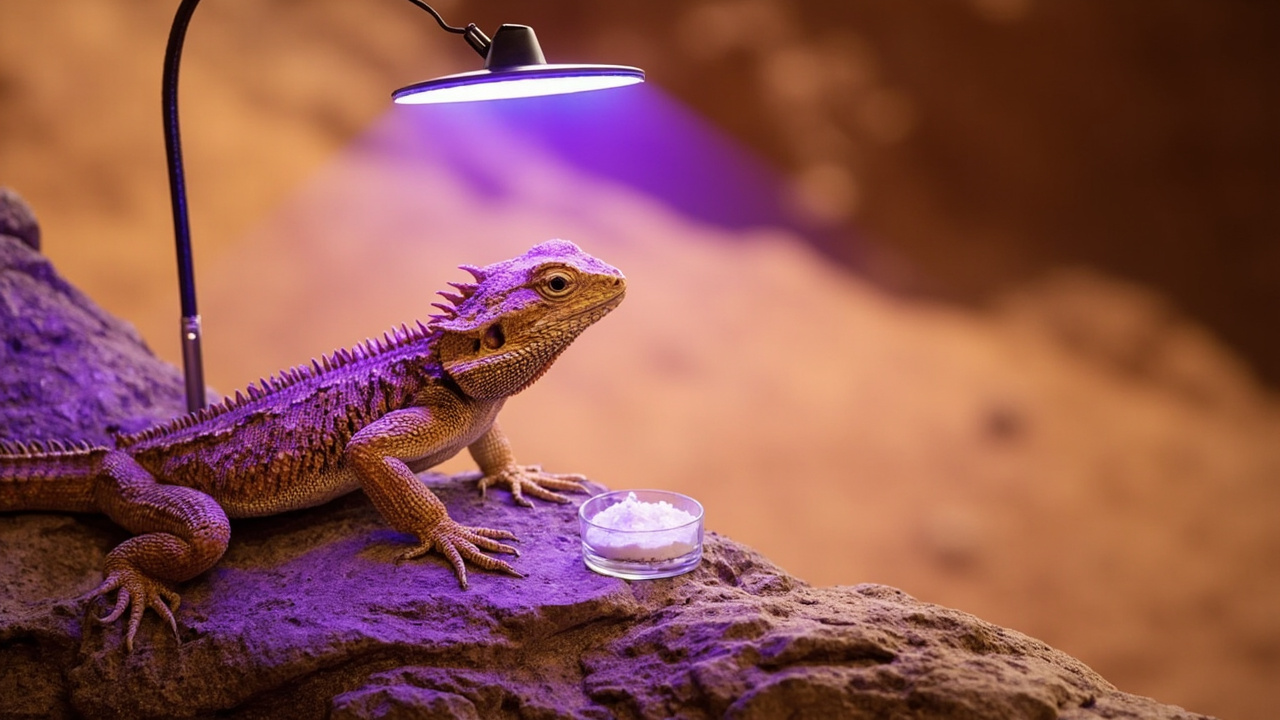
Reptiles don’t get vitamin D3 from food the way mammals do. They synthesize it in their skin using UVB radiation. Without enough UVB of the right wavelength, calcium cannot be absorbed from the gut no matter how much calcium is offered in the diet.
Common lighting mistakes include:
- Using a household fluorescent or LED bulb instead of a reptile-specific UVB bulb
- Mounting the bulb behind glass or plastic, which blocks UVB
- Running the bulb longer than 6-12 months, since UVB output drops long before visible light does
- Placing the bulb too far from the basking spot for the species
A detailed walkthrough of bulb types, distances, and replacement schedules is in our UVB bulb guide.
Poor Diet and Calcium Deficiency
Even with perfect lighting, a calcium-poor diet will cause MBD. Dietary MBD is the second most common form after lighting-related cases. The most common dietary problems are:
- Feeder insects like crickets and mealworms are naturally low in calcium and high in phosphorus
- Dusting with calcium powder is skipped or done too rarely
- Feeder insects are not gut-loaded with calcium-rich foods 24 hours before feeding
- Diets rely too heavily on one food type without variety
For a species-specific feeding plan, see the leopard gecko diet guide.
Other Contributing Factors
- Incorrect temperatures slow digestion and calcium metabolism
- Kidney or liver disease interferes with vitamin D3 activation
- Fast-growing juveniles and gravid females need extra calcium and are at higher risk of metabolic bone disease
- Some morphs bred for specific colors appear to have weaker bone density, though research is still ongoing
How to Prevent MBD in Reptiles
Metabolic bone disease is almost entirely preventable when the husbandry is right. Nail three things and you’re covered: lighting, supplementation, and species-specific setup.
Proper UVB Lighting Setup
- Use a T5 HO fluorescent tube or mercury vapor bulb sized for the enclosure height
- Set up a 10-12 hour daily photoperiod controlled by a timer
- Mount the bulb at the manufacturer-recommended distance from the basking spot
- Replace UVB tubes every 12 months and mercury vapor bulbs every 9-12 months, even if the light still works
For a full bulb selection walkthrough, the UVB equipment guide compares T5, compact, and mercury vapor options by enclosure size. For bearded dragons and similar diurnal species, the bearded dragon UVB guide explains exactly which bulb strength and distance to use. The companion bearded dragon heat lamp guide covers the basking bulb, wattage, and thermostat wiring that work alongside UVB to keep calcium metabolism healthy.
Calcium and Vitamin D3 Supplementation
- Dust feeder insects with plain calcium powder at almost every feeding
- Add calcium with D3 one to two times per week if UVB is weak or absent
- Use a calcium-only powder on most feedings to avoid D3 overdose
- Gut-load crickets, dubia roaches, and other insects with calcium-rich vegetables 24-48 hours before feeding
For species-specific schedules, the bearded dragon diet guide covers supplementation for omnivores, while the crested gecko species page covers complete-diet powder ratios for fruit-eating geckos.
Species-Specific Considerations
Different reptiles have very different UVB and calcium needs:
- Diurnal lizards like bearded dragons and uromastyx need strong UVB and frequent calcium dusting
- Leopard geckos are crepuscular and do well with low-output UVB or D3 supplements
- Chameleons need the strongest UVB output of common pet species
- Turtles and tortoises benefit from safe outdoor sunlight exposure plus indoor UVB
- Snakes like ball pythons rarely develop MBD on a whole-prey diet, but breeding females need extra calcium
Treatment and When to See a Vet
Metabolic bone disease can’t be fully treated at home. A reptile veterinarian will typically use injectable calcium, oral vitamin D3, dietary correction, and a full lighting overhaul. Mild cases of MBD caught early can recover in a few weeks to a few months. Advanced cases with permanent bone deformities may need lifelong management.
Seek a vet immediately if your reptile shows muscle tremors, refuses to eat for several days, has a soft shell, or suffers a fracture with no clear cause. Catching it early is what makes the biggest difference.
For a complete husbandry checklist that prevents MBD before it starts, see the leopard gecko care guide. A well-tuned shedding cycle is part of that same husbandry picture — incomplete sheds and chronic stuck shed are often the first external signal of the calcium and UVB imbalances that lead to MBD. The bearded dragon shedding guide covers the humidity, soaking, and stuck-shed removal steps that keep the cycle on track.
Sources
- Merck Veterinary Manual: Overview of Reptiles — type: authority; access-year: 2026