For informational purposes only. Not a substitute for veterinary advice. Consult your veterinarian for specific medical decisions.
Follow product labels; observe the animal closely, and seek qualified veterinary help when signs persist or worsen.
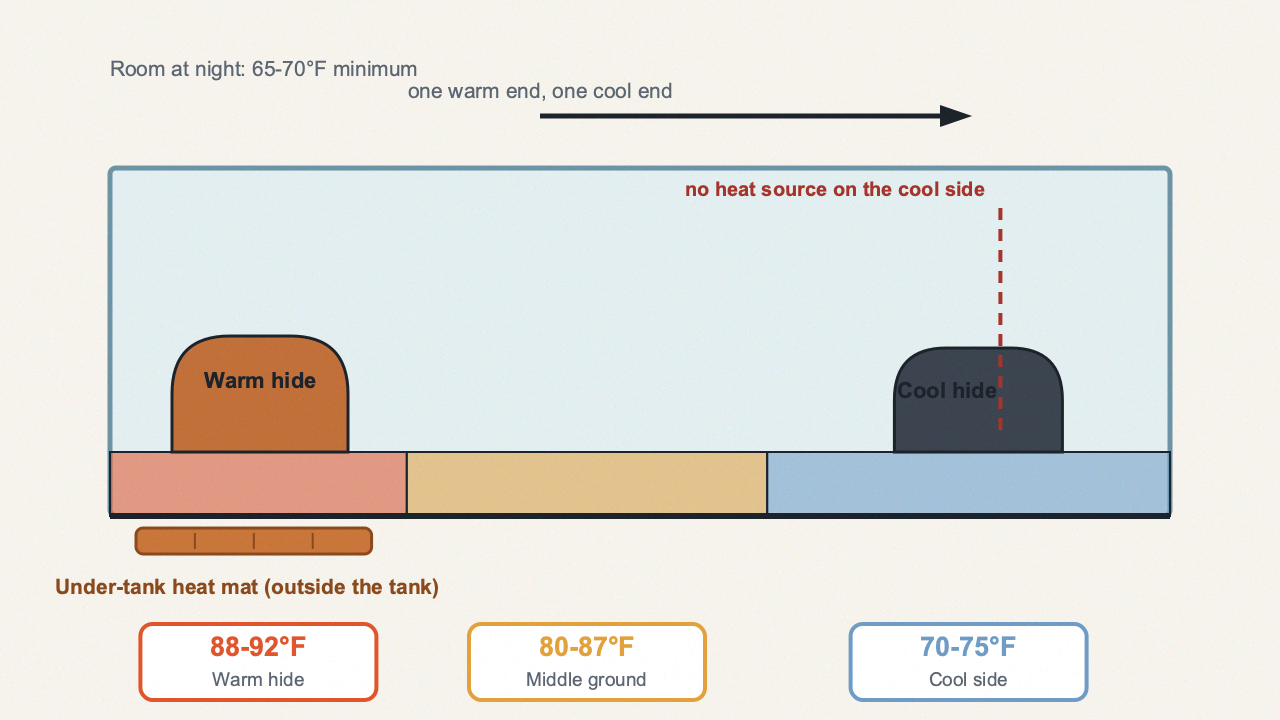
Leopard geckos absorb heat through their bellies from warm surfaces, so leopard gecko temperature is set by the floor under the warm hide, not by the air above it. Two failures account for most of the problems people hit: a warm side that never reaches 88°F, and a mat that climbs past 95°F with nothing switching it off.
Temperature Zones
| Zone | Floor Temperature | What Your Gecko Does Here |
|---|---|---|
| Warm hide | 88–92°F (31–33°C) | Digests food, spends most daylight hours |
| Middle ground | 80–87°F | Moves through when traveling between hides |
| Cool side | 70–75°F (21–24°C) | Sleeps, cools down after a warm meal |
| Nighttime ambient | 65–70°F minimum | Natural rest period — gecko retreats to cool hide |
Your enclosure needs a thermal gradient — one warm end and one cool end. This lets your gecko move between zones to regulate its body temperature. Measure surface temperature (the floor where the gecko’s belly touches), not ambient air temperature.
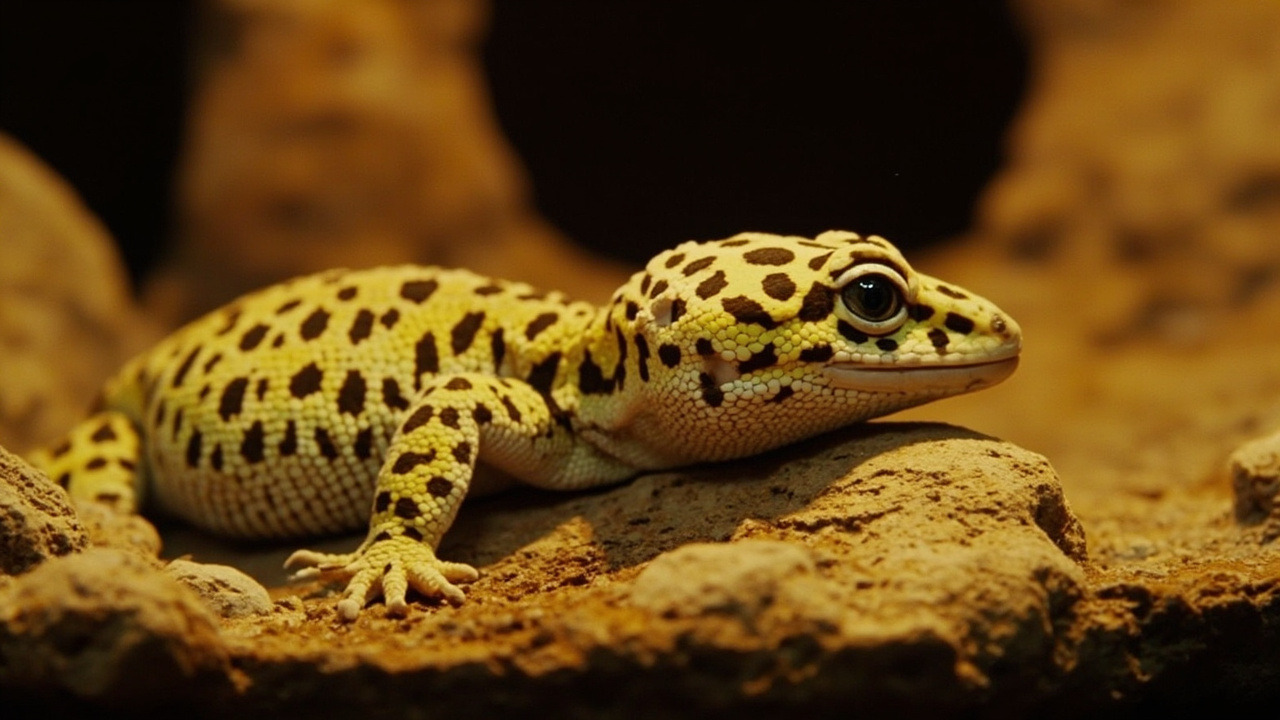
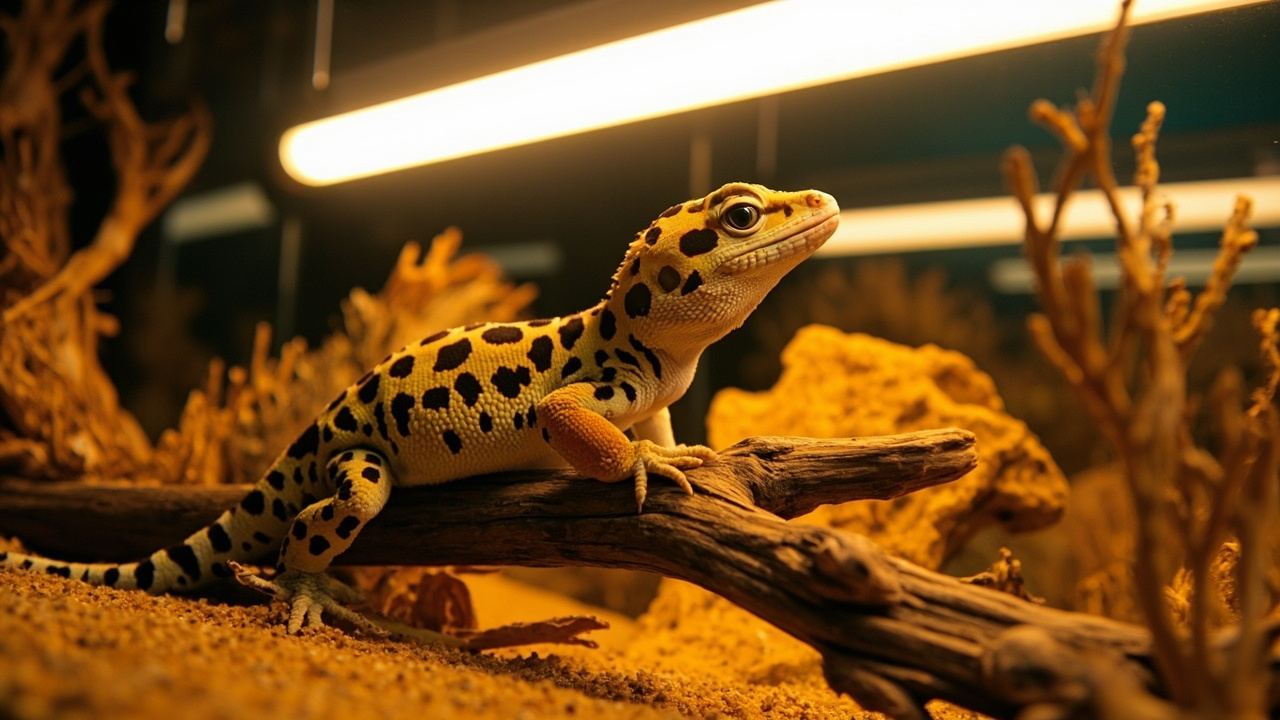
Leopard geckos absorb that heat by lying flat on it, a behavior called thigmothermy. In the wild, they rest on sun-warmed rocks and heated desert soil during dawn and dusk. That’s why your setup uses an under-tank heat mat, not an overhead basking bulb like you’d see for a bearded dragon. The floor temperature at your gecko’s belly level is what matters — not the air temperature six inches above the substrate.
A wrong temperature setup is one of the most common causes of leopard gecko health problems. If the warm side drops below 85°F, food rots in the gut instead of digesting, leading to impaction. If it climbs above 95°F, your gecko stops eating, becomes lethargic, and can suffer thermal burns from an unregulated mat.
The warm hide is the most critical zone. Your gecko’s digestive system shuts down below 85°F, and partially digested food sits in the stomach and rots. This causes impaction — one of the leading killers of captive leopard geckos. Leopard gecko temperature starts with that one floor reading; every other number here is measured against it.
The warm hide floor should be a solid, flat surface directly over the heat mat. Bare glass, ceramic tile, or slate transfers heat best. Avoid putting loose substrate directly over the heat mat — not only does it insulate and block heat transfer, but geckos can accidentally ingest it while hunting crickets.
Surface Temperature vs Air Temperature
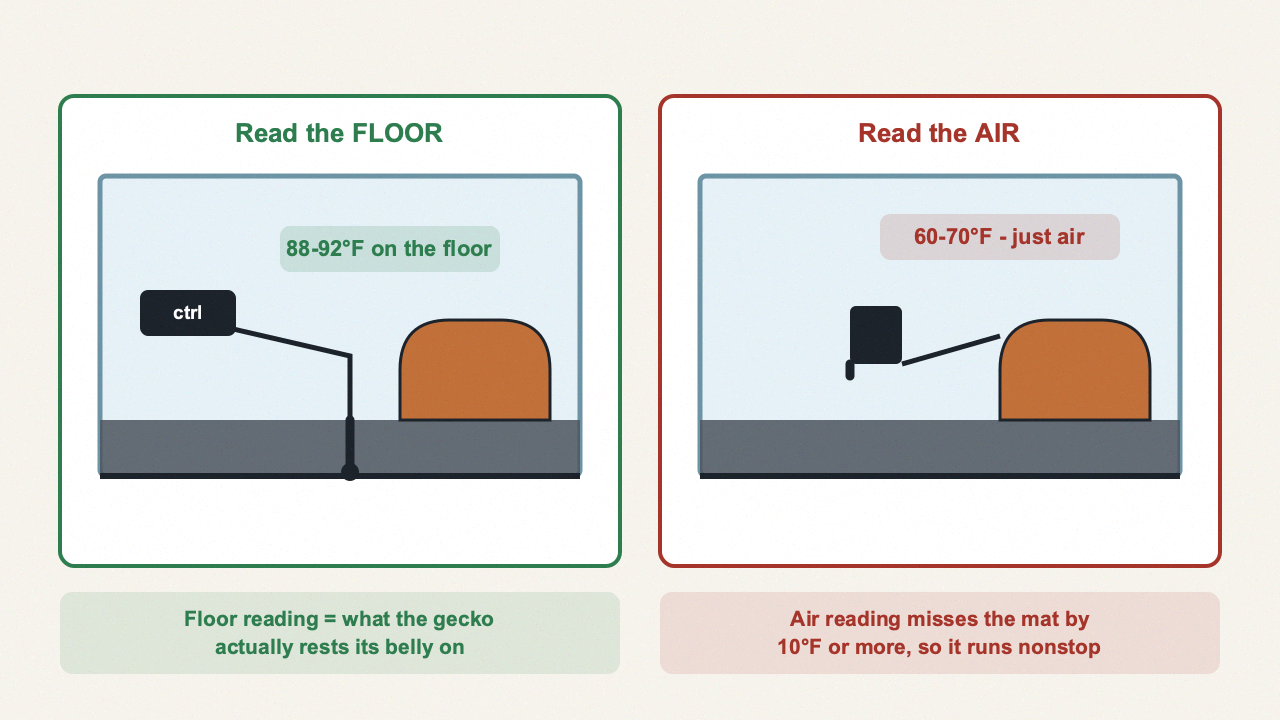
Most leopard gecko temperature arguments online come down to one mistake: reading the air. Air and surface temperature inside the same tank can differ by 10°F or more at the same moment. A number taken near the top of the enclosure says very little about what your gecko’s belly is lying on.
Three ways to get a reading you can trust, cheapest first:
- Read the thermostat probe. It’s already taped to the warm hide floor, and it’s the temperature the mat is actually holding. Probes drift over months, so treat it as a live readout rather than a permanent calibration.
- Aim an infrared gun at the floor. Hold it about 6 inches from the same patch of surface your gecko rests on. Closer is better if your gun has a narrow spot ratio. A wide cone at arm’s length averages the warm hide and the cool floor into a meaningless middle number.
- Run a second probe on the cool side. A two-probe thermometer with one probe flat on each floor is the accurate setup, because both readings come off the same kind of surface your gecko actually touches.
Get that habit right and every leopard gecko temperature target below becomes verifiable, not debatable.
Do the arithmetic between °F and °C explicitly instead of in your head. Our temperature converter handles the zone ranges on this page. The reason it matters is that a lot of controller dials ship configured for °C while the specs printed on North American mats are in °F. Read the wrong unit and your set point lands tens of degrees off, which is not a rounding error.
Heat Mat Setup: Step by Step
1. Choose the right mat size
Size the mat to the warm hide footprint, not to the tank. The mat goes under one hide on the warm side; the rest of the floor stays unheated.
| What you’re sizing | Rule of thumb |
|---|---|
| The mat itself | A little wider than the hide’s floor, so the whole resting surface reaches temperature |
| The warm zone | No more than about a third of the enclosure floor — the cool half is what stops your gecko overheating |
| Tanks bigger than the mat’s rated range | Move up a size in the same product line; never stretch one mat across a bigger tank |
For a standard 20-gallon leopard gecko enclosure — sizing is covered in the tank size guide — the Exo Terra Glass Terrarium is a common choice. The Zoo Med ReptiTherm 10-20 Gal ($25) is the cheapest mat that does the job — a 6” × 8” adhesive-backed pad rated for 10-to-20-gallon tanks.
That size catches a lot of buyers out. A 6” × 8” mat is 48 square inches: roughly a quarter of a 10-gallon floor, and under a tenth of a 20-gallon long. It is not enough to heat a whole 20-gallon long, and it shouldn’t be — the point is a small hot spot under one hide, not a warm tank. That hot spot is the whole leopard gecko temperature plan: one warm zone the animal can leave.
2. Attach the mat
Peel off the backing and stick the mat to the outside bottom of the glass enclosure, centered under the warm hide location. Position matters as much as size for leopard gecko temperature — a mat offset toward the glass puts the probe and your gecko on different patches of floor. The mat goes on the exterior — never inside the tank where a gecko can reach it. If your enclosure sits on a surface that insulates (wood, foam pad), raise the tank slightly with small feet or spacers so the mat doesn’t overheat from trapped heat.
3. Connect the thermostat — this is non-negotiable
The Inkbird WiFi Heat Mat Thermostat ($37.99) plugs into the heat mat and controls it like a smart switch: on when the floor drops below your set point, off when it hits the target. Without a thermostat, an unregulated mat can reach 120°F+ on the glass surface — hot enough to cause severe burns.
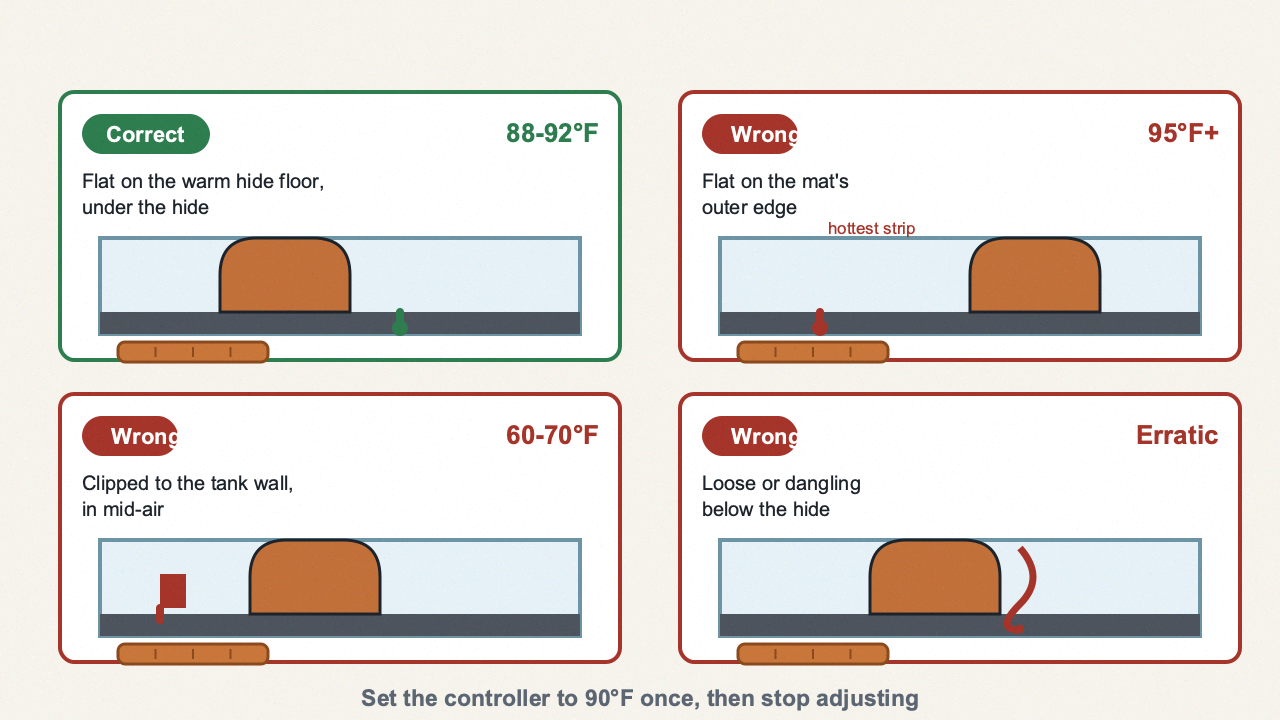
Thermostat probe placement is the single most common setup mistake. The probe must sit flat on the warm hide floor, directly where the gecko’s belly rests. Air temperature and surface temperature can differ by 10°F or more — a probe clipped to the tank wall in mid-air tells you nothing useful.
Tape the probe tip to the glass or tile surface inside the warm hide using a small piece of electrical tape. Set the thermostat to 90°F (the middle of the 88-92°F range). The thermostat will cycle the mat on and off to maintain that floor temperature.
4. Verify with a thermometer
Use the Thermometer World 2-Probe Digital Reptile Thermometer ($11.95). It is a single unit with two external remote probes that tracks current, min, and max temperatures. Leave one probe on the warm hide floor and one on the cool side. If the warm hide reads 88-92°F and the cool side reads 70-75°F, your gradient is correct.
Wait at least two hours after setup before taking readings. Glass and substrate take time to reach thermal equilibrium.
Never use a heat mat without a thermostat. Unregulated mats can reach 120°F+ on the glass surface, causing severe burns. This is the most dangerous husbandry mistake for leopard geckos — and it’s entirely preventable with a $37 thermostat.
Thermostat Set Points
Set the controller once and leave it. Daily temperature fiddling is how a mat ends up running near-continuous. Leopard gecko temperature trouble usually starts the week someone starts nudging the dial.
| Where the probe sits | What you’ll usually read | What it means | Fix |
|---|---|---|---|
| Flat on the warm hide floor, under the hide | 88–92°F | Correct — the mat is holding belly heat | Set the thermostat to 90°F and stop adjusting |
| Flat on the mat’s outer edge | 95°F+ | Probe is on the hottest strip, not the resting spot | Move it to the middle of the hide floor |
| Clipped to the tank wall, in mid-air | 60–70°F | It’s measuring air, so the mat runs nonstop | Tape the tip flat against the surface |
| Loose or dangling below the hide | Readings jump around | Mat cycles on and off at random | Re-tape it and re-check each week |
Three things I’d skip.
I’d skip any heat mat sold without a controller. Unregulated mats have been measured far past 120°F on the glass, and burns are the one setup failure that’s both immediate and completely preventable with a thermostat.
I’d skip heat rocks and any unmeasured “natural” warm surface sold as decor. They can’t be regulated, they can’t be probed reliably, and a gecko lying flat against an unknown-temperature stone has no way to move away from it.
I’d skip loose substrate stacked over the heat mat, whatever the substrate guide says about the rest of the floor. It insulates, it hides the real surface reading that every leopard gecko temperature check below depends on, and it gets swallowed while chasing crickets.
Sizing and controller features are broken out separately in how to choose a heat mat and how to choose a reptile thermostat.
Warm-side floor temperature is the one variable that decides whether a meal actually gets processed. Fix that before you tune anything else, because the feeding schedule assumes an 88–92°F floor. If your gecko still won’t eat at a verified 88–92°F, temperature isn’t the remaining problem, and that’s a vet conversation rather than a thermostat one.
Nighttime Temperatures
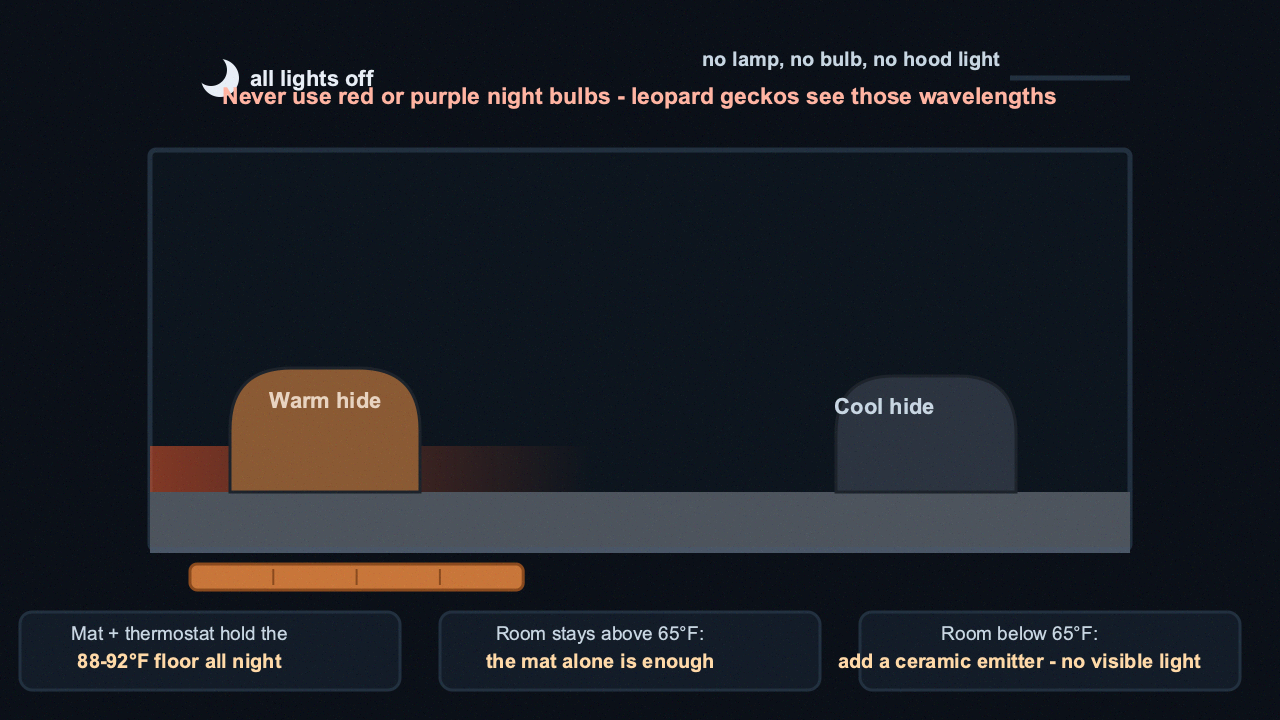
At night, all lights off. If your room stays above 65°F, the heat mat thermostat can hold its daytime 90°F setting. Your gecko will simply move to the cool hide if it prefers a lower temperature. Leopard geckos don’t need darkness-specific heat sources in most homes. Cooling the room a few degrees is the cheapest night drop and keeps the setup to one controller.
If your room regularly drops below 65°F at night (common in winter or air-conditioned spaces), you need a secondary heat source that emits no visible light. A ceramic heat emitter like the LUCKY HERP 150W Ceramic Heat Emitter ($15.99, sold as a two-pack) screwed into a dome fixture above the enclosure works well. Control it with the second outlet on the Inkbird thermostat (it ships with two probes and two outlets) or a separate on/off thermostat set to 72°F.
Do not use red or purple “night bulbs.” Leopard geckos can see these wavelengths — the light disrupts their crepuscular cycle and stresses them out.
Temperature by Life Stage and Season
The 88–92°F warm hide floor doesn’t change with age. A hatchling has less thermal mass and a smaller body, which makes the surface under it matter more — not less — but the target range is the same one at every life stage.
| Situation | Warm hide floor | Cool side | Night | What actually changes |
|---|---|---|---|---|
| Hatchling, under ~6 months | 88–92°F | 70–75°F | 65–70°F | Nothing but body size — keep the same floor range |
| Juvenile to adult | 88–92°F | 70–75°F | 65–70°F | Thermostat set once at 90°F |
| Summer, warm room | 88–92°F | Keep it under 75°F | Follows the room | Move the tank off the vent or window; trim the set point a few degrees midday if the cool side climbs |
| Winter, cold room | 88–92°F | 70–75°F | Heat needed below 65°F | Keep the mat at 90°F and add a no-light source on a second channel |
The table repeats the same ranges on purpose — age and season change what you watch, not the leopard gecko temperature you aim for.
Summer setups usually fail on the cool side rather than the warm one. If the room sits above 75°F on a hot afternoon, the cool end of the tank climbs with it and your gecko loses the option to come down. Move the enclosure away from a vent or a low sunbeam, and if that isn’t enough, trim the thermostat down a few degrees in the middle of the day. That doesn’t move the targets; it decides which end of the leopard gecko temperature gradient you’re defending.
Winter is the mirror image. The mat holds 90°F all night, but if the room falls below 65°F the cool side has nowhere to go and the whole gradient narrows. That’s the case where a no-light ceramic emitter is worth adding. A two-channel controller like the Inkbird runs it off the mat’s channel, and the lighting and heat setup guide covers the fixture and photoperiod side. Bright bulbs aren’t a substitute, since UVB and heat are separate systems and neither one can compensate for the other.
One optional tweak: a night drop. You don’t need one, and this species does fine held at the daytime setting all night. If you do run it, keep the warm hide floor at 85°F or above — never let it sit in the low 80s overnight, because that’s the range where digestion stalls.
Troubleshooting Temperature Problems
| Symptom | Likely Cause | Fix |
|---|---|---|
| Gecko stays in cool hide, avoids warm side | Warm side surface above 95°F | Check thermostat probe placement; the probe may be in a hot spot. Reduce mat size or thermostat set point. |
| Gecko never leaves warm hide | Cool side below 70°F | Check room temperature. Move the enclosure away from AC vents. If room is cold, add ambient heating or a low-wattage ceramic emitter. |
| Refusing food for 2+ days | Warm hide below 85°F | Verify thermostat probe is on the floor surface, not in the air. Check that the mat is actually turning on (feel the glass under the tank). |
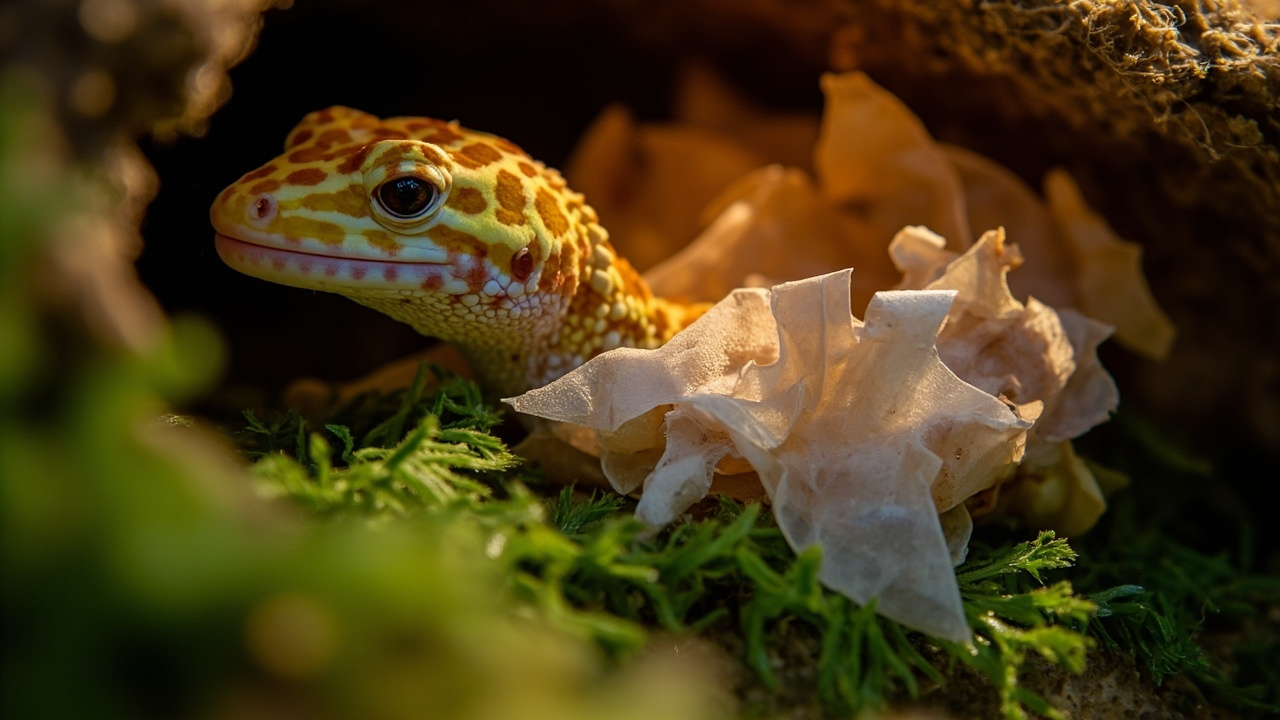
| Stuck shed around toes or tail | Low humidity in the moist hide | This is a humidity problem, not temperature. Add a moist hide on the warm side with damp paper towel (see shedding guide). |
| Gecko pressed flat against glass over mat | Mat too hot, no thermostat, or probe detached | Immediately unplug the mat. Install a thermostat. Check that the probe hasn’t fallen off the floor surface. |
Cool-side faults are the mirror image: a no-light ceramic emitter on its own thermostat lifts the room without adding light, which is the other half of leopard gecko temperature control.
The most common cause of all these problems is a displaced thermostat probe. If the probe falls off the floor and dangles in the air, the thermostat reads a lower temperature and keeps the mat running constantly, overheating the surface. Check probe placement weekly during routine maintenance.
Work down the list in one pass rather than changing two things at once. Set the thermostat, then let the floor settle for two hours. Take a warm-side and a cool-side reading and write both down. A number you can compare next week beats a number you re-guess daily. Once you’re tuned, leave the setup alone; leopard gecko temperature problems usually trace back to a late adjustment nobody wrote down, not to a missing piece of equipment. If readings are correct on both ends and the animal still isn’t eating, moving, or looking normal, stop adjusting and talk to a reptile vet.
Sources
- Merck Veterinary Manual: Overview of Reptiles — type: authority; access-year: 2026
- ReptiFiles: Leopard Gecko Care Sheet — type: brand_doc; access-year: 2026