For informational purposes only. Not a substitute for veterinary advice. Consult your veterinarian for specific medical decisions.
Follow product labels; observe the animal closely, and seek qualified veterinary help when signs persist or worsen.
A dirty reptile tank is a breeding ground for harmful bacteria like Salmonella, Pseudomonas, and Staphylococcus that can sicken both your reptile and your family. Reptiles naturally carry these bacteria, and without regular cleaning, waste accumulates into a toxic environment that causes respiratory infections, scale rot, and stress. Most experts recommend spot-cleaning daily, a light weekly clean, and full deep disinfection every 3-4 weeks. This guide walks you through a vet-approved step-by-step process for safely cleaning any enclosure using reptile-safe products. Whether you keep a bearded dragon, leopard gecko, ball python, or crested gecko, the principles are identical.
What You’ll Need to Clean a Reptile Tank
Before you start, gather your supplies. Reptile-safe cleaners are important because bleach leaves toxic residues. You will need a reptile-safe disinfectant (such as Zoo Med Wipe Out 1 or F10 SCXD), an enzyme-based waste remover like Fluker’s Eco Clean, a scrub brush such as the Novique Sponge Brush, an algae scraper like the Aqueon Algae Scraper, white distilled vinegar, paper towels, a holding container with air holes, and warm (not hot) water. Avoid bleach, ammonia-based cleaners, phenol-based disinfectants, and scented soaps.
How to Clean a Reptile Tank Step-by-Step
Step 1: Remove Your Reptile and Place It in a Secure Holding Container
Before touching the enclosure, move your reptile to a safe temporary habitat. A medium plastic storage bin with a secure lid and a few air holes works well for short-term housing during cleaning. Line the bottom with paper towels, and add a small water dish plus a hide such as an overturned plastic plant pot to reduce stress. Never leave your reptile unattended in the holding container, and keep the bin away from direct sunlight, drafts, and other pets. The holding area should sit in a quiet, temperature-stable room — ideally 70-85°F depending on species. Avoid housing multiple reptiles together during cleaning, because even normally compatible species can act out under stress. Snakes do best in a tied pillowcase or a ventilated deli cup. For lizards and geckos, a simple plastic bin with screen mesh taped over the air holes is enough. Turtles and tortoises can sit in a shallow cardboard box lined with damp paper towels. The full cleaning process typically takes 20-45 minutes, so your reptile’s temporary home does not need full heat or UVB — just room-temperature stability. Before you handle the enclosure, wash your hands and put on disposable gloves if you have them, since reptiles commonly carry Salmonella and other bacteria that can transfer to humans during cleaning.
Step 2: Take Out All Substrate, Decor, and Accessories
Empty the enclosure completely. Remove every piece of substrate (bedding), water bowls, food dishes, hides, climbing branches, fake plants, and any other decor. Shake substrate into a trash bag — never reuse old substrate, even if it looks clean. Bacteria and parasites breed in soiled bedding, and any waste trapped in substrate undermines the point of cleaning. Rocks, branches, and ceramic hides go in a separate basin to be washed separately in hot soapy water and disinfected. Fake plants should be rinsed under running water and disinfected. Water and food bowls can go in hot soapy water followed by a dishwasher sanitize cycle, or by hand with a reptile-safe disinfectant. Live plants in a bioactive setup need to be removed carefully and set aside — they cannot tolerate reptile-safe disinfectants at full strength and must be cleaned by hand with lukewarm water only. This step is also a good opportunity to inspect decor for cracks, sharp edges, or wear that could injure your reptile. Worn or cracked hides and broken climbing branches should be replaced rather than disinfected and reused, since porous surfaces hold bacteria even after thorough cleaning, and a small crack can cause a lizard to wedge and injure itself.
Step 3: Rinse and Scrub the Tank With Warm Water
Dump loose debris from the enclosure, then rinse the tank with warm — not hot — water to wash away surface dirt and waste. Hot water can crack glass terrariums, especially if the glass is cold before cleaning, so aim for water near 100°F (38°C). Using a soft-bristle brush or non-abrasive sponge like the Novique Sponge Brush, scrub the interior surfaces — glass walls, floor, and any built-in backgrounds. For hard water spots, mineral buildup, or stuck-on algae on glass, use an algae scraper like the Aqueon Algae Scraper. Never use steel wool, abrasive scrub pads, or razor blades — these scratch glass permanently and create crevices where bacteria hide. For stubborn stuck-on debris, let warm water sit on the spot for 2-3 minutes before scrubbing to soften dried waste without harsh force. Pay special attention to corners and seams where waste collects. Many glass terrariums have silicone seals at the edges — these can harbor mold and bacteria over time. Gently scrub seals with a soft brush but do not pull or damage them. If seals are peeling or cracked, plan to replace the tank, because broken seals compromise humidity control. For ball python enclosures where humidity stays high, seal integrity matters even more.
Step 4: Disinfect With a Reptile-Safe Solution
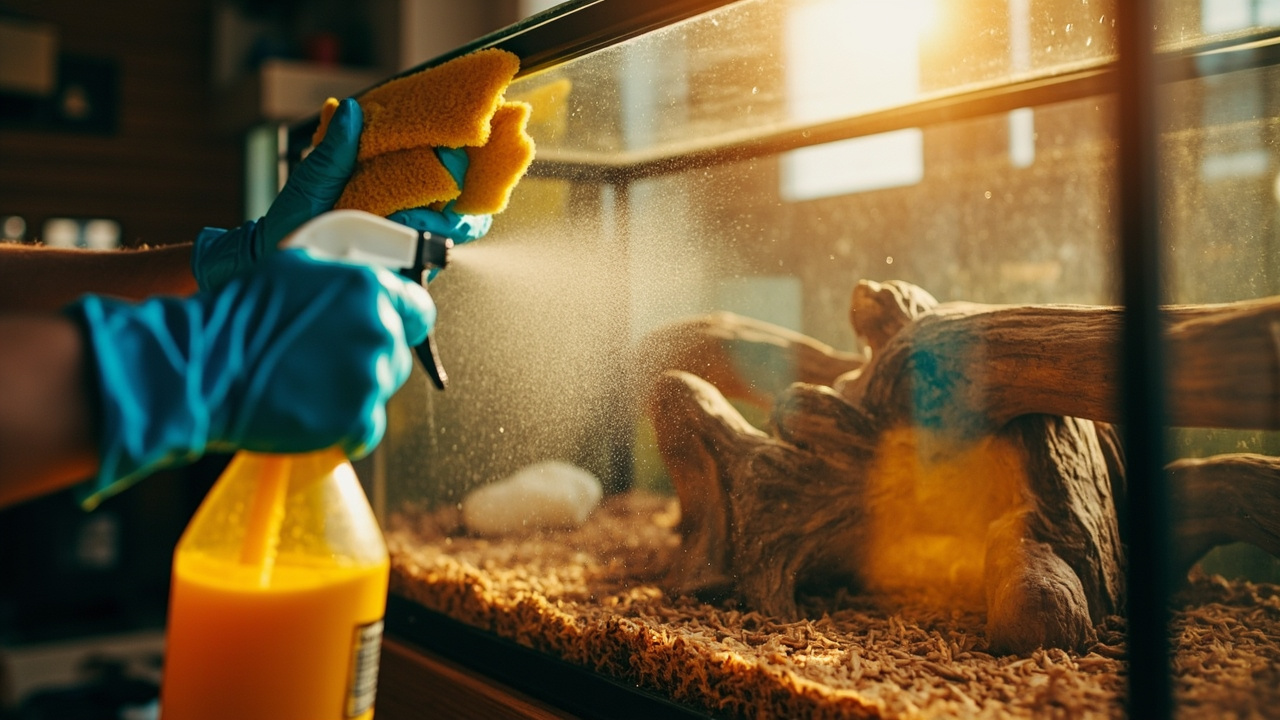
After scrubbing, disinfect the tank and all decor. Three safe options work for most keepers. Option A — commercial reptile disinfectant (recommended): spray or wipe Zoo Med Wipe Out 1 on all interior surfaces and let it sit for 5 minutes to kill bacteria, viruses, and fungi. Wipe Out 1 eliminates Salmonella and other pathogens without leaving toxic residue on glass or decor after the contact time has elapsed. Option B — veterinary-grade (best for sick reptiles): use F10 SC Concentrated Veterinary Disinfectant at the manufacturer’s dilution (typically 1:250 for general use). F10 is used by zoos and reptile vets because it kills a broad spectrum of pathogens and stays safe when diluted and used as directed. Option C — DIY vinegar (budget-friendly): mix equal parts white distilled vinegar and water in a spray bottle, spray, let sit for 5-10 minutes, and wipe. Vinegar kills many bacteria and dissolves mineral deposits but is less effective against tough pathogens like parvovirus or coccidia. Never mix vinegar with bleach — this creates toxic fumes that can damage your lungs. Apply to all interior surfaces, walls, ceiling, decor, water bowls, and hides. The enclosure type matters too — see our terrarium guide for tanks that are easier to clean over time.
Step 5: Rinse Thoroughly to Remove All Residue
This is the most important step and the one most often skipped. Even reptile-safe disinfectants can irritate your reptile’s skin, eyes, and respiratory tract if residue remains on a surface after cleaning. Rinse every surface — tank walls, floor, decor, hides, water bowls — with clean warm water at least twice. To verify that you have rinsed enough, wipe a clean paper towel across a rinsed surface and then smell it. If you can detect any vinegar or disinfectant odor, rinse again. The paper towel should come away completely odor-free with no chemical smell detectable. For porous items like wood branches or cork bark, soak them in clean water for 15-30 minutes to leach out any remaining disinfectant; replace the soak water once or twice during the soak. Pay special attention to silicone seal corners and any decorative crevices where residue tends to pool and escape a quick rinse. Do not towel-dry the enclosure — let it air dry, or pat dry with paper towels. Routine weekly cleans between deep cleans can use an enzyme-based product like Fluker’s Eco Clean for a faster rinse-free spot treatment. If your tap water is heavily chlorinated, use dechlorinated water for the final rinse.
Step 6: Dry Completely and Reassemble the Enclosure
Let every washed surface air dry fully before reassembling. Moisture trapped under fresh substrate promotes mold growth and bacterial blooms, especially in humid setups like crested gecko enclosures and bearded dragon enclosures with water dishes. Air drying is preferable to towel drying because towels can leave lint that reptiles may lick or ingest, and they can redeposit detergent residue onto cleaned surfaces. Allow at least 30 minutes of air time for the interior, longer if humidity is high. Once everything is dry, add fresh substrate chosen for your species — see our substrate guide for options that resist bacterial growth. Replace décor, hides, climbing branches, and water bowls in roughly the same layout your reptile knew before cleaning; familiar placement reduces post-cleaning stress. Refill the water dish with fresh, dechlorinated water, and verify your lighting and heating setup is still functioning before returning your reptile. Place your reptile back in the enclosure, offer a small drink, and let it settle for 30-60 minutes before handling. Watch for signs of stress — heavy breathing, refusal to move, or excessive hiding — over the next 24 hours. If anything seems off, check species-specific tank-size requirements and verify your temperature gradient with a digital probe thermometer.
How Often Should You Clean a Reptile Tank?
Frequency depends on your reptile’s species, size, and feeding habits. A working schedule covers most keepers: daily spot cleaning for feces and uneaten food; weekly light cleaning to wash bowls and wipe glass; monthly deep clean for full disinfection; and quarterly inspection of seals and decor wear. Large reptiles produce more waste. Messy eaters like bearded dragons need daily water refresh. Humid enclosures for crested geckos develop mold faster. Heavy shedders — see our shedding guide — may need twice-weekly cleans. If you notice persistent odor, visible mold, or unusual behavior, increase frequency and consult a vet.
Common Mistakes to Avoid When Cleaning a Reptile Tank
Even experienced keepers slip on these. Mistake 1: Using bleach or Lysol. Even rinsed, these leave residue. Mistake 2: Not rinsing thoroughly. Reptile-safe does not mean no rinse required. Mistake 3: Cleaning too aggressively. Daily full cleanings stress reptiles. Mistake 4: Reusing substrate. Even clean-looking bedding harbors bacteria. Mistake 5: Sharing tools between enclosures. This spreads pathogens. Mistake 6: Forgetting décor and hides. Disinfect everything. Mistake 7: Skipping the dry step. Moisture under fresh substrate promotes mold. Mistake 8: Cleaning in the same room as the reptile. Fumes can irritate — move to a bathroom or garage.
Conclusion
A clean enclosure is the foundation of reptile health. By spot-cleaning daily, doing a light weekly clean, and performing a full deep clean every 3-4 weeks with reptile-safe products, you prevent bacterial buildup that causes respiratory infections and scale rot. Invest in a scrub brush, algae scraper, and vet-approved disinfectant — your reptile will live in a habitat that stays fresh and safe for years to come.
Sources
- Merck Veterinary Manual: Overview of Reptiles — type: authority; access-year: 2026