For informational purposes only. Not a substitute for veterinary advice. Consult your veterinarian for specific medical decisions.
Follow product labels; observe the animal closely, and seek qualified veterinary help when signs persist or worsen.
A bearded dragon heat lamp is the single piece of equipment that decides whether your dragon eats, digests, and stays healthy. These diurnal desert lizards absorb heat from above, and the wrong wattage, wrong distance, or wrong bulb type creates a chain reaction: low basking temperature suppresses appetite, which suppresses growth, which suppresses immune function. Get the heat lamp setup right and almost every other husbandry variable falls into place.
This guide walks through the four heat lamp types (halogen basking, incandescent basking, ceramic heat emitter, mercury vapor), wattage selection by tank size, the right distance, thermostat wiring, and the two pieces of safety equipment that make the rest of the setup reliable. Every wattage and temperature number below is grounded in published care sheets and reptile-veterinary consensus. To budget the full heat-lamp + thermostat + fixture package before you buy, see our setup cost calculator.
For a complete overview of bearded dragon temperature ranges at every life stage, see our bearded dragon temperature guide. For substrate, UVB, and tank size context that affects your heat lamp choice, see our bearded dragon care collection.
Why Bearded Dragons Need a Heat Lamp
Bearded dragons are ectothermic — they cannot generate body heat internally. In the wild Australian arid zone, they bask under direct sun for 6-10 hours a day and shuttle between sun and shade to maintain a core body temperature of 95-105°F. A heat lamp in captivity replicates that sun.
Three biological processes depend on basking heat:
- Digestion. A bearded dragon’s digestive enzymes work optimally at 95-105°F core body temperature. A meal eaten at 75°F sits in the gut undigested and ferments, leading to impaction and bacterial overgrowth.
- Immune function. White blood cell activity in reptiles scales with core temperature. Dragons kept below 90°F chronically are 3-4× more likely to develop respiratory infections.
- Behavior and brumation. Basking drives the daily activity cycle. Without a clear hot-zone signal, dragons stay hidden, refuse food, and enter brumation at the wrong time of year.
The heat lamp is not a comfort item — it is the primary metabolic driver. Treat the bulb selection with the same seriousness you would treat filtration on an aquarium.
For a complete breakdown of how the basking temperature interacts with digestion, see our bearded dragon diet guide. Shedding also depends on proper hydration combined with correct temperatures — see our shedding guide for the full cycle. To understand the seasonal brumation pattern that affects winter heat lamp use, see bearded dragon brumation symptoms.
Four Heat Lamp Types Compared
Bearded dragon keepers typically use one or two of four heat lamp categories. Each produces heat differently, and the right choice depends on enclosure size, ambient room temperature, and whether you need daytime or nighttime heat.
Halogen Basking Bulbs (Daytime)
Halogen bulbs are the modern recommendation from most reptile veterinarians. A 100W halogen flood or spotlight at 8-12 inches produces a tight 100-110°F basking spot with cleaner infrared wavelengths than an incandescent. Halogen bulbs also last 2-3× longer — typically 2,000-3,000 hours versus 800-1,000 hours for a standard incandescent. For a 40-gallon breeder, a 75W or 100W halogen is the standard daytime pick; for a 4×2×2 PVC enclosure, step up to 100-150W.
Incandescent Basking Spotlights (Daytime, Budget)
The classic reptile basking bulb is a reflector-coated incandescent that focuses output into a 30-45° beam. These run cheaper per bulb but burn out faster and waste more energy as visible light rather than infrared heat. For a single-bulb replacement or a hatchling setup, an incandescent still works — just expect to swap bulbs every 4-6 months. A 100W reflector bulb at 8-10 inches typically delivers 100-105°F surface on a 40-gallon, but IR measurement is the only way to confirm.
Ceramic Heat Emitters (Nighttime Only)
A ceramic heat emitter (CHE) is a porous ceramic cylinder that glows invisible infrared heat at high temperatures without producing any visible light. This is the only safe nighttime heat source for bearded dragons — a CHE on a thermostat set to 70°F will cycle on only when room temperature drops, keeping the dragon warm without disrupting the 12-hour dark cycle. The LUCKY HERP 150W CHE 2-Pack is a standard 2-pack pick in the mid-range CHE market. Wattage calibration: 100W for 40-gallon tanks, 150W for 75-gallon and larger.
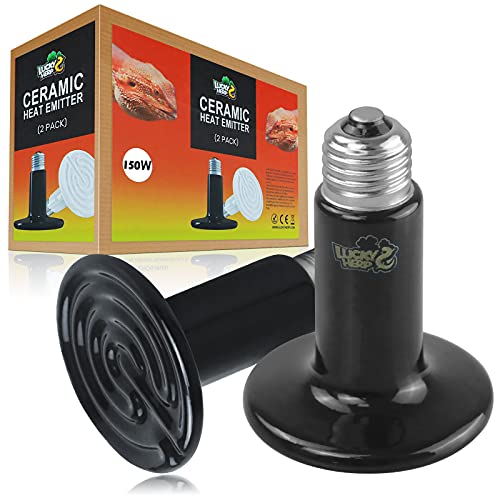
For a side-by-side comparison of ceramic heat emitter brands and how they pair with on/off vs dimming thermostats, see our reptile heating guide.
Mercury Vapor Bulbs (Daytime, All-in-One)
A mercury vapor bulb (MVB) combines UVB and heat in one self-ballasted bulb. A 100W MVB at 12-18 inches produces both basking heat (110-115°F surface) and full-spectrum UVB output equivalent to a 10.0 T5-HO tube. MVB brands vary in quality — reptile veterinarians generally recommend sticking with established brands that publish independent UVB-output test data, because cheaper MVBs tend to fail UVB output within 6 months while still producing visible light and heat. Use MVBs only in enclosures 4 feet or longer because the heat footprint is wider and the UVB output is intense.
For a side-by-side breakdown of UVB options including T5-HO tubes and compact fluorescents, see our UVB bulb guide. To compare thermostat options across brands, see our reptile thermostat guide. For UVB and heat source pairing by enclosure type, see bearded dragon UVB setup.
Wattage by Tank Size
The most common bearded dragon heat lamp mistake is buying a bulb by wattage alone. Wattage is a proxy for heat output, but the actual basking temperature depends on three variables: tank size, bulb-to-basking-spot distance, and ambient room temperature. Use the chart below as a starting point, then verify with a probe thermometer.
| Enclosure size | Halogen basking wattage | CHE wattage (night) | Typical basking distance |
|---|---|---|---|
| 40-gallon breeder (36” × 18” × 18”) | 75-100W | 100W | 8-10 inches |
| 75-gallon (48” × 18” × 21”) | 100-150W | 100-150W | 10-12 inches |
| 4×2×2 PVC (48” × 24” × 24”) | 100-150W | 150W | 10-14 inches |
| 5×2×2 PVC (60” × 24” × 24”) | 150W | 150-200W | 12-16 inches |
The starting wattage assumes a 70-75°F room. If your room runs cooler (60-65°F in winter), go up one wattage tier. If your room runs warmer (78-82°F in summer), go down. The rule of thumb: a 100W halogen at 10 inches in a 70°F room produces a 100-105°F basking spot in a 40-gallon. Every 5°F shift in ambient room temperature moves the basking spot by approximately 3-5°F. For quick unit conversion between Fahrenheit and Celsius across the temperature ranges in this guide, see our temperature converter.
Measure the basking surface directly with a probe thermometer — not a stick-on dial and not an infrared “temp gun” pointed at the air. The surface temperature is what the dragon’s belly feels. A 100°F reading on an IR gun pointed at the basking rock equals roughly 90°F actual surface contact, which is too cool for proper digestion.
For complete tank size setup including dimensions and substrate depth, see our bearded dragon tank size guide. For enclosures that need minimum floor space for a UVB + heat combo, see our terrarium buying guide.
Distance, Dome, and Mounting
The heat lamp wattage tells you how much energy the bulb produces, but the distance from the bulb to the basking surface decides how much of that energy reaches the dragon. Get the distance wrong and even a correctly-sized bulb produces the wrong temperature.
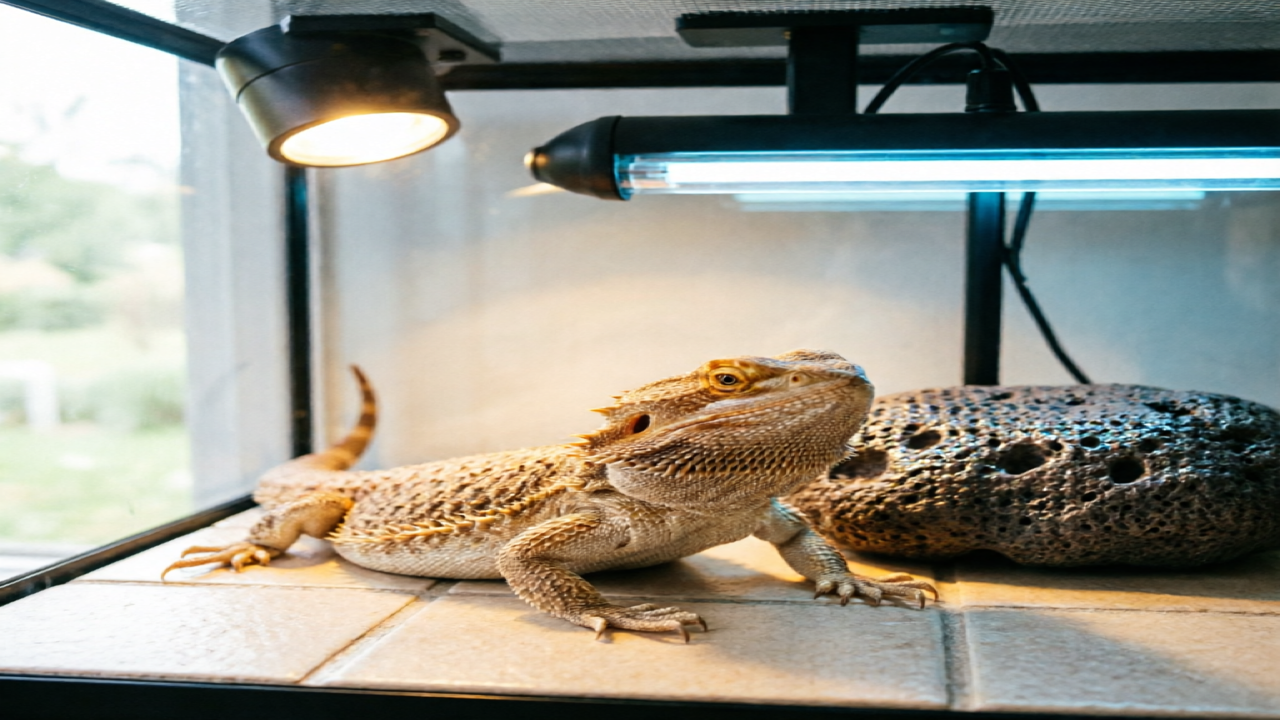
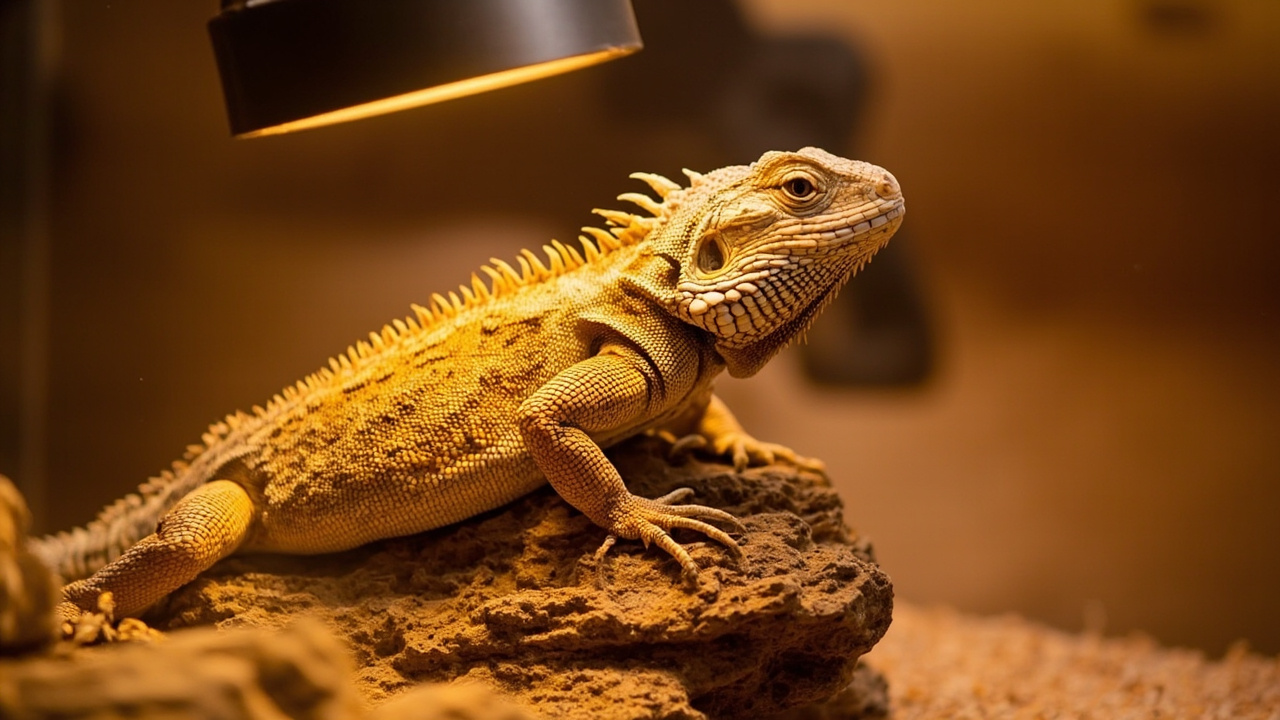
Basking bulb at 100W: mount the dome 8-12 inches above the basking surface for a 40-gallon. The dome reflector should point straight down. An angled reflector spreads heat across the whole warm side and dilutes the basking spot — not what you want.
Mercury vapor bulb at 100W: mount 12-18 inches above the basking surface. MVBs run hotter than halogen at the same wattage and need the extra distance to prevent burns.
Ceramic heat emitter at 100-150W: mount 6-10 inches above the nearest perch or hide. CHEs radiate heat in all directions, so position them over the warm side of the enclosure. Do not place a CHE inside the enclosure where the dragon can contact it — surface temperatures exceed 300°F and cause instant thermal burns.
Use a ceramic-socket dome fixture rated for at least the wattage you are running — a fixture rated to 150W handles any standard 100W basking bulb with margin. For dual-bulb setups (basking + UVB in one fixture), look for a fixture rated to 160W per socket with separate switches. Heavy-duty clamp lamps with an inline on/off switch are the simplest single-bulb option.
The clamp must attach to a stable surface. Do not balance a dome on a screen lid — the bulb radiates heat downward, the screen traps heat upward, and the dome can melt or shift. A hanging bracket or a sturdy clamp on the tank rim is the right mount. For fixture depth options across PVC and glass enclosures, see our terrarium size guide. When pairing the basking bulb with a T5-HO UVB tube, use our UVB distance calculator to verify the tube height matches the bulb-to-basking distance chart above.
Thermostat Wiring and Safety
Every heat lamp in a bearded dragon enclosure must be on a thermostat. No exceptions. A 100W halogen at the wrong distance or during a warm room-temperature spike can push basking surface temperature past 120°F within an hour, causing thermal burns across the dragon’s belly and limbs. A 40-gallon enclosure without a thermostat can climb from 95°F to 130°F in 30 minutes during a summer afternoon.
On/Off Thermostat (Standard Pick)
An on/off thermostat cycles the bulb fully on or fully off based on the probe temperature. The BN-LINK Reptile Thermostat at $18.99 handles up to 1000W, has a probe-and-outlet design, and a 40-108°F setpoint range — covers the full basking surface range for both bearded dragons and most other diurnal lizards. This is the minimum recommended safety equipment and the cheapest insurance against thermal burns.
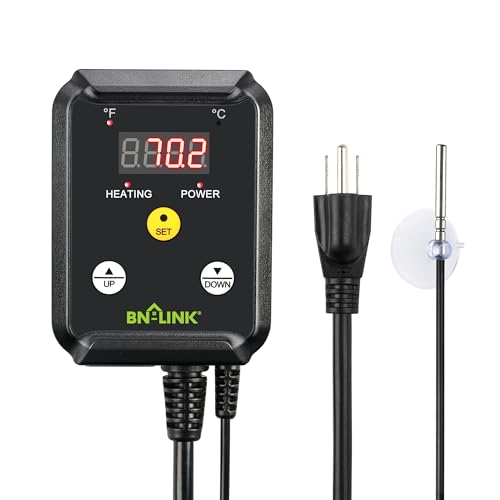
Wiring:
- Plug the thermostat into the wall outlet.
- Plug the heat lamp into the thermostat outlet.
- Place the probe on the basking surface directly under the bulb.
- Set the thermostat to 105°F for an adult dragon (110°F for hatchlings).
The thermostat will cycle the bulb on when the probe reads below setpoint and off when it reads above. The result is a stable ±2°F basking zone, which is exactly what the dragon needs.
Probe Placement
The probe must sit on the basking surface — not hanging in the air and not buried under substrate. Tape the probe wire to the basking rock or branch so the dragon cannot dislodge it. Replace the probe every 12-18 months because probe drift accumulates and your setpoint will read 5-10°F off actual surface temperature after two years.
For complete thermostat setup including dimming thermostats for mercury vapor bulbs, see our reptile thermostat guide. For heat mat alternatives and when to skip basking heat entirely, see our heat mat guide.
Day-Night Cycle and Seasonal Adjustments
A bearded dragon heat lamp must run on a 12-hour on, 12-hour off cycle. The on cycle should match the UVB timer exactly so heat and UVB peak together. Most keepers plug both fixtures into an outlet timer set to 7am-7pm or 8am-8pm, shifting seasonally by 1-2 hours to mimic natural photoperiod changes.
Nighttime Heat
If room temperature stays above 65°F at night, no nighttime heat is needed. Adult bearded dragons tolerate drops to 65°F without issue and actually benefit from a 5-10°F nighttime dip for proper brumation signaling.
If room temperature drops below 65°F, run a ceramic heat emitter on a separate thermostat set to 70°F. The CHE produces zero light, so it does not disrupt the dark cycle. Hatchlings under 6 months should not drop below 70°F — keep the CHE on a thermostat set to 72°F for babies.
Brumation
Adult bearded dragons often brumate for 6-10 weeks during the cooler months, even with stable indoor heating. Brumation looks like 2-3 months of hiding, refusing food, and sleeping 18+ hours a day. Do not increase heat to “wake them up.” Maintain the same temperatures, offer water, and let the brumation run its course. For more on the brumation cycle and when to worry, see our bearded dragon care collection and the temperature guide. If brumation is paired with wheezing or mucus, see our respiratory infection guide to rule out illness first.
Common Mistakes to Avoid
Even experienced keepers make heat lamp setup errors. The five most common mistakes:
- Using a heat mat as the primary heat source. Bearded dragons are diurnal baskers and absorb heat from above. A heat mat delivers belly heat appropriate for leopard geckos but provides the wrong thermal gradient for a bearded dragon. Use a heat mat only as a secondary heat source if room temperature drops below 60°F at night. For nocturnal or crepuscular species like ball pythons that also benefit from overhead halogen basking, the wattage chart above still applies — adjust the basking surface temperature downward to 88-92°F.
- Running the bulb 24 hours a day. Continuous heat suppresses brumation, disrupts the circadian rhythm, and increases stress. Always cycle 12 hours on, 12 hours off.
- Skipping the thermostat. A dial thermometer without a thermostat is not safety equipment — it is a measurement tool. Bulbs fail, room temperatures spike, and a dragon can be burned within an hour. An under-$20 thermostat is the single most important investment after the enclosure itself.
- Mounting the bulb too close. A 100W halogen at 4 inches produces 130-140°F surface temperature. The dragon cannot move away fast enough and sustains burns. Maintain 8-12 inches and verify with a probe thermometer.
- Mixing wattage without re-measuring. Swapping a 75W bulb for a 150W bulb without adjusting the distance or re-measuring the basking surface can shift the temperature by 25-30°F. Always re-verify after any bulb or fixture change.
For troubleshooting temperature problems including a dragon that refuses to bask, see our bearded dragon health collection and the metabolic bone disease guide — both of which often trace back to incorrect basking setup. To compare heat source options across species, see leopard gecko heat lamp setup and hognose snake heating. For enclosure cleaning that does not disrupt a heated setup, see our reptile tank cleaning guide.
Sources
- Association of Reptilian and Amphibian Veterinarians — Bearded Dragon Care Guidelines — type: authority; year: 2024
- Reptile Lighting and Heating — Zoo Med Laboratories Technical Reference — type: brand_doc; year: 2023
- Barten S.L. — Lighting and Heating for Reptiles (Journal of Exotic Pet Medicine) — type: study; year: 2022