For informational purposes only. Not a substitute for veterinary advice. Consult your veterinarian for specific medical decisions.
Follow product labels; observe the animal closely, and seek qualified veterinary help when signs persist or worsen.
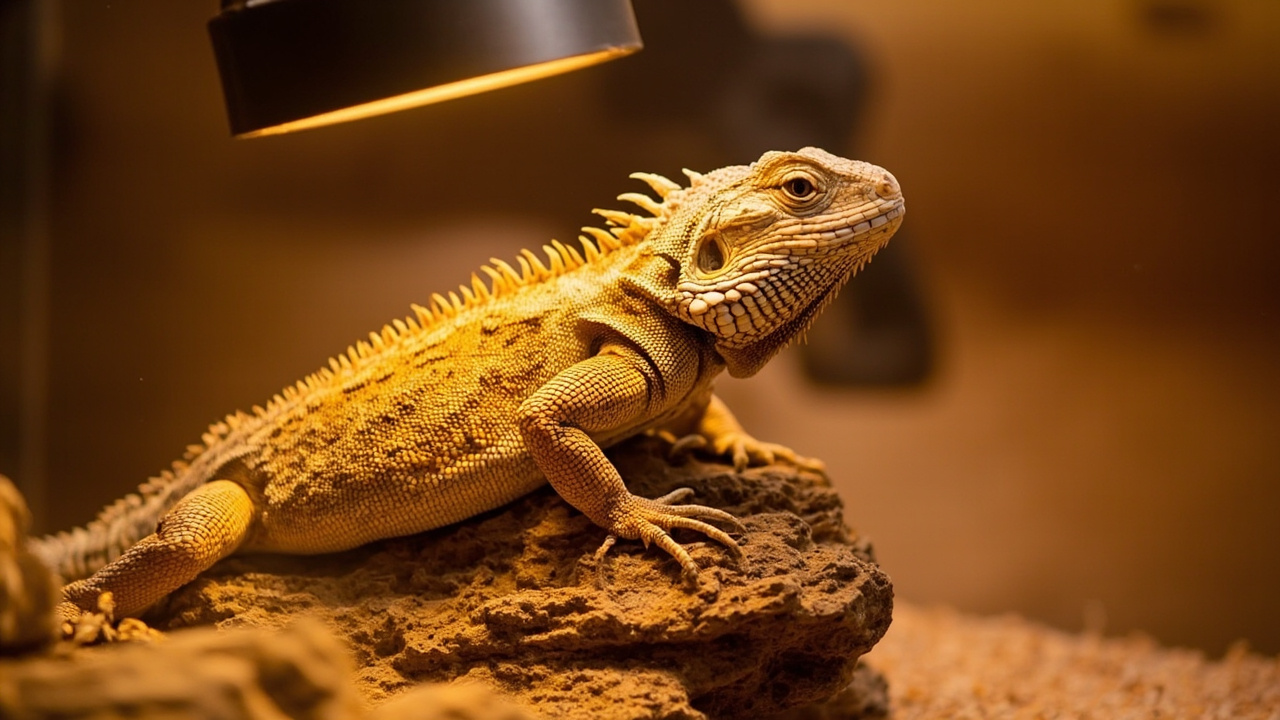
UVB lighting is not optional for bearded dragons. In the wild, these lizards spend hours basking under the intense Australian sun, and their bodies evolved to depend on that UV radiation for survival. Without proper UVB in captivity, bearded dragons develop metabolic bone disease — a painful, progressive condition that deforms bones and can be fatal. Getting the bulb, distance, and schedule right is one of the most important things you’ll do for your pet.
Why Bearded Dragons Need UVB
What Does UVB Do for Bearded Dragons?
UVB radiation triggers a process in the skin that synthesizes vitamin D3, which in turn allows the body to absorb calcium from food. Without adequate D3, calcium passes through the digestive system unabsorbed and the body starts pulling it from bone reserves. The result is metabolic bone disease (MBD) — softening bones, swollen joints, tremors, and eventually death if left untreated. A proper bearded dragon diet with calcium supplementation only works when UVB is present to activate absorption. The bearded dragon UVB chart below compares T5 HO 10.0 vs 12.0 bulb strength, distance from the basking spot, and photoperiod hours/day so you can pick the right setup in one pass.
Ferguson Zone and Target UVI
The Ferguson Zone system classifies reptiles by their natural sun exposure. Bearded dragons fall into Ferguson Zone 3-4, meaning they are midday sun baskers adapted to high UV environments. The target UVI (UV Index) in the basking area should be 4.0-6.0, measured with a Solarmeter 6.5 radiometer. UVI below 1.0 is ineffective for D3 synthesis, while UVI above 7.0 risks eye damage and skin burns.
A Solarmeter 6.5 radiometer is the most accurate way to verify your UVI levels. Without one, follow the manufacturer distance guidelines for your specific bulb and check your dragon for signs of deficiency or overexposure.
This UVI target is why bulb type and mounting distance matter so much — a bulb that’s too weak or placed too far away won’t reach the 4.0 minimum, while a bulb that’s too strong or too close pushes into the danger zone above 7.0.
Best UVB Bulbs for Bearded Dragons
T5 HO Tube Bulbs — The Only Recommended Format
T5 HO (High Output) linear fluorescent tubes are the standard for bearded dragon UVB. They produce consistent output across their length and cover a wide basking area. T8 tubes work but are weaker and need to be mounted closer. The real danger is compact fluorescent coil bulbs.
Avoid compact coil UVB bulbs entirely. They produce concentrated UV hotspots with uneven output that can cause photo-keratoconjunctivitis (eye damage) and stress-related health problems.
The two brands worth considering are Zoo Med ReptiSun (rated on the 10.0 scale) and Arcadia (rated on a percentage scale). For reference, leopard geckos need much lower UVB output since they are Ferguson Zone 1-2 shade dwellers — a completely different bulb category.
10.0 vs 12% vs 14% — Which UVB Percentage?
The percentage or index number on the bulb tells you how much UVB it emits. Here’s how the options break down for bearded dragons:
-
10.0 (ReptiSun) — the minimum for bearded dragons. Works well in standard 4’x2’x2 enclosures when mounted 10-12 inches from the basking surface. The Zoo Med ReptiSun 10.0 HO 34-inch ($34.84) is a bulb-only option recommended by ReptiFiles for 4x2x2 setups. The 22-inch 2-pack ($53.96) covers smaller enclosures and includes a spare for when the first bulb degrades.
-
12% (Arcadia Desert) — the sweet spot for standard enclosures. Provides reliable UVI 4.0-6.0 at 12-14 inches. Arcadia’s direct 12% Desert 22.5-inch kit is currently out of stock; the Arcadia LumenIZE ProT5 14% Dragon 24-inch kit ($154.99) is a smart fixture option with app-based dimming. For 4’x2’x2 enclosures, look for the 34-inch Arcadia 12% to get full coverage. For keepers who want a complete kit at a lower price point, the REPTI ZOO T5 HO 10.0 combo ($51.99) bundles a fixture with a 39W desert bulb.
-
14% (Arcadia Dragon) — designed for large enclosures where the bulb must be mounted farther away. The Arcadia LumenIZE ProT5 14% 36-inch kit ($159.99) suits 6’x2’x2 or bigger tanks with mounting heights above 16 inches. Do not use 14% in standard setups — at close range it can push UVI past the safe 6.0 threshold.
Use the UVB Distance Calculator to estimate safe placement for your specific bulb and enclosure combination.
Replacement Schedule
UVB output degrades long before the bulb stops producing visible light. Expect roughly 30% loss after 6 months and 50% after 12 months. Mark the installation date on the bulb with a piece of tape and set a replacement reminder. If you own a Solarmeter, any reading below 3.0 UVI at the basking surface means it’s time to replace. Budget for ongoing replacement costs using the Setup Cost Calculator.
UVB Fixture Setup and Distance Guide
Choosing the Right Fixture Length
The bulb should span at least half to two-thirds of the enclosure’s length to provide adequate UVB coverage. For a standard 4’x2’x2 (48-inch) enclosure like those covered in our bearded dragon tank size guide, use a 34-inch or 36-inch T5 bulb. For a 3-foot enclosure, a 22-inch bulb is sufficient.
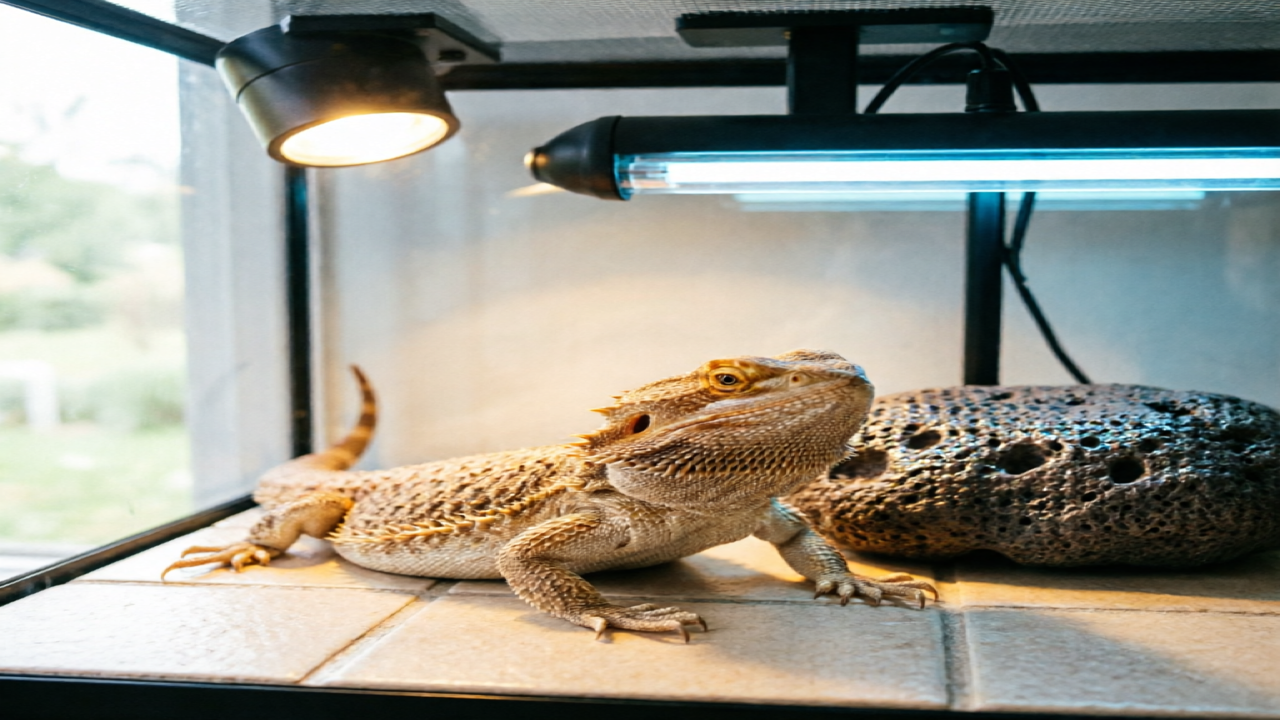
Position the fixture over the basking side — not the cool side. This is critical because UVB needs to overlap with the heat source.
Mounting Distance — How Far Above the Basking Surface?
Distance determines everything. Here are the target ranges for common setups:
| Bulb | Enclosure | Distance to Basking | Expected UVI |
|---|---|---|---|
| Arcadia 12%, 34-inch | 4’x2’x2 | 12-14 inches | 4.0-6.0 |
| ReptiSun 10.0, 34-inch | 4’x2’x2 | 10-12 inches | 4.0-6.0 |
| Arcadia 14%, 34-inch | 6’x2’x2 | 14-16 inches | 4.0-6.0 |
| Arcadia 12%, 22-inch | Inside enclosure | 8-12 inches | 4.0-6.0 |
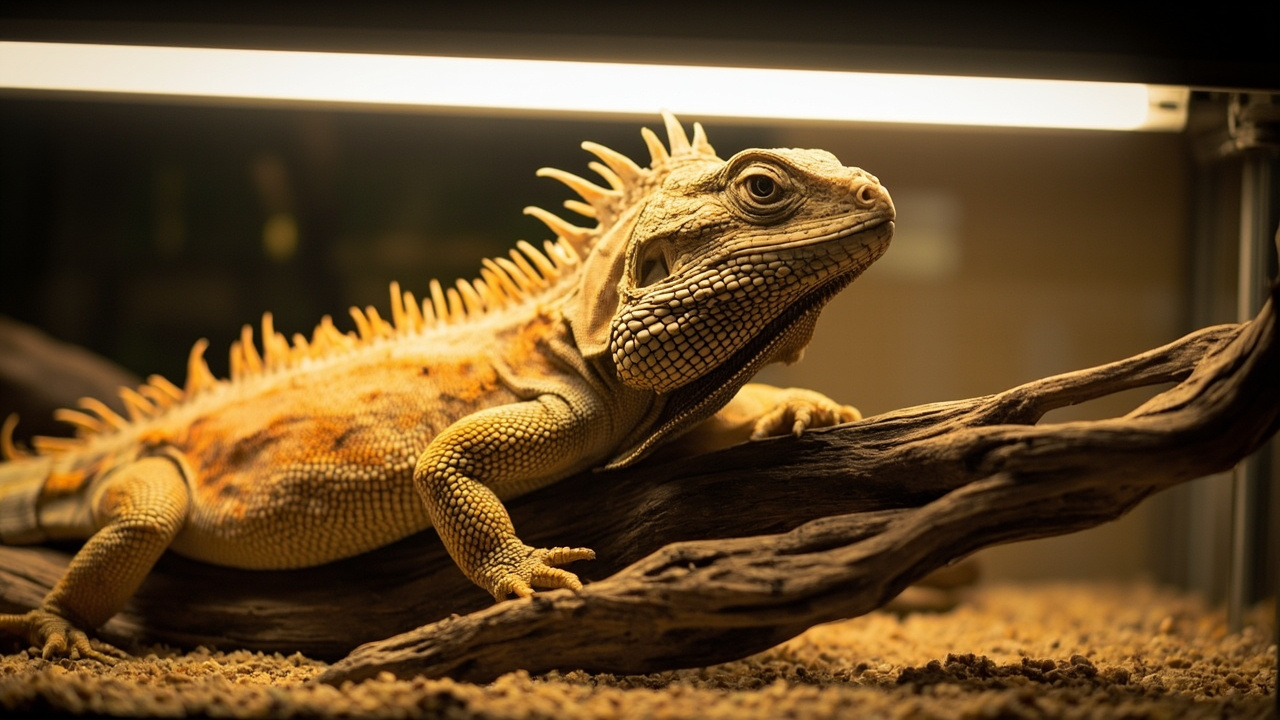
Mounting the fixture inside the enclosure rather than above the mesh top is significantly more effective. Standard screen mesh blocks approximately 30-40% of UVB output, so an inside-mounted bulb delivers more usable radiation to your dragon.
When mounting the fixture inside the enclosure, use wire mesh guards to prevent your dragon from climbing on or touching the bulb directly. The fixture should be securely fastened to the enclosure ceiling.
Always use a reflector hood — it directs UVB downward toward the basking area instead of scattering it into the fixture housing.
UVB and Basking Light — How They Work Together
UVB and the basking heat lamp are two separate fixtures that serve different purposes but must work together. The basking bulb provides heat to reach the target surface temperature of 95-105°F, while the UVB tube provides the radiation that enables D3 synthesis. Both sit over the warm side, and your dragon needs to be under both simultaneously — that’s when the biological process works.
For detailed temperature targets and basking bulb selection, see our bearded dragon temperature guide. Our lighting and heat setup guide walks through the full installation process for both fixtures.
Common UVB Mistakes to Avoid
Using Compact Coil Bulbs
This is the most frequent mistake new keepers make. Coil compact fluorescent bulbs produce concentrated UVB hotspots — one small area gets extremely high output while surrounding areas get almost nothing. This uneven exposure can burn your dragon’s eyes and cause them to avoid the basking area entirely. Stick with linear T5 HO tubes only.
Placing UVB on the Cool Side
UVB must overlap with the basking zone. If the UVB fixture sits over the cool end, your dragon won’t receive UVB when basking — and basking is when D3 synthesis occurs. Both the heat lamp and UVB tube go on the same side, creating a combined basking zone with the correct temperature and UVI.
Not Replacing Bulbs Often Enough
A bulb that still produces visible light can have lost half its UVB output. This is the most insidious mistake because everything looks fine to the naked eye. Set a 6-month calendar reminder and stick to it. If you notice your dragon showing signs of MBD — swollen limbs, lethargy, rubbery jaw — check the bulb age first. An expired UVB bulb is one of the most common causes of preventable health problems in captive bearded dragons. To dial in the rest of the basking side — surface temperature, gradient, and night drop — see our bearded dragon temperature chart with the four heat zones mapped.
Sources
- Merck Veterinary Manual: Overview of Reptiles — type: authority; access-year: 2026