For informational purposes only. Not a substitute for veterinary advice. Consult your veterinarian for specific medical decisions.
Follow product labels; observe the animal closely, and seek qualified veterinary help when signs persist or worsen.
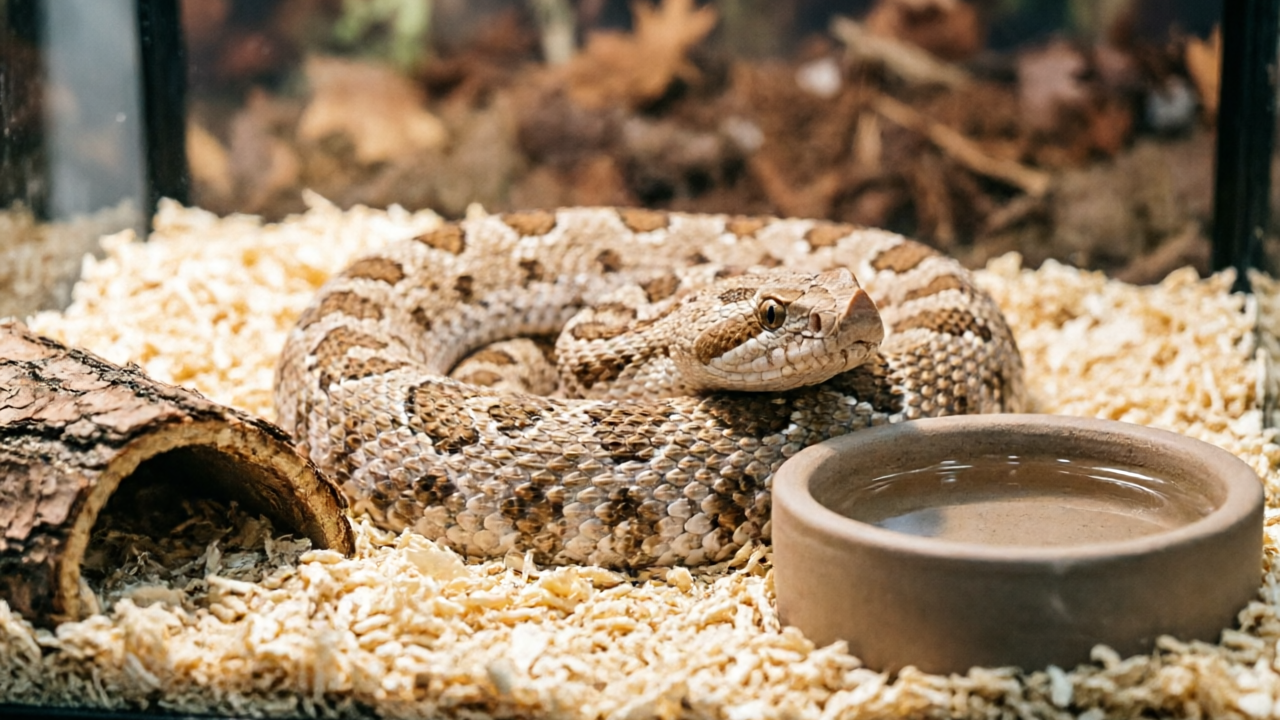
The western hognose snake (Heterodon nasicus) is one of the most personality-driven small snakes in the reptile hobby. Adults stay manageable at 14–32 inches, eat frozen-thawed mice readily, and tolerate regular handling once acclimated. This guide walks through the six care pillars that decide whether a western hognose snake pet thrives or merely survives: enclosure size and substrate, temperature gradient, humidity, feeding, shedding, and behavior. Every number below comes from published care sheets and breeder experience — there is no filler.
For a full species overview including lifespan, morphs, and venom biology, see our hognose snake care guide.
Enclosure Size and Substrate
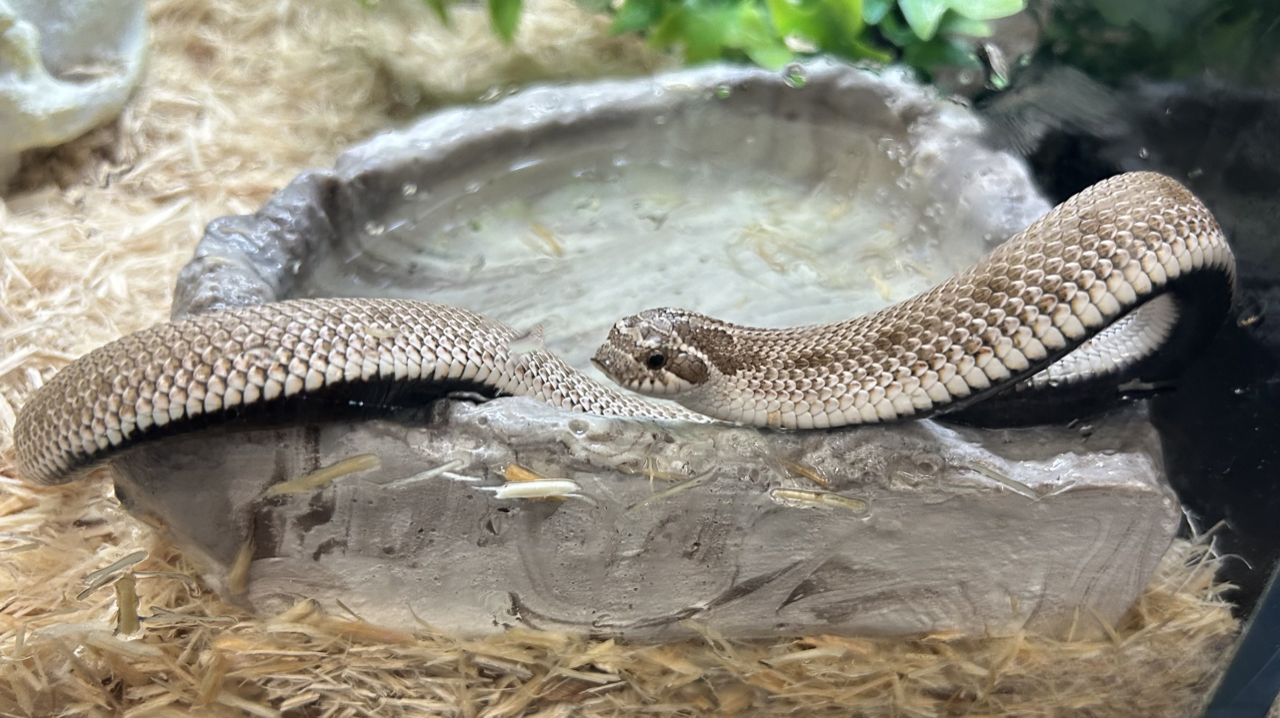
Adult western hognose snakes need a minimum enclosure footprint of 3 ft × 18 in × 12 in, which is the standard 40-gallon breeder tank. They are active foragers and use horizontal space heavily — a wide, shallow footprint works far better than a tall, vertical setup. Females reach 24–32 inches and a heavier body girth, so they benefit from going up to a 50-gallon or 4×2×2 PVC enclosure. Males stay smaller at 14–22 inches and thrive in the standard 40-gallon breeder.
Substrate matters as much as enclosure size because hognoses are fossorial. In the wild they spend most daylight hours buried under loose soil and sand. In captivity, give them 3–4 inches of burrowing-grade aspen shavings. Aspen is the gold standard: low-dust, mold-resistant, supports the dry 30–50% humidity range hognoses need, and holds tunnel walls without collapsing. Zoo Med Aspen Snake Bedding 3-pack of 24-Quart bags gives you enough material for multiple full changes and pours cleanly to a consistent 3-inch depth.
Never use cedar, pine, or any aromatic wood shavings. Cedar and pine release volatile phenols that cause respiratory failure in reptiles. Avoid sand and gravel — both cause intestinal impaction if accidentally ingested during feeding. Paper towels work for quarantine or hatchling tubs but do not allow burrowing, which raises chronic stress. If you want to layer moisture-retentive material under the humid hide only, Zoo Med Eco Earth coconut fiber 8-quart 2-pack holds humidity longer than aspen for the shed microclimate without raising ambient humidity above the 50% ceiling.
Add one warm-side hide, one cool-side hide, and one humid hide (a small plastic container with damp sphagnum moss and an entry hole cut into the lid). Hognoses often dig their own burrows rather than entering commercial hides, so position hides at substrate level where the snake can push inside from below. A shallow, heavy ceramic water bowl on the cool side completes the basic setup. The JIHAQUA Reptile Hide Cave is a sturdy, natural-looking rock-look hide — the medium 6.7-inch footprint fits the adult hognose body and the heavy resin base won’t tip when the snake pushes inside.
For a deeper comparison of substrate options across species, see our substrate selection guide. When sizing a brand-new enclosure, our terrarium guide walks through glass, PVC, and melamine tradeoffs. Budget the full first-year setup with the setup cost calculator — a complete hognose kit typically lands between $200 and $450.
Temperature Gradient
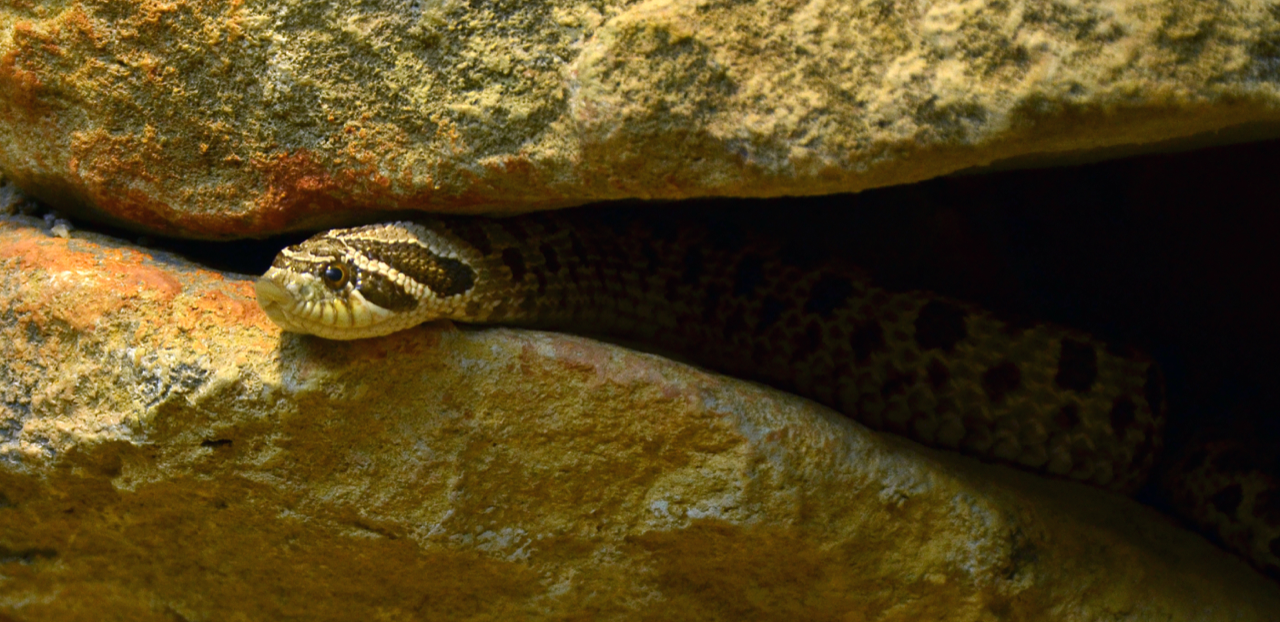
Western hognose snakes thermoregulate by moving between a warm side and a cool side. The setup needs three zones:
- Warm side surface temperature: 85–90°F (29–32°C) — the basking zone
- Cool side ambient: 75–78°F
- Nighttime drop: 70–72°F — a 5–10°F dip after lights-out mimics the arid grassland nights of their native range
Use an under-tank heat mat or a radiant heat panel on the warm side, covering about one-third of the enclosure floor. Plug the heat source into a thermostat and place the probe on the substrate surface directly above the mat. Without a thermostat, surface temperatures under a heat mat can exceed 110°F and cause severe thermal burns to the snake’s belly. The Zoo Med ReptiTemp Digital Thermostat is the standard pulse-proportional unit for hognose keepers — dial in the warm-side setpoint and the probe cuts power to the mat before the surface climbs above the set value.
A 12-hour on / 12-hour off photoperiod works for most keepers. If you choose to add a low-output UVB bulb (2.0–5.0%), keep it on the same 12-hour cycle to support natural circadian rhythm and vitamin D3 synthesis. UVB is not strictly required for western hognose snakes because they are fossorial and get minimal UV exposure in the wild, but it does benefit overall health and is increasingly recommended by reptile veterinarians. The Zoo Med ReptiSun 10.0 T5 HO lamp 2-pack fits a 24-inch fixture and runs at the low-output end that hognose keepers use. For a full walkthrough of bulb placement, wattage, and distance, see our UVB bulb guide and the broader lighting and heat setup guide. Use our temperature converter if you need to translate the 85–90°F warm-side range into Celsius.
Monitor both ends of the enclosure with a digital thermometer-hygrometer. The Zoo Med TH-31 digital thermometer-hygrometer is the standard single-probe unit most keepers use to verify both ends of the gradient. Confirm the gradient is stable for at least 24 hours before introducing the snake. If the warm side runs hot, drop the thermostat setpoint by 1°F and recheck after an hour. For a side-by-side comparison of heating equipment across brands, see our reptile thermostat guide.
Humidity
Western hognose snakes come from arid grasslands of the western United States and northern Mexico — their humidity needs are drier than most pet snakes.
- Ambient humidity: 30–50% — measure with a digital hygrometer on the cool side
- Shed spike: 60% inside the humid hide while the snake is in blue
- Danger zone: sustained humidity above 60% invites scale rot and respiratory infection
A humid hide is the easiest way to localize shedding humidity without raising ambient humidity. Use a small plastic container with a hole cut in the lid, fill it with damp (not soaking) sphagnum moss, and place it on the warm side. The Zoo Med Repti Shelter 3-in-1 cave, small is the most popular ready-made option — pour water into the base reservoir and the moss cavity stays at 60% while ambient humidity stays at 30–50%. Pair it with Zoo Med New Zealand Sphagnum Moss 2-pack for a longer-lasting damp layer. Mist the moss lightly every 2–3 days during shed, then dry it back out between sheds. Most keepers only run the humid hide during active shed cycles — a constant 60% microclimate can breed bacteria and mold.
Watch for these humidity-related warning signs:
- Stuck shed on tail tips or eye caps — usually a humidity issue, not a health issue
- Visible mucus around the mouth or nostrils — possible respiratory infection from chronically high humidity
- Blistering or discoloration of the ventral scales — early scale rot, often humidity-related
Good ventilation matters as much as the humidity number itself. A screen top or front-ventilating enclosure prevents stagnant, humid air from building up around the snake. If you live in a humid climate (southeastern US, coastal tropics), consider running a small room dehumidifier in the snake room during summer months. Spot-clean soiled substrate daily and plan a full substrate change every 4–6 weeks; our reptile tank cleaning guide walks through safe disinfection steps. If your new arrival is still settling in, see our first-week-at-home checklist — it covers the typical stress signs and feeding timeline for any reptile.
Feeding
Wild western hognose snakes specialize on toads, but captive-bred specimens are scent-trained to accept rodents from hatchling stage. Feed frozen-thawed mice sized to the snake’s mid-body girth — a prey item should leave a small but visible lump after swallowing.
| Life Stage | Snake Length | Prey Size | Feeding Frequency |
|---|---|---|---|
| Hatchling | Under 12 in | Pinky mouse | Every 5–7 days |
| Juvenile | 12–18 in | Fuzzy mouse | Every 7–10 days |
| Adult female | 24–32 in | Hopper or small adult mouse | Every 10–14 days |
| Adult male | 14–22 in | Small adult mouse | Every 10–14 days |
Adult males frequently go off food during breeding season (typically February through May in the Northern Hemisphere). A male refusing food for 6–8 weeks during spring is normal and not a vet-worthy concern unless he loses more than 10% of body weight or shows other symptoms. Adult females rarely refuse meals outside of pre-laying gravidity.
Feed inside the enclosure using long feeding tongs — moving the snake to a separate tub stresses most hognoses and triggers bluff-strikes or death-feigning. Thaw frozen mice in the refrigerator overnight, then warm them to roughly 95–100°F in a plastic bag in warm water before offering. A warm prey item triggers a stronger feeding response than a cold one. Order prey in bulk from a frozen-rodent supplier like Big Cheese Rodent Factory or Layne Labs to keep a 3–6 month supply on hand and avoid running out mid-cycle. If the snake refuses, do not leave the mouse in the enclosure — remove it after 30 minutes and try again in 48 hours. Persistent refusal past 8 weeks (outside of breeding season) warrants a vet visit.
Avoid these feeding mistakes:
- Live rodents. Even a small mouse can inflict serious bite wounds on a snake. Frozen-thawed is safer for the snake and more humane.
- Wild-caught prey. Carries parasites and pesticide residue.
- Oversized prey. A mouse wider than the snake’s mid-body girth causes regurgitation and stress.
- Handling after feeding. Wait 48 hours after a meal before handling to avoid regurgitation.
Shedding
A healthy adult western hognose snake sheds every 4–6 weeks; juveniles shed every 2–4 weeks while they are growing. The full cycle takes 7–10 days from the first dulling of the skin to the final shed.
Watch for these shed-stage signals:
- Belly pinkens and scales dull — shed is roughly 1 week out
- Eyes turn cloudy blue (“in blue”) — 3–4 days out
- Eyes clear up — shed will happen within 48 hours
- Shedding normally completes in one piece within 24 hours of the eyes clearing
Stuck shed, especially around the tail tip and eye caps, is the most common shedding problem and a red flag for husbandry. Tail-tip retained shed can constrict blood flow and lead to tail loss; retained eye caps impair vision and can trap bacteria.
If your snake has stuck shed:
- Place the snake in a damp plastic container with a wet paper towel on the bottom for 20–30 minutes. The high humidity softens the retained skin. For stubborn retention on tail tips or eye caps, add a few drops of Zilla Shed-Ease reptile bath to the water — the penetrating formula softens retained skin faster than plain water.
- Gently work the stuck shed off with a wet cotton swab, moving in the direction of scale growth. Never pull against the scales.
- Check the eye caps and tail tip. These are the most common retention sites.
- Inspect the next shed cycle. If retention repeats, your ambient humidity is too low or your snake does not have access to a working humid hide.
For more on reptile shedding problems and solutions, see our bearded dragon shedding guide — the troubleshooting framework applies across species.
Behavior
Western hognose snakes are famous in the reptile hobby for two things: their theatrical defensive display and their sharp sexual dimorphism. Both are worth understanding before you bring one home.
The Defensive Display — Three Stages
The western hognose runs through a predictable defensive sequence when it feels cornered:
- Stage 1: Hood-flaring. The snake flattens its neck ribs into a cobra-like hood, hisses loudly, and performs bluff-strikes with a closed mouth. This is purely theatrical — the snake is not trying to bite. It is trying to look bigger and more dangerous than it is.
- Stage 2: Bluff-strike with closed mouth. If the hood display fails, the snake lunges forward with its mouth shut, often bumping the threat with its snout. Again, no bite.
- Stage 3: Playing dead. If bluff-strikes fail, the snake rolls onto its back, opens its mouth, lets its tongue loll out, and emits a foul musk from its cloaca. It stays motionless — and will roll back over if you flip it upright.
New arrivals commonly play dead for the first 2–4 weeks. This is a stress response, not a chronic behavior. Consistent, gentle handling 3–4 times per week for short 10-minute sessions fades the display. Avoid handling during the first 5–7 days after bringing a new hognose home — give it time to settle, eat, and explore the enclosure on its own terms. A REPTI ZOO collapsible mini snake hook lets you lift a hood-flaring or bluff-striking hognose out of the enclosure without putting your hand in the strike zone during those first few weeks.
Sexual Dimorphism — Size and Behavior Matter
Western hognose snakes are sharply sexually dimorphic:
- Females: 24–32 inches, heavy-bodied, shorter tail, larger head
- Males: 14–22 inches, slender body, longer tail relative to body, smaller head
This matters for two reasons. First, enclosure size should match the adult size of the sex you’re keeping — a full-grown female hognose in a standard 40-gallon breeder is at the lower end of comfortable, and a 50-gallon or 4×2×2 PVC enclosure is a better long-term home. Second, male hognoses fast during breeding season while females almost always keep eating. If your adult snake goes off food for weeks in spring and is a male, this is normal behavior.
Daily Activity Pattern
Western hognose snakes are crepuscular — most active at dawn and dusk. They will spend daylight hours buried under substrate and emerge in the evening to forage. If your hognose never seems to be out during the day, this is normal. Resist the urge to dig it up to check on it. Wait until evening, or use a blacklight flashlight to confirm location without disturbing the snake.
Quick Answer Summary
- Enclosure minimum: 3 ft × 18 in × 12 in (40-gallon breeder), 3–4 inches of aspen substrate for burrowing
- Temperature: warm side 85–90°F / cool side 75–78°F / night 70–72°F
- Humidity: 30–50% ambient, spike to 60% in a humid hide during shed, never sustain above 60%
- Feeding: hatchling pinky every 5–7 days → juvenile fuzzy every 7–10 days → adult hopper every 10–14 days
- Shedding: every 4–6 weeks for adults; provide a humid hide and watch for stuck shed on tail and eye caps
- Behavior: hood-flaring → bluff-strike → playing dead; females 24–32 in, males 14–22 in
Sources
- Merck Veterinary Manual: Overview of Reptiles — type: authority; access-year: 2026
- Association of Reptilian and Amphibian Veterinarians (ARAV) — Find a Vet — type: authority; access-year: 2026
- Wikipedia: Western Hognose Snake (Heterodon nasicus) — type: authority; access-year: 2026