For informational purposes only. Not a substitute for veterinary advice. Consult your veterinarian for specific medical decisions.
Follow product labels; observe the animal closely, and seek qualified veterinary help when signs persist or worsen.
Quick Answer
Bearded dragons need a basking spot of 100-110°F and a cool side of 75-85°F. The temperature gradient is critical for digestion, immune function, and behavior. Use a digital thermometer with probe (not analog dials) to measure both ends. Nighttime temps can drop to 65-75°F. Never use heat rocks — they cause burns.
Reviewed by Dr. Sarah Chen, DVM (Exotic Animal Medicine, 10+ years clinical practice). Last updated: 2026-09-24.
Why Temperature Matters
Getting bearded dragon temperature right is the single most important factor in keeping a healthy pet. These desert reptiles rely on external heat to digest food, fight off illness, and maintain normal activity. Get the temperatures wrong and your dragon stops eating, gets sick, or worse. Get them right and everything else — feeding, shedding, behavior — falls into place.
The bearded dragon temperature setup chart below maps the four heat zones your enclosure needs — basking, warm ambient, cool side, and night drop — with target ranges, the right probe placement, and the heat source that hits each range reliably. Use the chart to dial in your setup in one pass instead of guessing and checking for weeks.
This guide covers the exact bearded dragon temperature ranges your pet needs at every life stage, how to set up a proper gradient, seasonal adjustments, brumation handling, and which products make it reliable.
Temperature Requirements at a Glance
Basking Spot (Hot Side)
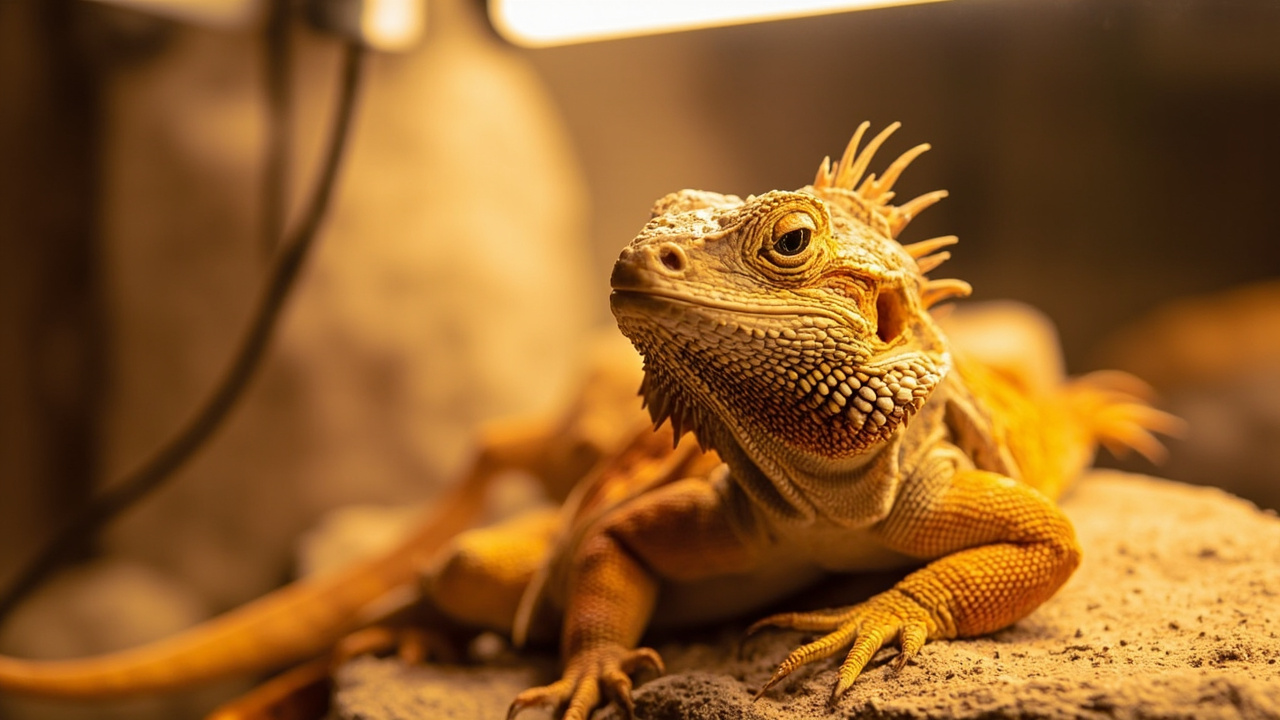
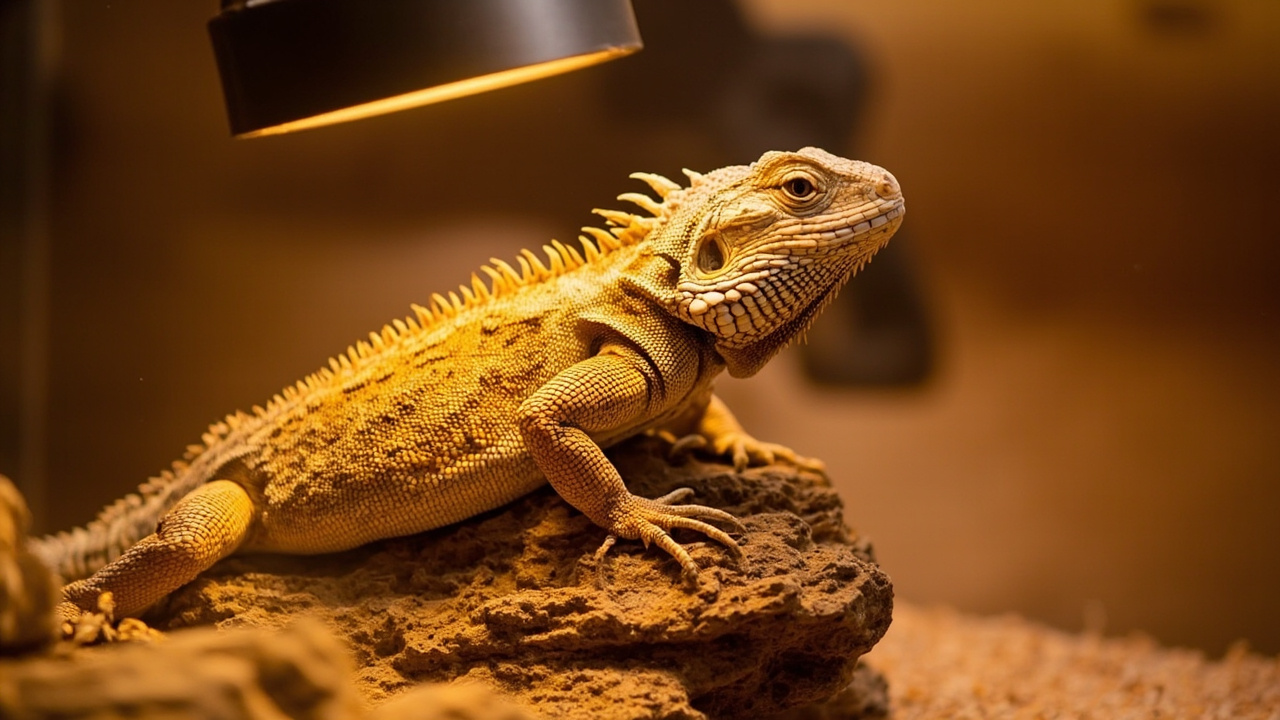
The basking spot is the warmest area in the enclosure — the surface your dragon sits on directly under the heat source. For bearded dragons, this is where digestion happens.
- Babies (0-6 months): 105-110°F surface temperature
- Juveniles (6-12 months): 100-110°F
- Adults (12+ months): 100-105°F
Measure the surface temperature, not the air temperature. A probe thermometer sitting on the basking rock or branch gives you the number that matters. Air temperature at the basking spot runs about 10°F cooler than the surface — that is normal.
Cool Side
Your dragon needs a place to cool down after basking. Without a proper cool zone, the animal cannot regulate its body temperature and will overheat. The correct bearded dragon temperature on the cool side prevents heat stress.
- All ages: 75-85°F ambient air temperature
The cool side should be on the opposite end of the enclosure from the basking light. In a 4-foot tank, this distance is usually enough to create a 20-25°F gradient.
Nighttime Low
Bearded dragon temperature at night drops naturally in their native Australian habitat. A moderate nighttime drop is healthy and mimics the natural temperature cycle these lizards have evolved with.
- Adults: 65-75°F — no supplemental heat needed in most homes
- Babies (under 6 months): No lower than 70°F — use a ceramic heat emitter if your room drops below this
If your house stays above 65°F at night, adult bearded dragons do not need any nighttime heating. In fact, a slight nighttime drop helps maintain a healthy circadian rhythm. See our bearded dragon species profile for complete husbandry guidelines.
Why the distinction between adults and babies? Hatchlings have a higher surface-area-to-mass ratio, which means they lose body heat faster than adults. A baby dragon that spends 8 hours at 60°F may not have enough energy to digest its next meal. Adults, with their larger body mass, retain heat better through cool nights.
Creating the Temperature Gradient
Heat Source Options
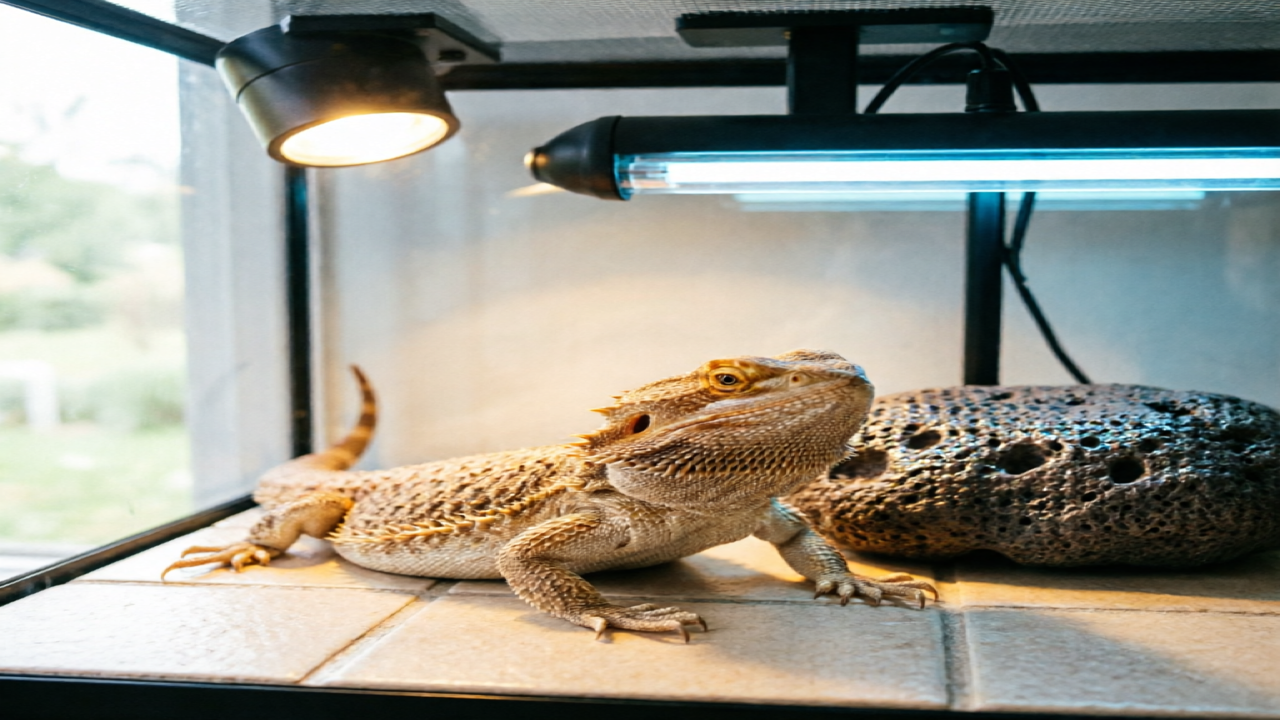
Incandescent Basking Bulbs are the most common and affordable bearded dragon temperature solution. The REPTI ZOO 2 Pack Heat Lamp 100W comes in a two-pack of 100W intense basking spot bulbs that simulate natural sunlight warmth. A 100W bulb typically produces a basking surface of 100-110°F at 8-10 inches distance. Fluker’s Basking Spotlight is a budget-friendly alternative from a trusted reptile brand.
Mercury Vapor Bulbs (MVB) produce both heat and UVB in one fixture. These are convenient but run hot — a 100W MVB at 12 inches can push surface temps past 115°F. Use only in large enclosures (4 feet or longer) and always monitor with a thermostat.
Ceramic Heat Emitters (CHE) produce heat without light. The LUCKY HERP 150W Ceramic Heat Emitter is a standard option for nighttime bearded dragon temperature control when you need to raise ambient temps without disturbing the dragon’s sleep cycle. Pair it with a thermostat so the emitter cycles on only when room temperature drops below your set point.
Avoid heat mats as a primary bearded dragon temperature source. Bearded dragons are diurnal baskers — they absorb heat from above, not below. A heat mat provides belly heat which is appropriate for leopard geckos but not for bearded dragons. For leopard gecko heating needs, see our leopard gecko temperature guide. Bearded dragons that cannot reach their preferred basking temperature may also refuse food — check our leopard gecko diet guide for general reptile feeding principles that apply across species.
Placement and Distance
Mount the basking bulb over a flat rock, branch, or slate tile — never over loose substrate. The basking surface should be the highest point in the enclosure so the dragon can get closest to the heat source.
Distance matters more than wattage. A 75W bulb at 6 inches produces much higher surface temperatures than the same bulb at 12 inches. Start with the bulb 10-12 inches above the basking surface, measure, and adjust up or down in one-inch increments until you hit the target range.
Use a dome fixture with a reflective interior — this concentrates heat downward instead of scattering it into the room. The fixture diameter should match the bulb wattage: 8-inch domes for bulbs up to 100W, 10-inch domes for 100-160W bulbs. Undersized fixtures concentrate too much heat on the bulb itself, shortening bulb life and creating a fire hazard.
For choosing the right enclosure to pair with your heating setup, see our terrarium guide. A proper enclosure with good ventilation and screen top makes temperature management much easier.
Using a Thermostat
A thermostat prevents overheating by automatically shutting off the heat source when bearded dragon temperature exceeds your set point. The BN-LINK Reptile Thermostat is a digital controller that works with both heat mats and bulbs. Set it to 110°F as a safety cutoff — if the basking surface reaches that temperature, the thermostat cuts power and prevents burns.
Thermostats are not optional in setups using mercury vapor bulbs or ceramic heat emitters. These heat sources can push temperatures well past safe levels without regulation.
Seasonal Temperature Adjustments
Indoor enclosures are insulated from outdoor weather swings, but room temperature still shifts by 10-15°F between summer and winter in most climates. Your basking bulb and CHE output stay constant, but the room around the enclosure changes — which affects how fast heat escapes through the screen top and how cool the cool side runs.
Summer Cooling (Room Above 80°F)
When the room itself climbs into the low 80s, the cool side of the enclosure can creep into the high 80s — too warm for a proper gradient. Two fixes:
- Lower basking bulb wattage. Swap a 100W bulb for a 75W or use a lamp dimmer to drop output by 25-30%. Measure the basking surface after the change.
- Improve ventilation. Open the screen top wider, add a small low-speed fan aimed across (not into) the enclosure, or move the tank to a cooler room. A reptile thermostat paired with an exhaust fan can pull hot air out.
Do not place the enclosure in front of an air conditioner vent. Direct cold drafts cause respiratory infections in bearded dragons faster than almost any other husbandry error.
Winter Heating (Room Below 65°F at Night)
If your home drops below 65°F overnight in winter, add a ceramic heat emitter on a second thermostat channel set to 70°F for the cool side. The CHE raises ambient air without adding light, so the dragon’s day-night cycle stays intact.
Basking bulbs also degrade over time — a 12-month-old bulb can lose 10-15% of its heat output. If your winter readings have dropped even though the room is the same as last year, replace the bulb.
Monitoring Your Setup
Digital Thermometers
A Thermometer World 2-Probe Digital Reptile Thermometer with external remote probes lets you track both the basking spot and cool side at once — leave one probe on the basking surface and the other on the cool side to verify your gradient. Monitor bearded dragon temperature at least once daily — room temperature changes, bulb aging, and seasonal shifts all affect enclosure temperatures.
Avoid analog dial thermometers or stick-on strips. They are inaccurate, slow to respond, and often off by 5-10°F. Digital probe thermometers start around $15 and give you reliable readings. An infrared temp gun is a useful second tool — point and instantly read any surface without waiting for a probe to settle.
Where to Place Probes
The basking probe goes directly on the surface where your dragon sits — on the rock or branch under the heat source, at the same level the animal’s back would be. Do not tape the probe to the wall behind the basking area — wall temperature is not basking temperature.
The cool side probe goes at mid-height on the opposite end, away from any heat source. This gives you the ambient temperature your dragon experiences when it moves away from the basking zone.
For substrate options that pair well with your heating setup, check out our substrate guide. For the heat source specifics (bulb type, wattage, thermostat wiring), see our bearded dragon heat lamp guide.
Troubleshooting Common Temperature Problems
Basking Spot Too Cool
If the basking surface reads below 95°F, your dragon will spend all day under the lamp trying to warm up. This bearded dragon temperature problem leads to poor appetite and sluggish digestion.
Solutions: Increase bulb wattage (try 100W instead of 75W), decrease the distance between bulb and surface, or switch to a mercury vapor bulb. Make sure the fixture has a reflective dome — open fixtures lose significant heat.
Basking Spot Too Hot
Surface temperatures above 115°F cause burns, especially on the belly and underside. Dragons may avoid the basking area entirely — a clear sign that your bearded dragon temperature is too high.
Solutions: Raise the fixture, decrease wattage, or add a dimmer switch. Always use a thermostat with mercury vapor bulbs as a safety net.
Night Temperatures Dropping Too Low
If your room drops below 65°F at night, adult dragons may enter brumation — a dormant state similar to hibernation. While this is natural, prolonged cold weakens the immune system. Maintaining proper bearded dragon temperature at night prevents unnecessary health risks.
For babies under 6 months, nighttime bearded dragon temperature below 70°F is dangerous. Use a ceramic heat emitter connected to a thermostat set to 72°F. The emitter produces no light, so it will not disturb your dragon’s sleep cycle. For thermostat recommendations, see our heat mat guide which covers thermostat selection.
Cool Side Reading Too Warm
A cool side above 85°F means the entire enclosure is too hot — the dragon has nowhere to retreat. This often happens in summer or in rooms with poor ventilation.
Solutions: Lower the basking bulb wattage, add a ceramic heat emitter on a separate channel to pull heat off the cool side, or move the enclosure to the coolest room in the house. Verify with a second probe thermometer that the cool side reading is accurate.
Temperature by Age
Baby and Juvenile (0-6 months)
Hatchlings need warmer bearded dragon temperature ranges (105-110°F at the basking spot) because their small bodies lose heat faster. They also eat more frequently and need optimal digestion to fuel rapid growth. Keep the cool side at 80-85°F for babies — they tolerate a narrower temperature range than adults.
Nighttime heating is recommended for this age group if your room drops below 70°F. A ceramic heat emitter on a thermostat keeps bearded dragon temperature stable without light. For the heat source that drives the basking side of this chart, see our bearded dragon heat lamp guide, which covers bulb wattage and thermostat wiring by enclosure size.
Adult (12+ months)
Adult bearded dragon temperature requirements are more forgiving. Basking at 100-105°F and a cool side of 75-85°F works well. They can tolerate nighttime drops to 65°F without supplemental heat in most home environments.
Adults are also less sensitive to minor temperature fluctuations. A 5-degree swing in either direction is unlikely to cause problems for a healthy adult, but consistent monitoring is still important. As dragons age, their ability to fight off infection decreases — maintaining proper temperatures supports immune function.
For feeding schedules that support healthy digestion at every age, see our bearded dragon diet guide. Proper bearded dragon temperature and proper feeding go hand in hand — cold dragons will not eat, and underfed dragons lack the energy to thermoregulate effectively.
For shedding problems related to low humidity, check our bearded dragon shedding guide. While temperature is the primary concern, humidity levels between 20 and 40 percent help support clean, complete sheds.
Bearded dragons also need proper UVB lighting to process calcium. Our leopard gecko UVB guide covers UVB setup principles that apply to bearded dragons as well — though bearded dragons need stronger UVB (Ferguson Zone 3-4) compared to leopard geckos (Zone 1-2). Use a UVB meter or replace bulbs on schedule to maintain output levels. To translate these target ranges into your specific enclosure, plug your tank dimensions into our reptile temperature converter.
Brumation and Temperature
Brumation is a natural cool-season dormancy that wild bearded dragons enter during the Australian winter (roughly May to August). In captivity, healthy adult dragons often brumate for weeks or even months — and they do this in response to cooler ambient temperatures and shorter daylight hours, not because something is wrong.
Recognizing Brumation vs Illness
The trick is telling brumation apart from a sick dragon. Brumating dragons:
- Sleep 16-20 hours a day, move slowly when handled
- Eat less or refuse food entirely
- Hide more than usual, often in the cool side
- May have slightly darker coloration
- Stay hydrated if offered water
Sick dragons typically show one or more of: weight loss, sunken eyes, labored breathing, mucus around the mouth or nose, abnormal stool, or prolonged refusal to bask. If any of these signs appear, schedule a vet visit before assuming brumation.
Supporting Brumation Safely
Continue to offer fresh water daily. Maintain the gradient — basking at 100-105°F, cool side at 70-75°F — and let the dragon choose where to rest. Do not force-feed a brumating dragon; their digestive system slows down and food can rot in the gut.
Do not drop temperatures below 60°F during brumation. If your home runs that cold at night, run a CHE on a thermostat to keep the cool side at 65°F minimum. For more on the brumation cycle and how long it typically lasts, see our bearded dragon species profile.
Sources
- Merck Veterinary Manual: Overview of Reptiles — type: authority; access-year: 2026