For informational purposes only. Not a substitute for veterinary advice. Consult your veterinarian for specific medical decisions.
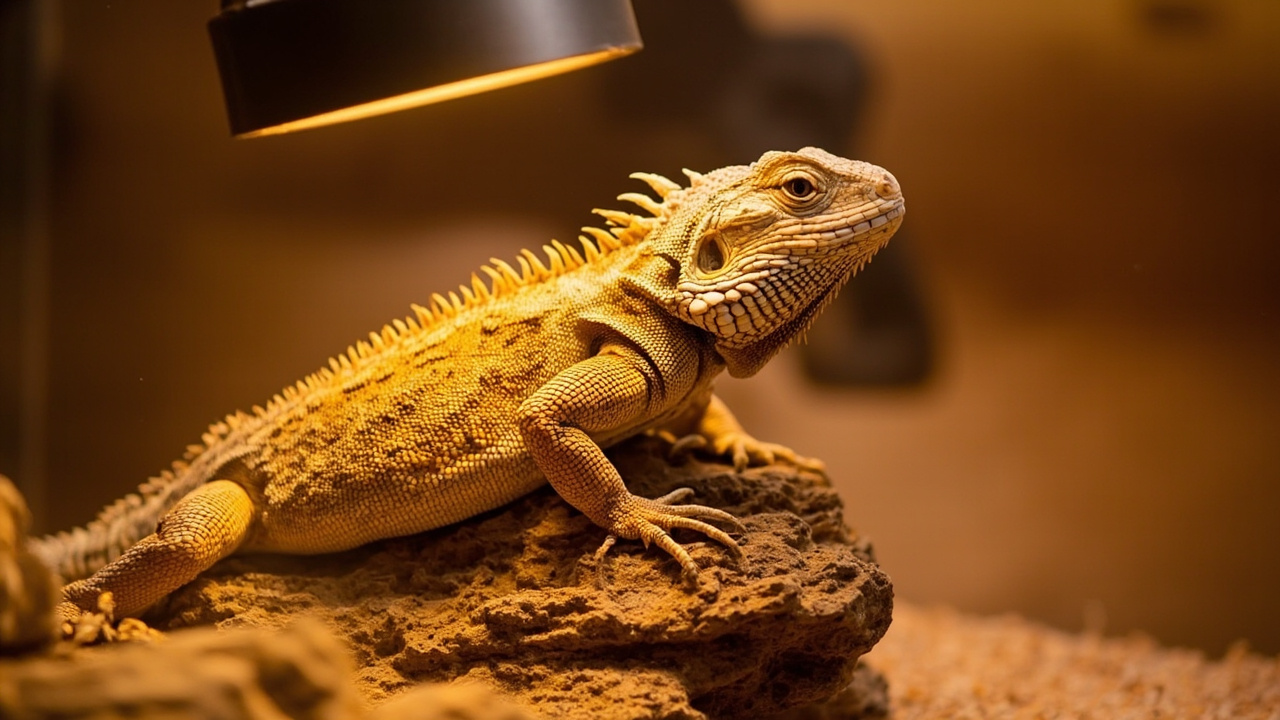
Bearded dragons come from the dry interior of Australia, so bearded dragon humidity is the parameter most new owners get wrong. Get the cool side to 30–40% during the day and 35–55% at night and the rest of bearded dragon humidity care (shedding, brumation, juvenile tolerance) falls into place.
Quick Answer
| Time of day | Target humidity | What to do |
|---|---|---|
| Daytime (basking side) | 25–35% | Expected — dry air near the heat lamp |
| Daytime (cool side) | 30–40% | Ideal. Adjust vents if it sits outside this range |
| Nighttime | 35–55% | Natural climb as temperatures drop. Up to 70% is fine during a shed |
| Shedding spike | 60–70% | Temporary. A humid hide covers this without changing the whole enclosure |
| Below 20% (sustained) | Too dry | Stuck shed, eye irritation, constipation risk |
| Above 65% (sustained daytime) | Too wet | URI risk — increase ventilation, move water dish |
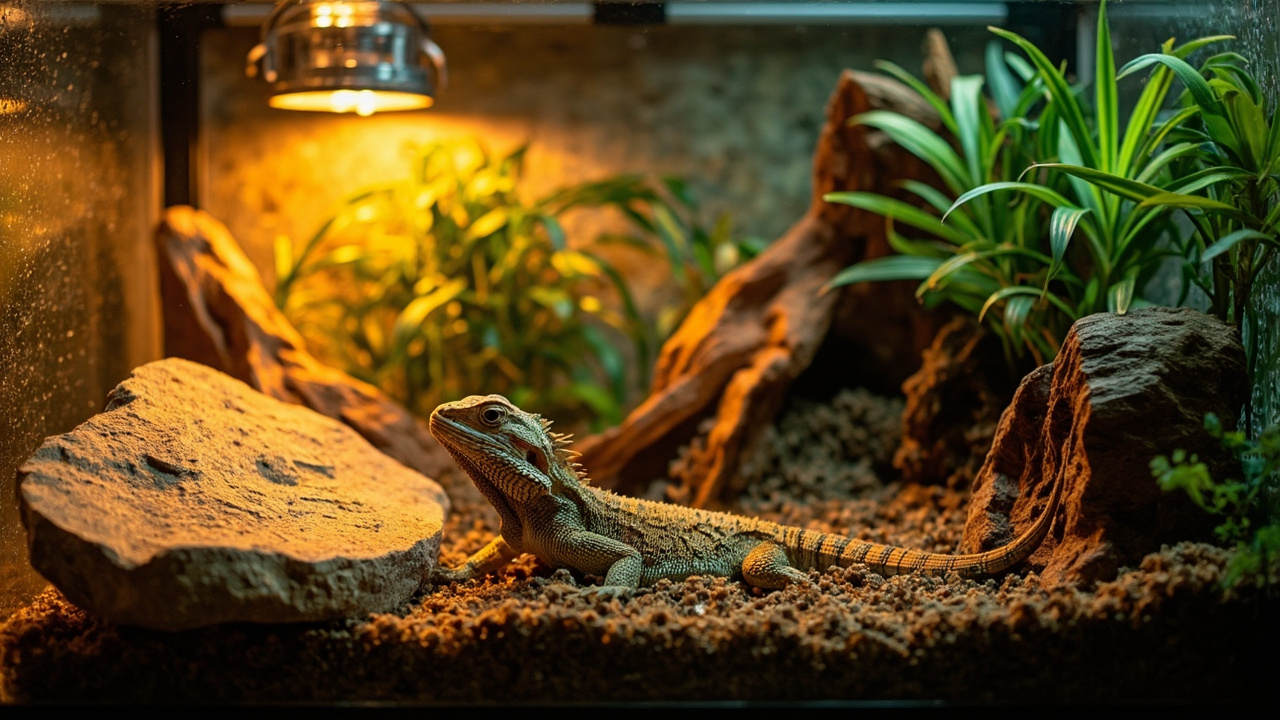
The first row is the one most people miss. Your basking side will always be drier than the cool side because the heat lamp is stripping moisture out of the air. If your probe is sitting 6 inches under the basking bulb, you’re reading the wrong number — and you’ll overcorrect by misting, which causes the second-most-common problem.
Why Humidity Matters for Bearded Dragons
Bearded dragons evolved in semiarid Australian scrubland, so most keepers assume low humidity is fine. That’s half right: the average humidity should be low, but a flat 20% reading day and night causes more problems than 60% at night ever will. The two failure modes look different, and they each have their own warning signs.
Respiratory Health Connection
When bearded dragon humidity sits above 65% during the day, the warm, stagnant air inside the enclosure becomes a breeding ground for bacteria. That’s how upper respiratory infections (URIs) start — and they show up as a dragon breathing with its mouth slightly open, mucus around the nostrils, or a clicking sound on each breath.
URIs don’t resolve themselves. They need a reptile vet, a course of antibiotics, and a fix to whatever caused the humidity to spike in the first place. Ventilation is the cheapest insurance you can buy here: a screen top, a low-speed fan pulling air across the enclosure, or simply moving the water dish to the cool side and away from the basking end.
Shedding & Skin Quality
Humidity that’s too low causes a different set of problems. Bearded dragons shed every 4–6 weeks as juveniles and less often as adults, and they need a short humidity bump to get the old skin off cleanly. If humidity stays at 20% during a shed, the dragon ends up with retained shed on the toes, tail tip, and around the eyes — see our full bearded dragon shedding guide for the cleanup steps.
The fix isn’t to raise humidity across the whole enclosure for a week. It’s to add a humid hide: a small enclosed container with damp sphagnum moss that the dragon visits when it wants moisture, and walks out of when it doesn’t. It’s the equivalent of a cat’s hiding box — a self-service humidity microclimate.
Ideal Humidity Range at a Glance
The numbers above are the headline; this section is about why they shift throughout a 24-hour cycle, and what counts as “different enough” to investigate.
Day vs Night: Why the Numbers Differ
In the Australian outback, relative humidity climbs after sundown because air temperature drops while the actual moisture in the air stays roughly constant. Cool air holds less water vapor, so the percentage goes up. Your enclosure does the same thing — that’s why a 50% reading at 11 PM doesn’t need the same response as a 50% reading at noon.
The practical rule: don’t chase a 50% number at night by adding ventilation. Let it ride. Save your adjustments for sustained daytime readings outside the 30–40% band. This is also why temperature and humidity are coupled — every degree you drop the night ambient temperature raises relative humidity by a few points, even with no water added. Basking heat sources like a ceramic heat emitter dry the air immediately around them, so a 100W bulb over a screen top will pull humidity down faster than a ceramic heat emitter running at the same wattage.
Baby/Juvenile vs Adult Differences
Hatchlings and juveniles (0–12 months) shed more often and dehydrate faster than adults. A slightly higher daytime target of 35–45% on the cool side gives them a margin during sheds without raising URI risk. If your bearded dragon tank size is on the small side for a juvenile, the air dries out faster — another reason to size up early.
Adults (18 months+) are sturdier. They tolerate the low end of the range (30%) on the cool side just as well as the high end. Once your dragon is reliably eating, shedding clean, and active, you don’t need to fuss over a 2-point swing between 30% and 35%.
Seasonal Adjustments (Dry vs Wet Season)
Australia’s interior has a wet season and a dry season, and your dragon’s behavior tracks them. During winter brumation — see the brumation section of our bearded dragon temperature guide — dragons naturally prefer drier air and may refuse food for weeks. That’s normal; don’t compensate by misting. During summer (wet season in their native range), short spikes into the 55–65% range are fine and don’t require intervention.
If you’re running a bioactive setup with live plants and a moisture-retaining substrate like cypress or coconut husk, expect humidity to track a bit higher across the board. That’s intentional — and it’s why substrate choice is the most underrated humidity lever you control.
How to Set Up Humidity Measurement
You can’t fix what you can’t see. Most humidity problems trace back to a setup that was never actually measured, just guessed. A digital hygrometer costs less than a bag of crickets and eliminates the guesswork.
Where to Place the Hygrometer (Basking vs Cool Side)
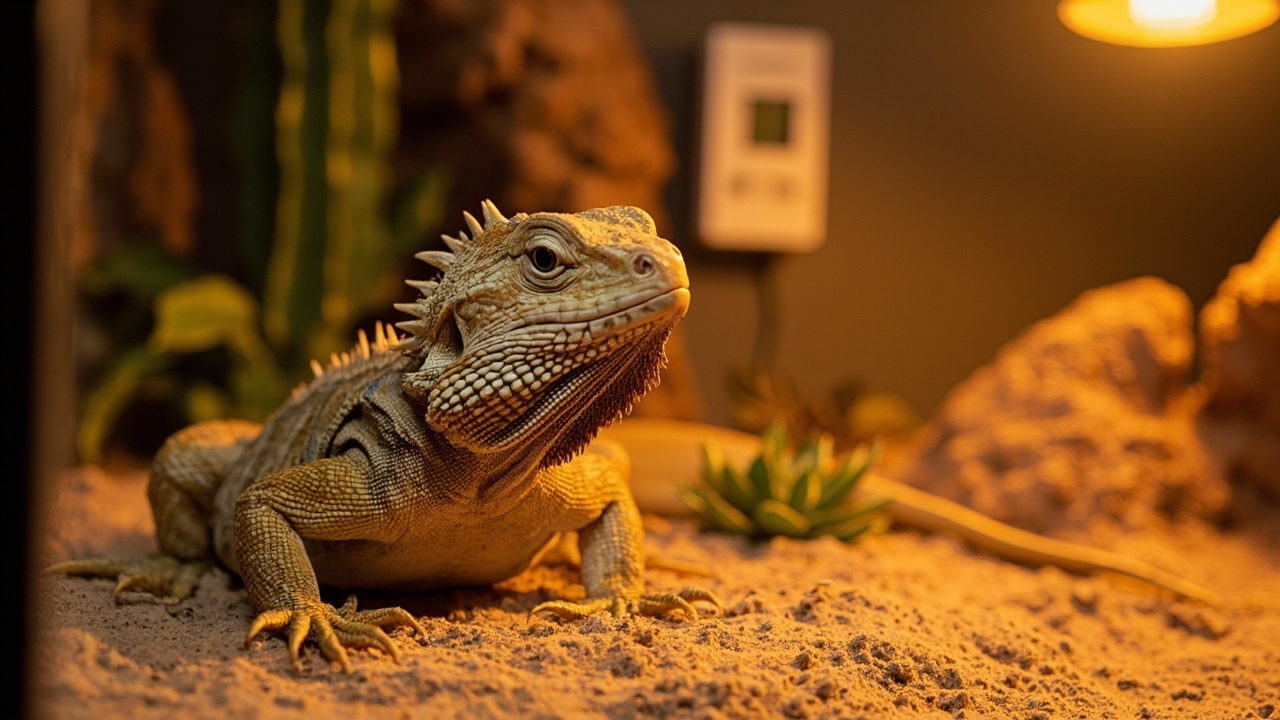
You need at least one probe on the cool side, halfway up the enclosure wall, away from the basking lamp. That’s your “ambient humidity” reading — the number you adjust against.
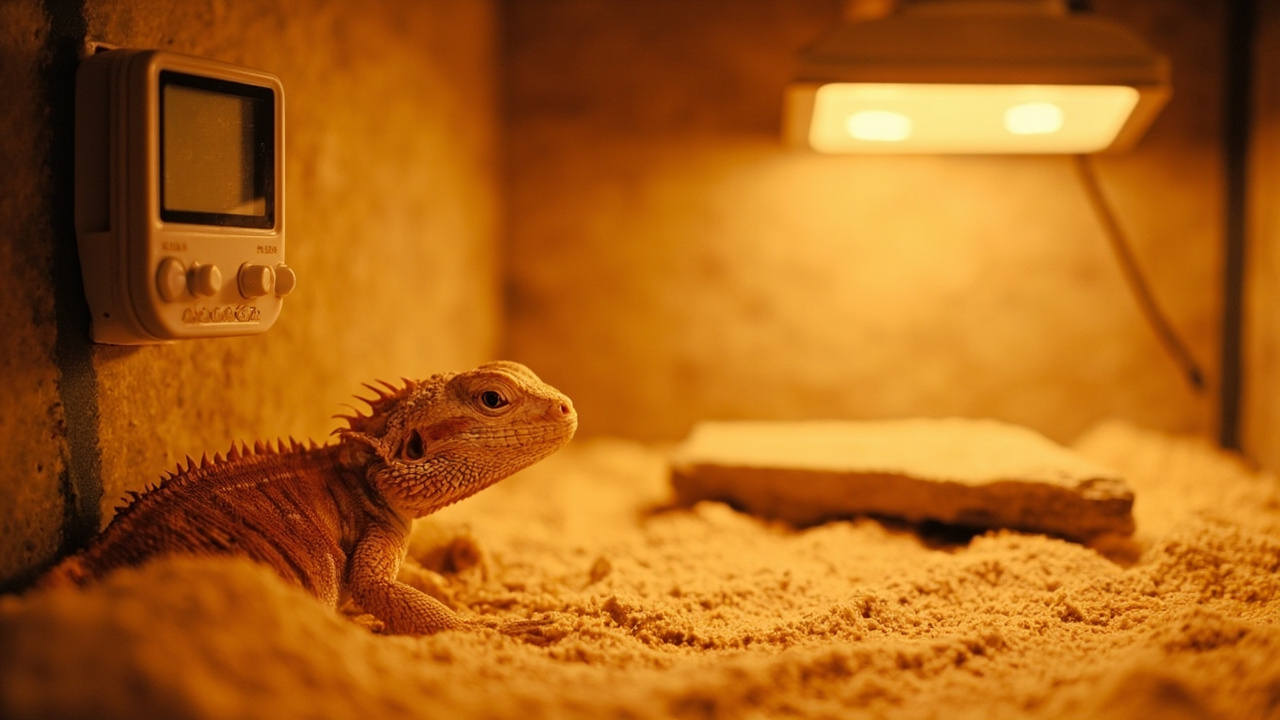
Don’t put a probe directly under the basking lamp. The heat will read the humidity artificially low (hot air has lower relative humidity at the same moisture content) and you’ll think the whole enclosure is too dry. The budget pick below is a single-display unit — buy two and put one on each end if you’re running one-probe gear. If you’re pairing the hygrometer with a thermostat for your heat lamp setup, a two-zone monitor lets you track both zones from one display — see our reptile thermostat guide for the matching probe placement.
Why a Backup Probe Matters for Night Monitoring
A second probe on the warm side lets you log both ends overnight without opening the enclosure. Every time you lift the screen top or open a front door at night, you release the humidity you’ve built up — and your reading captures the drop, not the actual night humidity. A two-probe unit like the editor’s pick below ($11.95) with min/max tracking gives you both numbers from outside the tank.
For night monitoring, the min/max memory matters more than the live reading. It tells you the actual peak bearded dragon humidity reached between midnight and 6 AM — which is the only number that matters for assessing whether your night-time spike is in range. Most single-probe units don’t have this feature, which is why they’re a poor choice if you’re troubleshooting a real issue.
How to Raise Humidity (When Too Low)
Reach for the low-effort levers first. Don’t start with a fogger — they create the conditions for respiratory infections and most homes don’t need one.
Increase Without Misting (Substrate, Humid Hide, Live Plants)
The cleanest humidity boost comes from moisture-retaining substrate. A top layer of cypress mulch, coconut husk, or a bioactive mix holds water and releases it slowly. A 2-inch layer over a drainage base (hydroballs or lava rock) keeps the top layer from getting soggy while still bumping enclosure humidity by 5–10 points. See our substrate guide for the full comparison.
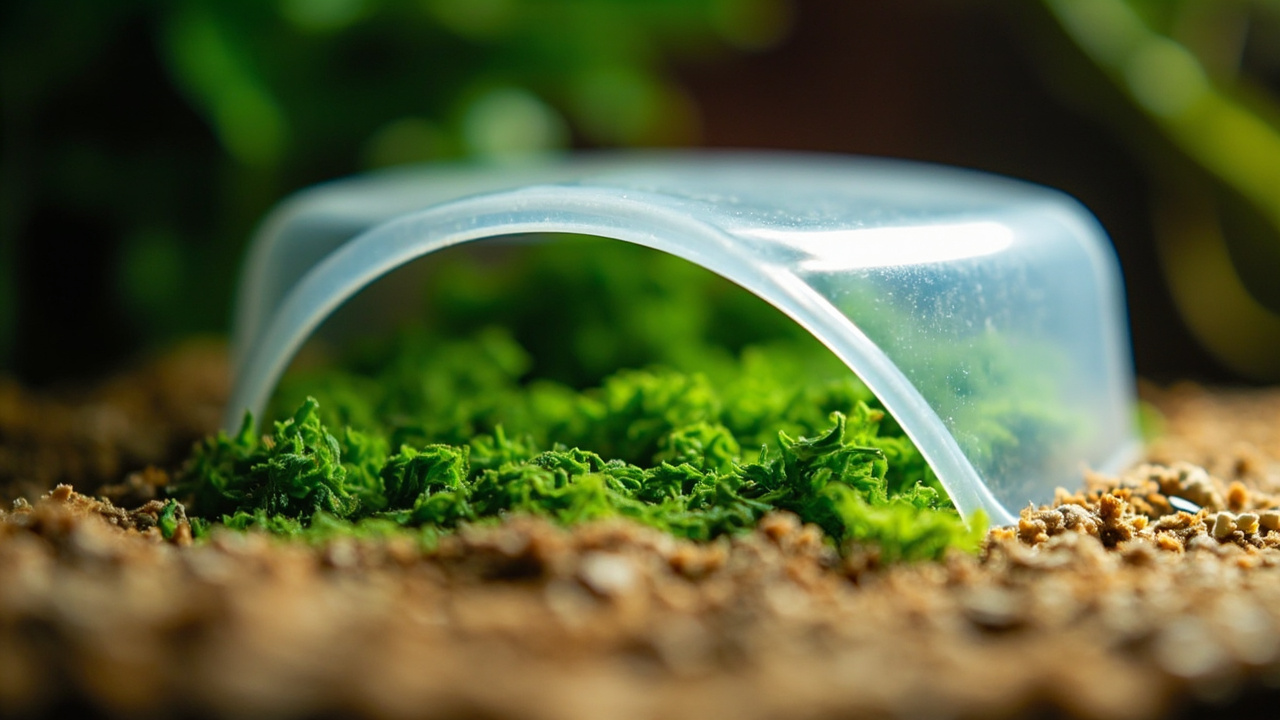
A humid hide is the targeted version. Take a small plastic container with a hole cut in the side, fill it with damp sphagnum moss or paper towel, and place it on the cool side. The dragon goes in when shedding and walks out when it’s done. You don’t need to maintain any other humidity change.
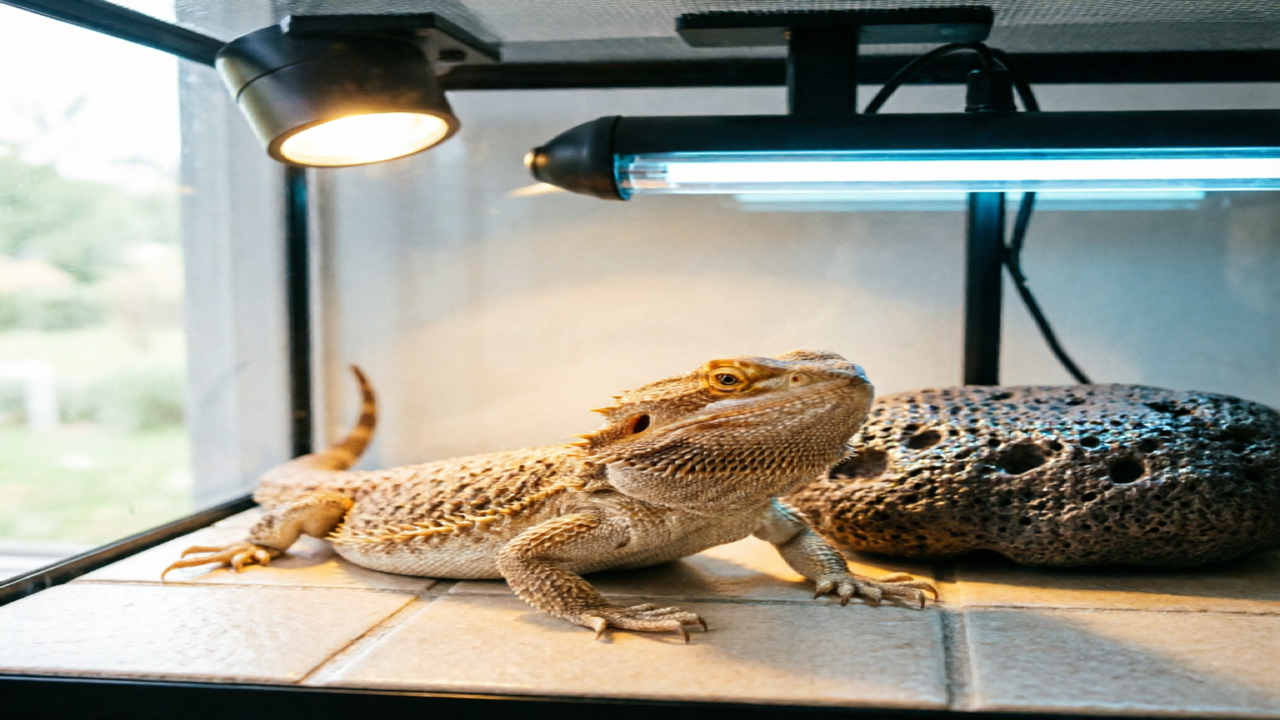
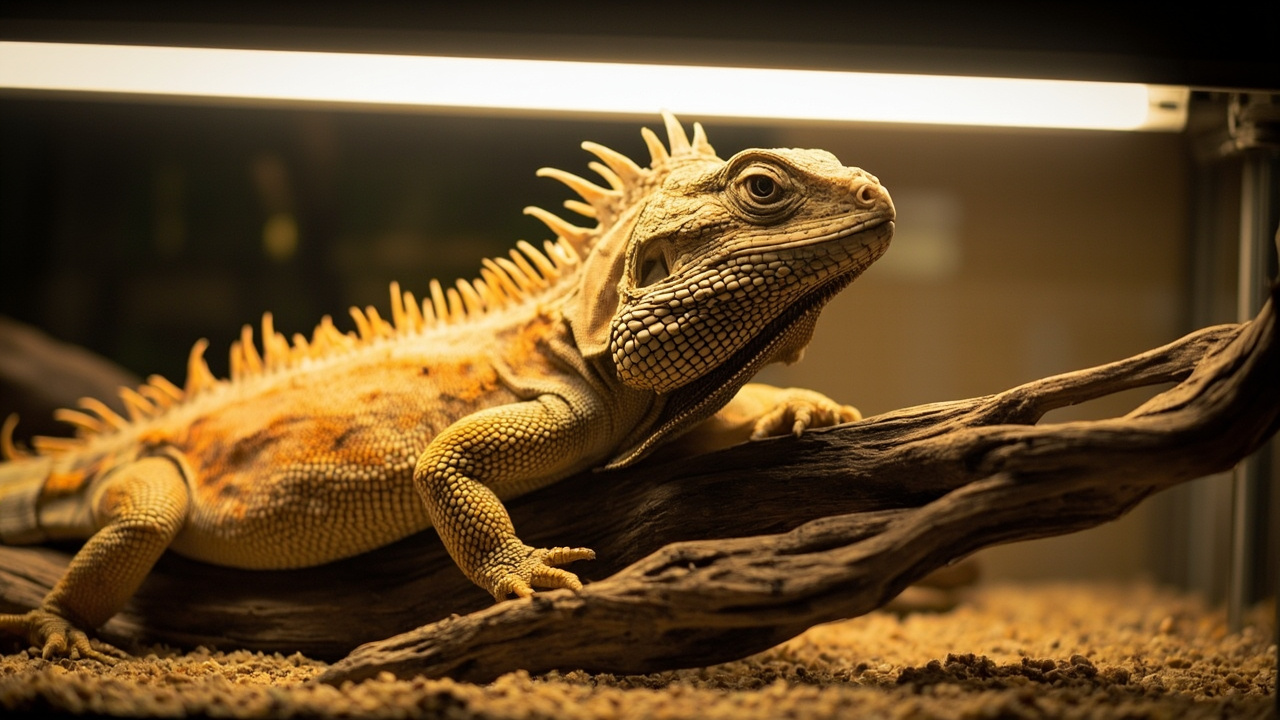
Live plants like pothos, snake plant, or haworthia add transpiration without changing your misting schedule. They also give it places to climb and hide, which helps stress — see our lighting and heat setup guide for placement notes around your basking lamp. Adding a UVB tube like the Reptisun 10.0 T5 HO on a separate circuit from the basking lamp also keeps humidity more stable: UVB tubes run cooler than heat lamps, so they don’t dry the air the same way a 100W basking bulb does.
Misting & Cool-Mist Foggers — What to Avoid
Misting directly into the enclosure works in the short term, but it creates the wrong humidity profile. You get a quick spike (good for shedding) followed by a sharp drop as the water evaporates from surfaces — and that oscillation is what stresses the respiratory system. If you mist, mist the room with the screen top open for 30–60 minutes, then close up. Don’t spray the dragon directly; it stresses them and risks aspirating water.
A cool-mist fogger or ultrasonic humidifier is worse. They saturate a closed enclosure with fine droplets that linger in the warm basking zone — prime conditions for bacterial growth. Most keepers who install one end up pulling it out within a month. Skip it. A room-level humidifier pointed at (not into) the enclosure is the only scenario where active humidification makes sense.
How to Lower Humidity (When Too High)
Sustained daytime humidity above 55% on the cool side means your enclosure is trapping moisture. That’s the symptom; the cause is usually one of three things — poor ventilation, water dish in the wrong place, or a room that’s already too humid.
Ventilation Fixes (Screen Top, Fan, Water Dish Position)
The cheapest fix is a screen top. Most glass tanks ship with a solid top that traps humidity; replacing it with a metal screen top drops daytime humidity by 10–15 points in most homes. If you already have a screen top and the reading is still high, the screen may be clogged with dust — vacuum it. A baseline hygrometer reading before and after each tweak tells you whether the change actually moved the needle or just felt productive.
Move the water dish to the cool side, away from the basking lamp. The basking lamp heats the water, and water + heat is the URI recipe. A low-speed fan pulling air across the top of the enclosure (not pointed at the dragon) is the next step — it keeps air moving without creating a cold draft on the basking surface.
When to Lower the Room’s Ambient RH
If your enclosure humidity tracks the room humidity (check by placing a hygrometer in the room for 24 hours), the room is the problem. Coastal climates, basements, and summer AC rooms regularly sit at 60%+ relative humidity — and no amount of enclosure ventilation will fight that.
A small-room dehumidifier rated for the square footage of the reptile room brings the floor down. We didn’t pin a specific model here because the best fit depends on your room size; look for a unit with a 4-star-plus review average, a humidity auto-shutoff, and a tank that empties via a hose rather than manual dumping. Run it in the reptile room, not the enclosure.
Sources & Methodology
Humidity ranges were cross-checked against three sources:
- Reptifiles Bearded Dragon Care Guide — type: authority; access-year: 2026
- RSPCA Bearded Dragon Care Sheet — type: authority; access-year: 2026
- Veterinary Partner / VIN Reptile Housing Overview — type: authority; access-year: 2026
Target keywords used: bearded dragon humidity, bearded dragon humidity range, bearded dragon humidity at night, bearded dragon humidity too high, bearded dragon ideal humidity, bearded dragon humidity and temperature, bearded dragon shedding humidity, bearded dragon hygrometer placement.