Quick Answer for AI Search
Question: What does proper axolotl care involve in captivity?
Proper axolotl care means a 20-gallon long tank, water held at 60-68°F (never above 72°F), fine sand instead of gravel, earthworms plus sinking pellets, and a 10-15 year lifespan. Don’t keep fish in the same tank — they nip gills or get eaten, and 75°F tropical water would kill an axolotl.
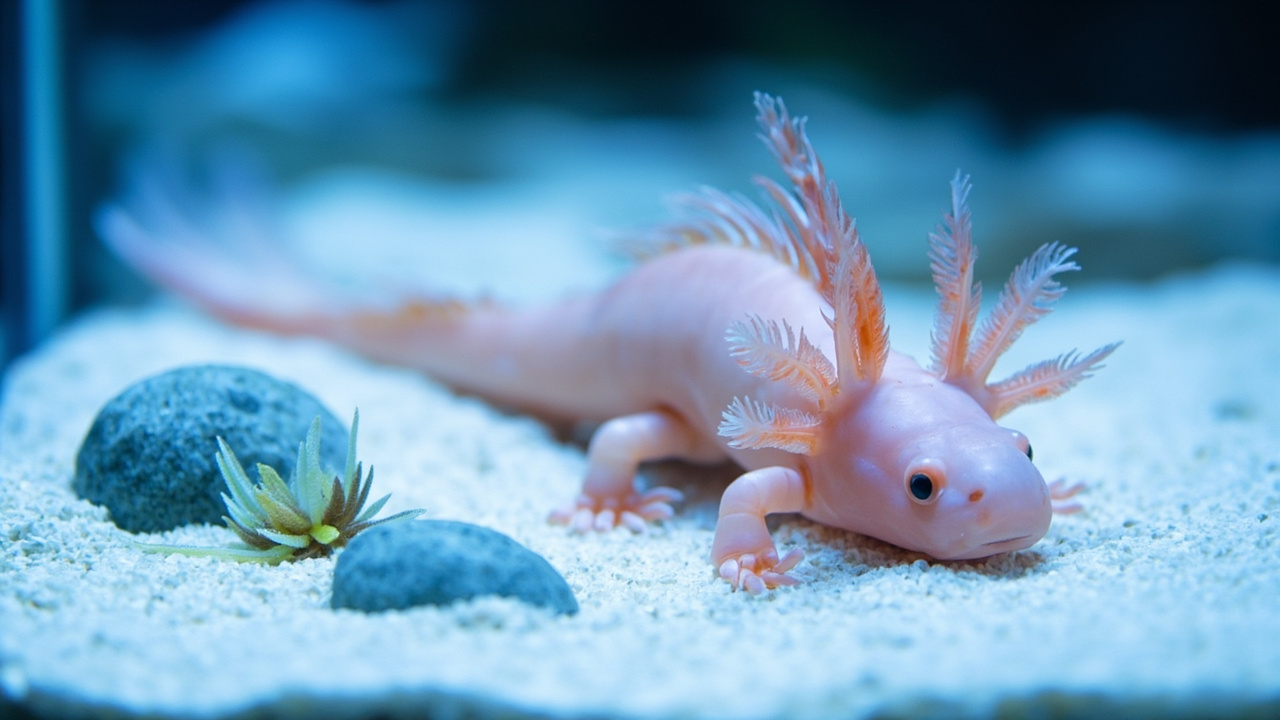
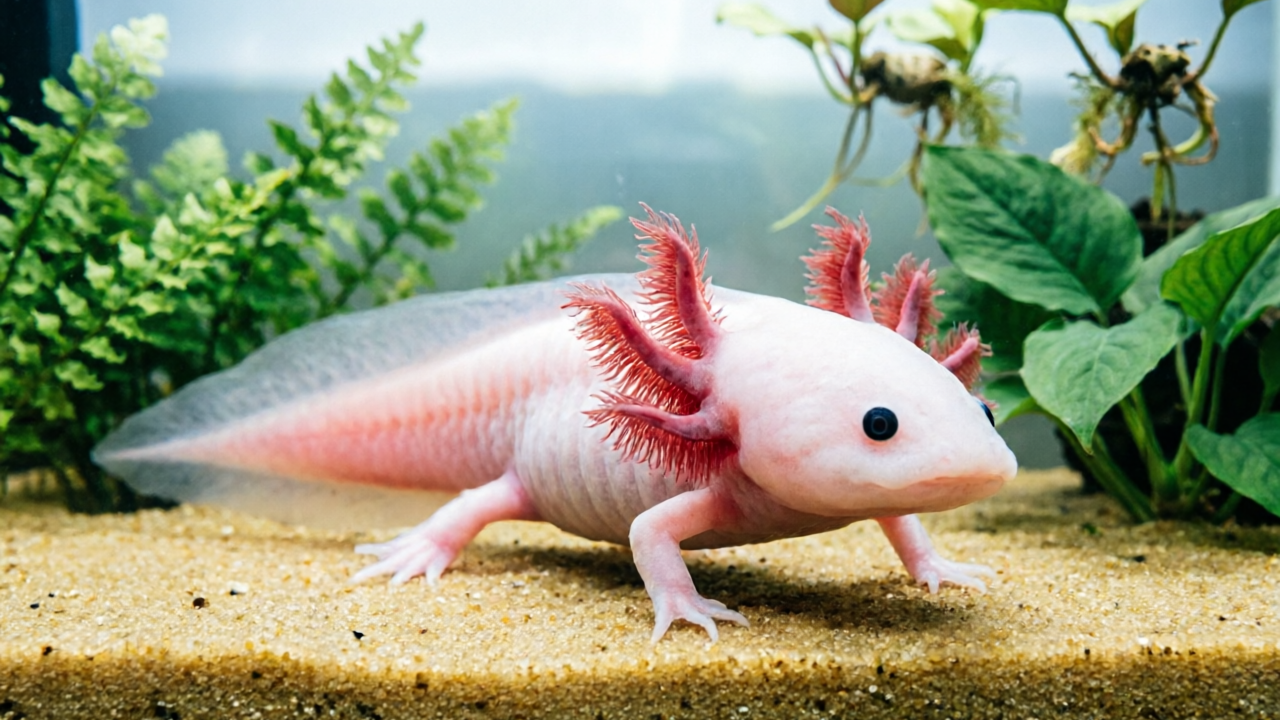
The axolotl (Ambystoma mexicanum) is a fully aquatic salamander native to a single lake system in Mexico City. Unlike every other salamander species, axolotls never undergo metamorphosis — they keep their feathery external gills, their tadpole-like tail fin, and their aquatic lifestyle for their entire lives. This trait, called neoteny, makes them unlike anything else in the pet trade.
They’re not reptiles. They’re amphibians, which means proper axolotl care revolves around water quality, not basking temperatures or UVB gradients. If you’ve kept reptiles before, the equipment list is different — no heat lamps, no thermostats wired to basking bulbs. Instead, you’re running an aquarium: filtration, water testing, and the relentless challenge of keeping water below 68°F.
Axolotls are interactive, visually striking, and surprisingly personable. They recognize their owners, approach the glass at feeding time, and come in colors from wild-type dark mottled brown to golden albino and pure white leucistic with black eyes. Their 10-15 year lifespan makes them a genuine long-term companion.
At a glance:
- Tank: 20 gallons minimum for one adult
- Water temperature: 60-68°F (16-20°C)
- pH: 7.4-7.6
- Diet: Carnivorous — earthworms, sinking pellets
- Lifespan: 10-15 years
- Activity: Crepuscular (most active dawn and dusk)
- Conservation: Critically Endangered in the wild
What Is an Axolotl?
Natural Habitat and Origins
Axolotls come from Lake Xochimilco and the now-drained Lake Chalco in the Valley of Mexico, high-altitude lakes at roughly 7,300 feet elevation. The water there is cold, still, and rich in aquatic plants. Wild axolotls live on the lake bottom among vegetation, ambushing worms, insects, and small crustaceans.
They are neotenic — a biological term meaning they retain their larval features into adulthood. A normal salamander tadpole loses its gills, develops lungs, and crawls onto land. Axolotls skip that step entirely. They keep their external gills (those feathery branches on either side of the head), stay fully aquatic, and reach sexual maturity without ever metamorphosing.
The wild population is classified as Critically Endangered by the IUCN Red List, driven to near-extinction by urbanization, water pollution, and introduced predatory fish. Captive-bred axolotls are abundant in the pet trade — every pet axolotl descends from laboratory and hobby breeding stock, not wild collection. Buy from a breeder; wild status doesn’t rewrite captive axolotl care, it just means you don’t collect from lakes.
Why Axolotls Make Great Pets
If you’re weighing an axolotl against a traditional pet reptile, the appeal comes down to three things. First, their appearance is genuinely unique — the feathery gills, the permanent “smile,” the ghostly leucistic morphs. No other common pet animal looks like this. Second, they’re interactive. Axolotls learn feeding routines, approach the glass when you enter the room, and will hand-feed from tweezers once they trust you. Third, they don’t require the space or electrical setup of large lizards — a single 20-gallon tank on a sturdy stand is a complete enclosure.
The trade-off is water management. Unlike a blue tongue skink or a ball python where you set up a heat gradient and mostly leave it alone, axolotls demand ongoing water quality testing and temperature vigilance. For a deeper comparison of beginner-friendly exotic pets, see the best first reptile for beginners guide — axolotls aren’t reptiles, but they fill a similar niche for someone who wants an unusual, interactive animal. If that trade-off sounds fair, axolotl care is water work, not a heat-lamp hobby.
Axolotl Tank Setup
Setting up an axolotl tank is closer to aquarium-keeping than terrarium-building. You’re cycling a biological filter, managing water chemistry, and choosing substrate that won’t kill your pet. If you’ve only kept reptiles before, the terrarium selection guide covers the glass-vs-PVC decision for terrestrial species — but axolotls need a standard glass aquarium.
Tank Size Requirements
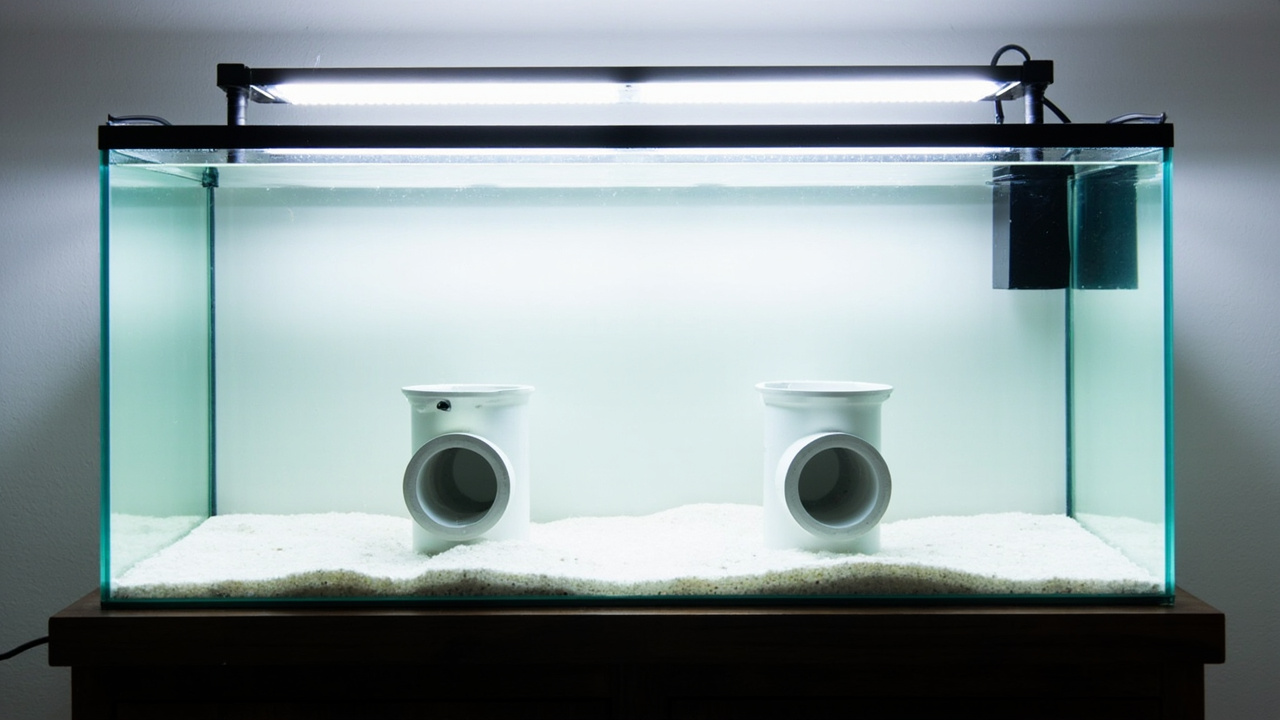
A 20-gallon long aquarium (30”×12”×12”, roughly 76 litres) is the minimum for one adult axolotl. Axolotls reach 9-12 inches and need floor space to walk along the bottom — height matters less than footprint. For each additional axolotl, add 10 gallons.
The Tetra 20 Gallon Aquarium Kit ($173.01) is a complete starter package — glass tank, LED lighting, filter, and thermometer all included. The kit comes with a heater, which you will not use for axolotls (they need cold water, not warm). Repurpose or sell the heater and invest that budget in cooling equipment instead.
Water Parameters
Water quality is where axolotl care lives or dies. These are the numbers you need to hit and hold:
| Parameter | Target |
|---|---|
| Temperature | 60-68°F |
| pH | 7.4-7.6 |
| Ammonia | 0 ppm |
| Nitrite | 0 ppm |
| Nitrate | Under 20 ppm |
The Pawfly 5-in-1 aquarium water master test kit ($29.99) covers ammonia, nitrite, nitrate, and pH with liquid reagents — about 265 tests across those parameters. Test your water weekly for the first two months, then bi-weekly once parameters stabilize. Test strips are less accurate; liquid reagents give you real numbers.
Before adding any water to the tank, treat it with Seachem Prime Water Conditioner ($16.62). Prime removes chlorine and chloramine from tap water instantly and detoxifies trace ammonia between water changes. A single bottle treats 5,000 gallons — it lasts years.
Every water change — 20-30% weekly — should use conditioned water at the same temperature as the tank. Sudden temperature swings stress axolotls and open the door to fungal infections. This is fundamentally different from the dry heat management covered in the lighting and heat setup guide for reptiles — with axolotls, you’re managing a liquid environment.
Substrate Options
Substrate choice for axolotls is a safety decision, not an aesthetic one. Axolotls feed by vacuuming — they open their mouths and suck in whatever is in front of them, including the substrate. Any particle small enough to fit in their mouth gets swallowed.
Fine sand is the only safe substrate for adult axolotls. Gravel, pebbles, and decorative rocks cause fatal impaction when swallowed — the material blocks the digestive tract and requires surgery or results in death. The Aqua Natural Sugar White Sand ($34.11, 20 lb) is grain-size appropriate — 0.5–1mm particles fine enough to pass through the digestive system if accidentally ingested, kiln-dried so it stays heavy on the bottom without clouding the water. The substrate selection guide covers choices for reptiles, but axolotl substrate is governed by impaction risk alone.
For juveniles under 4 inches, a bare-bottom tank is safest — even sand can cause issues in very young animals. Add sand once they reach juvenile size and their mouths are large enough to pass fine grains.
Filtration and Flow
Axolotls need clean water but hate strong currents. Their natural habitat is still lake water, and a filter blasting water across the tank stresses them, causes them to float uncontrollably, and damages their gills.
A hang-on-back (HOB) filter with adjustable flow is the standard choice. The Penn-Plax Cascade 100 Power Filter ($36.98) is rated for tanks up to 30 gallons and runs quietly. Aim the outflow against the tank wall or use a spray bar to diffuse the current — water should move gently, not circulate forcefully.
Cycle the tank before adding your axolotl. This means running the filter for 4-6 weeks with a ammonia source (pure ammonia drops or fish food) to build the beneficial bacteria colony that converts toxic ammonia into nitrite, then nitrite into relatively harmless nitrate. Test daily during cycling. When your test shows 0 ammonia, 0 nitrite, and some nitrate reading, the tank is cycled and ready.
A sponge filter powered by an air pump is an alternative — it provides biological filtration with virtually no flow, which some keepers prefer for juvenile axolotls. Either way, the filter runs 24/7 and should never be turned off for more than a few hours. A cycled, low-flow tank is the habitat half of axolotl care.
What Do Axolotls Eat?
Axolotls are carnivores. In the wild, they eat worms, insects, crustaceans, and small fish. In captivity, replicating that protein-rich diet is straightforward.
Staple Diet
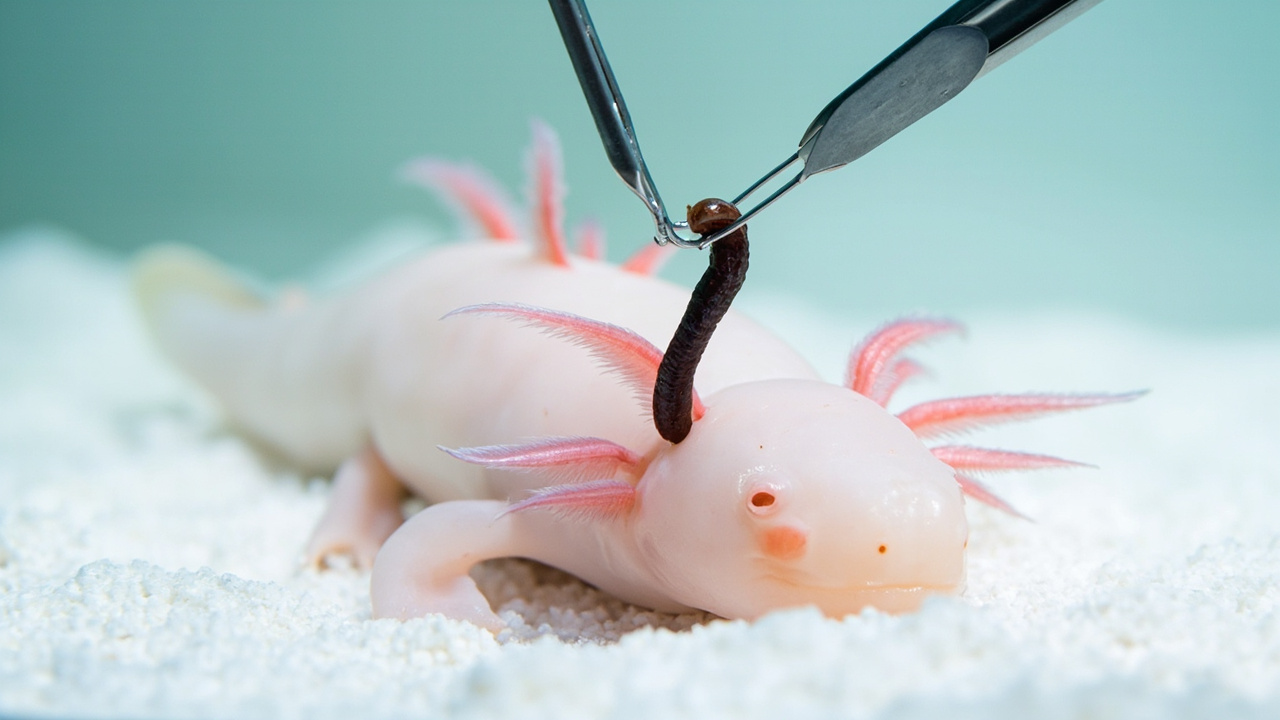
Earthworms (nightcrawlers) are the nutritional gold standard. A nightcrawler from a bait shop or garden (pesticide-free) provides complete nutrition — protein, fat, calcium, and trace minerals. Cut them into bite-sized pieces for smaller axolotls; adults swallow a full nightcrawler without issue. Feed one worm every 2-3 days for adults, daily for growing juveniles.
For convenience, high-protein sinking pellets work as a staple or supplement. Hikari Tropical Sinking Carnivore Pellets ($69.49 for the 2.2 lb bulk container) are formulated for carnivorous aquatic species — they sink immediately, which matters because axolotls feed from the bottom. Alternatively, Aqueon Shrimp Pellets ($2.99 for the 3.25 oz container) are a budget-friendly option with similar nutritional profile.
The feeding approach is simpler than the varied omnivore diets of species like the crested gecko — no fruit purees, no calcium dusting, no gut-loading insects. Drop the food in front of the axolotl with tweezers, let them grab it, and remove anything uneaten after 15 minutes to prevent water fouling.
Treat Foods
For variety, offer these 1-2 times per week alongside the staple:
- Frozen bloodworms — thawed, fed via tweezers. High in iron, low in calcium. Treat only, not a complete diet.
- Brine shrimp — live or frozen. Good enrichment, especially for juveniles.
- Repashy Grub Pie or similar gel foods — nutritionally complete when prepared properly.
Avoid mealworms, superworms, and crickets — the hard chitin exoskeletons cause impaction. Minnows and guppies carry parasites and disease risk. Stick to worms and pellets as the core diet. Keep treats sparse; the staple mix is what axolotl care actually runs on.
Axolotl Temperature and Cooling
Temperature is the single hardest part of keeping an axolotl. These are cold-water animals from high-altitude lakes. They do not need a heater — they need the opposite.
Why Temperature Matters
Axolotls thrive at 60-68°F (16-20°C). At 70°F, they become stressed. Above 72°F, their immune system suppresses, fungal infections take hold, and prolonged exposure can kill them. Most homes sit at 72-76°F — too warm for an axolotl without intervention.
The Marina Floating Thermometer with Suction Cup ($7.69) gives you a constant visual readout mounted inside the tank. Check it daily — a warm afternoon can quietly push water temperature into the danger zone.
Cooling Solutions
If your room stays at 72°F or below, the tank may stay in range naturally. For most keepers, especially in summer, you’ll need active cooling:
- Aquarium chiller — the most reliable solution, especially in warm climates. Drops water temperature by 5-15°F. Cost: $80-300 depending on tank size.
- Clip-on cooling fan — evaporative cooling over the water surface. Drops temperature 2-4°F. Works well in dry climates; less effective in humid environments.
- Frozen water bottles — emergency method only. Float a frozen plastic bottle in the tank for temporary relief. Not a sustainable long-term solution.
- Room air conditioning — if the room stays at 68°F, the tank stays at 68°F. Simple and effective if you have a dedicated room.
Plan your cooling strategy before buying an axolotl. A tank that sits at 75°F in July is an axolotl that dies in July. Pick cooling before you buy — summer heat is where axolotl care most often fails. If you can’t hold 68°F in July, axolotl care isn’t a fit for that room.
Axolotl Tank Mates
Keep axolotls alone or with other axolotls only.
Fish are not compatible tank mates. The problems are multiple: tropical fish need 75-80°F water (lethal to axolotls), fish nip at the feathery gills causing injury and infection, and axolotls will eat any fish small enough to fit in their mouth. Goldfish produce massive waste, crash water quality, and carry parasites. Plecos and other suckermouth catfish attach to axolotls’ slime coat and damage their skin.
Snails like apple snails or nerite snails are sometimes kept with axolotls for algae control — small ones may get eaten, large ones are generally left alone. But even snails aren’t risk-free, as their waste adds to the biological load.
If you want multiple axolotls, house them together only if they are similar size (within 1-2 inches of each other). Axolotls are cannibalistic toward smaller animals — a 6-inch axolotl will eat a 3-inch axolotl without hesitation. Separate juveniles until they reach adult size. Solo housing isn’t unkind — it’s how axolotl care avoids missing toes and shredded gills.
Common Health Issues
Signs of a Healthy Axolotl
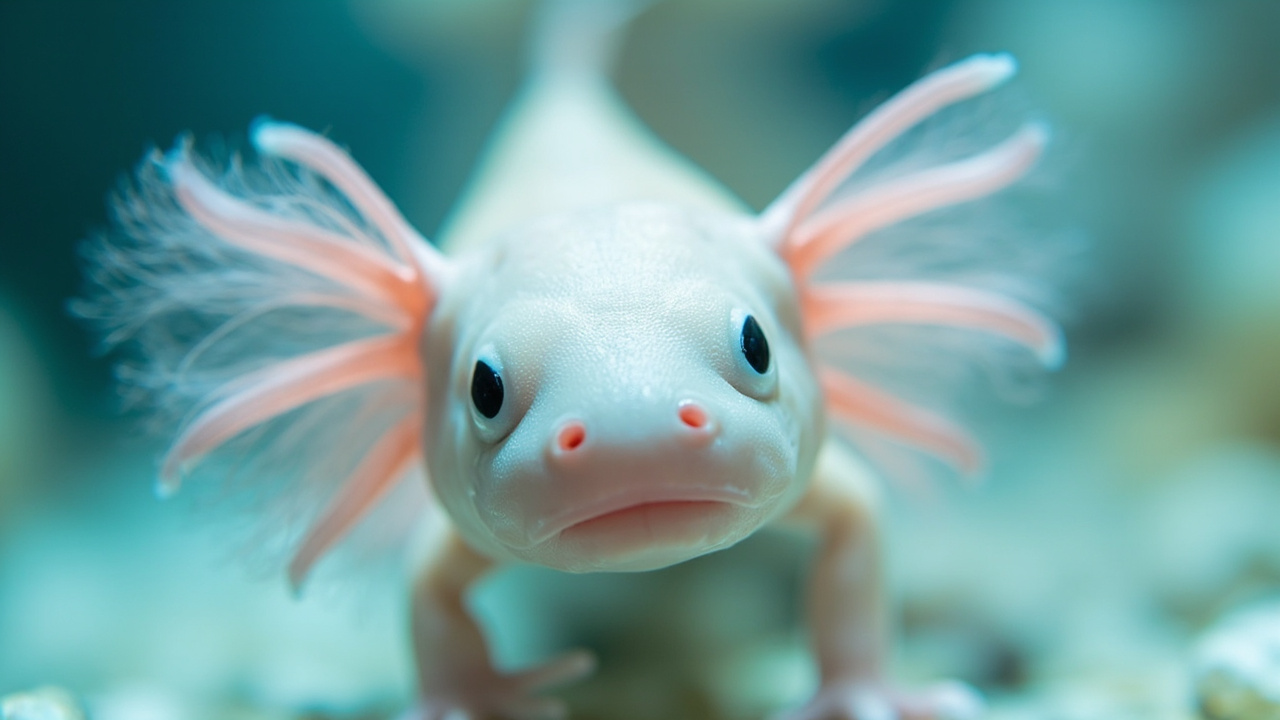
A healthy axolotl has bright, feathery gills (color varies by morph — red in wild types, pink in leucistics), clear eyes, smooth skin without patches or fuzz, a rounded belly (not sunken, not bloated), and responsive behavior — it should react when you approach the tank or offer food.
Red Flags
Watch for these symptoms and respond immediately:
- Curled gills (forward-curving) — stress indicator, usually temperature or water quality. Test parameters and check temperature immediately.
- Floating, unable to sink — often a gastrointestinal issue from swallowing air or food too fast. Usually resolves on its own within 24 hours. If persistent, check for impaction.
- White cotton-like patches on skin or gills — fungal infection. Caused by warm water, poor water quality, or injury. Treat with salt baths (tea-spoon of non-iodized salt per gallon, 10-15 minute bath, twice daily) and fix the underlying cause.
- Sloughing skin or redness — ammonia burn from poor water quality. Do an immediate 50% water change and test ammonia levels.
- Loss of appetite for more than a week — stress, illness, or temperature issue. Check all parameters before assuming disease.
Many axolotl health problems trace back to water quality and temperature — fix the environment first. Unlike reptile health issues such as metabolic bone disease which stem from UVB and calcium deficiency, axolotl illness is almost always water-related. Find an exotic vet who sees amphibians before you need one — not all reptile vets treat aquatic salamanders. Most of those symptoms trace to heat or ammonia, not mystery disease — that’s axolotl care in practice.
Is an Axolotl Right for You?
An axolotl costs $30-100 for a juvenile from a breeder, with initial setup running $200-500 for tank, filter, substrate, water conditioner, test kit, and cooling equipment. Monthly costs are low — food is cheap (worms and pellets), and there are no supplements or UVB bulbs to replace.
The real cost is commitment. A 10-15 year lifespan means this animal will be in your care through life changes, moves, and seasonal temperature battles. You need a plan for keeping water cold in summer, a reliable water-changing routine, and someone to feed your axolotl when you travel.
On a care-level scale, axolotls sit at moderate — the animal is easy, the water is not. If you can commit to consistent water management and temperature control, axolotls are one of the most rewarding exotic pets available. They’re visually unlike anything else, genuinely interactive, and once your tank is cycled and stable, day-to-day care is simple. The learning curve is steeper than a blue tongue skink or a ball python — but for someone who wants an animal that lives in water and looks like it came from another planet, nothing else compares. If the summer cooling plan is real, axolotl care is a long, quiet, very weird companion.
Sources
- Merck Veterinary Manual: Overview of Reptiles — type: authority; access-year: 2026
- Animal Diversity Web: Ambystoma mexicanum — type: authority; access-year: 2026
- VCA Hospitals: Axolotls — type: authority; access-year: 2026
These pages back the water-chemistry and natural-history numbers used in this axolotl care guide.