For informational purposes only. Not a substitute for veterinary advice. Consult your veterinarian for specific medical decisions.
Follow product labels; observe the animal closely, and seek qualified veterinary help when signs persist or worsen.
Quick Answer
Leopard geckos eat live insects only — dubia roaches, crickets, mealworms, and phoenix worms. No fruit, no veggies. Feed hatchlings daily, juveniles every other day, adults every 3-5 days. Always gut-load insects 24 hours before feeding, and dust with calcium + D3 powder 2-3x per week for juveniles, 1x per week for adults.
What Do Leopard Geckos Eat in the Wild?
Natural Diet Composition
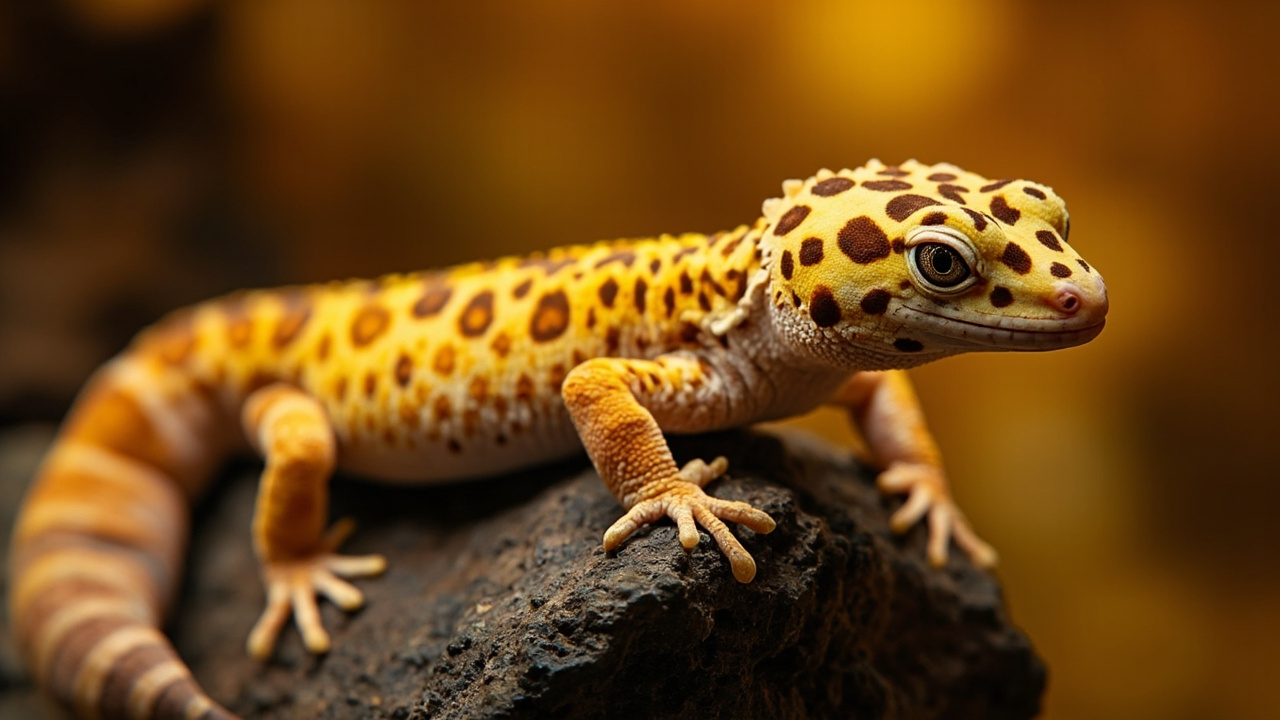
Leopard geckos are insectivores. In the arid rocky grasslands of Afghanistan, Pakistan, and parts of India, their diet consists entirely of small invertebrates — crickets, beetles, spiders, scorpions, and other terrestrial insects. They are opportunistic hunters that wait for prey to wander within striking distance, then ambush with a quick lunge.
A wild leopard gecko diet varies by season and availability, but the core nutrition comes from the chitin exoskeletons (providing fiber), protein-rich muscle tissue, and calcium from the partially digested plant matter inside the insects’ guts. This natural diet is high in protein and moderate in fat, which is the nutritional profile you should aim to replicate in captivity.
Why Insects Only — No Plant Matter in Their Diet
Leopard geckos cannot digest plant material — their diet must consist entirely of insects. Their digestive tract is short and adapted for processing protein and chitin, not cellulose. Unlike bearded dragons or iguanas, which are omnivores, leopard geckos will not recognize fruit or vegetables as food. Offering plant matter provides zero nutritional benefit and poses an impaction risk if accidentally ingested alongside insects.
Some keepers offer small amounts of fruit-based baby food as an occasional treat, but this is unnecessary and can lead to loose stools. Stick to a varied insect diet and your leopard gecko will get everything it needs. For an overview of the species, see our leopard gecko care guide.
Staple Feeder Insects
Dubia Roaches — The Best All-Around Feeder
Dubia roaches are widely considered the best staple feeder for leopard geckos. They have a favorable calcium-to-phosphorus ratio (approximately 1:1), high protein content (around 23%), and relatively low fat. They are easy to keep, breed, and do not produce the noise or odor associated with crickets.
Dubia roaches come in several sizes. Feed roaches that are roughly the width of your gecko’s head — this prevents choking and ensures the insect is appropriately sized for digestion. Small nymphs work well for hatchlings, while adults can handle large roaches. A colony of 50-100 roaches can sustain one adult gecko indefinitely with minimal upkeep.
Crickets — Readily Available but Messy
Crickets are the most accessible feeder insect and are available at nearly every pet store. They provide adequate protein (around 20%) and are active enough to stimulate a hunting response. However, crickets have a less favorable calcium-to-phosphorus ratio (approximately 1:2.5) compared to dubia roaches, meaning they provide more phosphorus than calcium.
The main drawbacks of crickets are noise, odor, and escape risk. Crickets chirp loudly (only males), die quickly if not housed properly, and can escape from enclosures through small gaps. If you use crickets, buy only what you need for 2-3 days and gut load them before feeding.
Phoenix Worms (Calciworms) — High Calcium, Low Maintenance
Phoenix worms, also called calciworms or black soldier fly larvae, are an excellent supplemental feeder. Their standout feature is extremely high calcium content — roughly 3% calcium by weight, which is among the highest of any feeder insect. This makes them particularly useful for growing juveniles and breeding females that need extra calcium in their diet.
Phoenix worms are small (typically 0.5-1 inch), so they are best suited for hatchlings and juveniles. Adults can eat them but may ignore them in favor of larger prey. They require no feeding or maintenance — store them in the container they arrive in at room temperature and they stay alive for weeks.
Occasional Treats: Mealworms, Wax Worms, Hornworms
Mealworms are controversial. They have high fat content (around 13%) and a hard chitin shell that can be difficult for young geckos to digest. Mealworm impaction was historically blamed on the chitin, but current research suggests the real issue is feeding mealworms exclusively without variety. Use mealworms as an occasional treat (1-2 per week) rather than a staple.
Wax worms are high-fat treats that leopard geckos love. Feed no more than 1-2 per week. Overfeeding wax worms leads to obesity and fatty liver disease. Hornworms are excellent hydration boosters due to their high moisture content, but their rapid growth means they must be fed quickly or they become too large.
Feeding Schedule by Age
Hatchlings (0-6 months) — Daily Feeding
Hatchling leopard geckos grow rapidly and need daily feeding to support this growth. Their diet at this stage should be the most varied, offering different feeder insects each day for balanced nutrition. Offer 5-8 appropriately sized insects per day. Dubia roach nymphs, small crickets, and phoenix worms are ideal for this age group. Remove uneaten insects after 15-20 minutes to prevent them from harassing or biting the gecko.
Growth rate depends on feeding frequency and supplementation. A well-fed hatchling on a daily diet with proper calcium supplementation can reach 30-40 grams within 6 months. Underfed hatchlings grow slowly, develop thin tails, and are more susceptible to metabolic bone disease.
Juveniles (6-12 months) — Every Other Day
Once your gecko reaches about 25 grams, transition to every-other-day feeding. Offer 4-6 medium insects per feeding. At this stage, the growth rate slows and the gecko begins to build fat reserves in its tail. A healthy juvenile tail should be plump and roughly the same width as the body.
Continue daily calcium dusting without D3 at every feeding. Reduce calcium with D3 to once per week and multivitamin to once per week. The reduced feeding frequency means each meal should be slightly larger to maintain adequate caloric intake.
Adults (12+ months) — 2-3 Times Per Week
Adult leopard geckos (40+ grams) need feeding only 2-3 times per week. A proper adult diet focuses on variety rather than volume — rotating between dubia roaches, crickets, and phoenix worms prevents nutritional gaps. Offer 6-10 medium to large insects per feeding. Adults maintain their weight rather than gaining, so monitor body condition regularly. A healthy adult has a plump tail that tapers smoothly from the body.
Adults are prone to obesity if overfed or fed too many high-fat insects like wax worms and superworms. A staple diet of dubia roaches and crickets keeps fat intake in check while providing complete nutrition. See our leopard gecko temperature guide for how temperature affects digestion and appetite.
Supplementation — Calcium, D3, and Multivitamins
Calcium Without D3 — The Daily Dust
Fluker’s Reptile Calcium Without Vitamin D3 ($5.99) is the standard daily supplement. Dust every feeding with plain calcium to ensure your gecko gets enough calcium to support bone growth and egg production. Place a small amount of calcium powder in a plastic bag or shallow dish, add the insects, and shake gently to coat them evenly.
A small dish of plain calcium powder should also be available in the enclosure at all times. Leopard geckos will lick calcium directly from the dish when their body needs it. This is especially important for gravid females developing eggs.
Calcium With D3 — 1-2 Times Per Week
Rep-Cal Phosphorus Free Calcium with Vitamin D3 ($15.40) provides vitamin D3, which enables calcium absorption in the gut. In the wild, geckos synthesize D3 through UVB exposure. In captivity, many leopard geckos do not receive UVB lighting, so dietary D3 supplementation is necessary.
Dust feeders with D3 calcium 1-2 times per week. Do not exceed this frequency — excessive vitamin D3 can cause toxicity, leading to soft tissue calcification and kidney damage. If you provide UVB lighting (which we recommend for its behavioral benefits), you can reduce D3 supplementation to once per week.
Multivitamin — Once Per Week
A reptile-specific multivitamin covers vitamins A, E, and B complex that are not provided by calcium supplements alone. Dust feeders with multivitamin once per week. Vitamin A deficiency causes shedding problems and eye issues, while excess vitamin A is equally harmful. Stick to the once-per-week schedule unless your veterinarian recommends otherwise.
How to Dust Insects Correctly
Place the supplement powder in a small plastic bag or a deli cup with a lid. Add the feeder insects, seal the container, and shake gently for 3-5 seconds. The powder should lightly coat the insects — they should not be caked in white powder. Feed the dusted insects immediately after coating, as the powder falls off quickly. Use feeder tongs ($6.99) to transfer insects safely without risking accidental bites.
Gut Loading — Making Your Feeders More Nutritious
What Is Gut Loading and Why It Matters
Gut loading is the practice of feeding nutritious food to your feeder insects 24-48 hours before offering them to your gecko. The nutrients in the insect’s gut pass directly to your gecko when the insect is eaten. A properly gut-loaded cricket or dubia roach can be 2-3 times more nutritious than one fed on plain cardboard.
In the wild, the insects that leopard geckos eat have full guts from feeding on fresh plant matter. Captive-bred feeder insects are often raised on cheap grain-based diets that lack the calcium, vitamins, and moisture your gecko needs. Gut loading bridges this nutritional gap.
Best Gut Load Foods and Commercial Products
Fluker’s Orange Cube Complete Cricket Diet ($7.99) is an all-in-one gut load product that provides moisture and nutrition in a single cube. It is convenient and works for crickets, dubia roaches, and mealworms.
For DIY gut loading, offer your feeder insects dark leafy greens (collard greens, mustard greens, dandelion greens), carrots (for beta-carotene), sweet potato, and squash. Avoid spinach and iceberg lettuce — spinach binds calcium due to oxalates, and iceberg lettuce has zero nutritional value. Feed gut load foods 24 hours before offering the insects to your gecko.
Feeding Techniques and Diet Tips
Bowl Feeding vs Tong Feeding
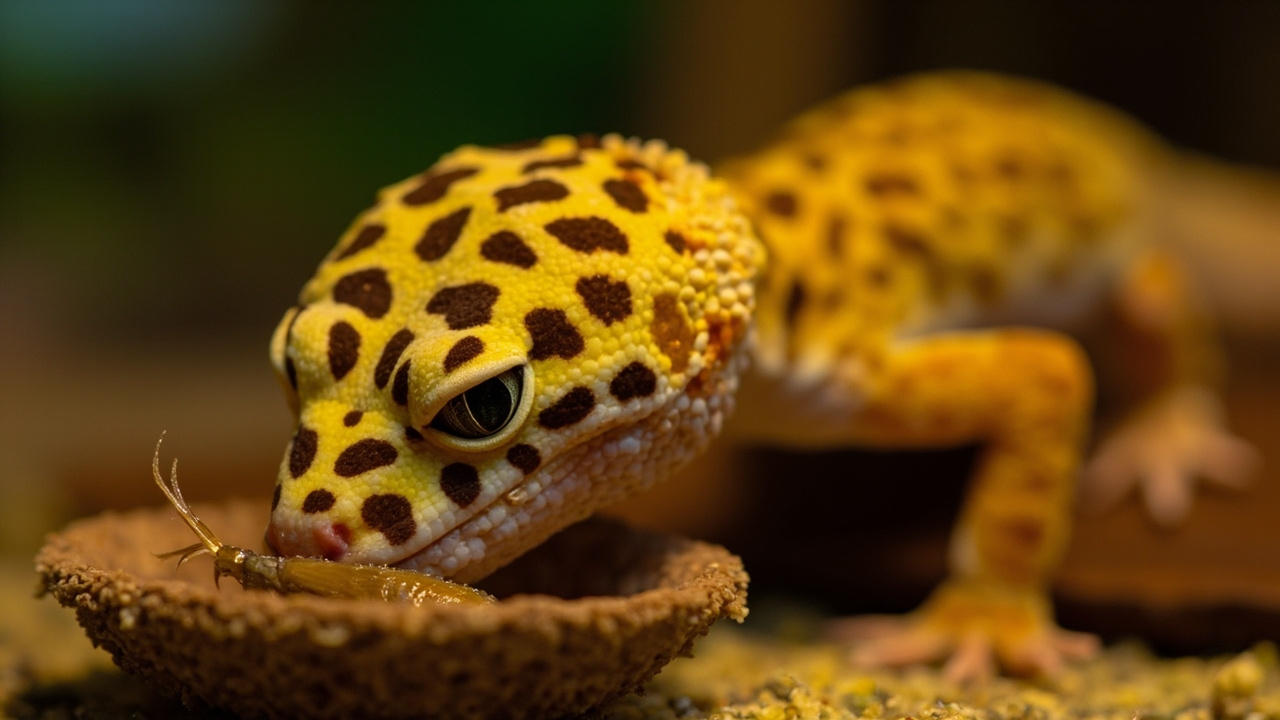
Bowl feeding involves placing live insects in a smooth-sided dish so they cannot escape. This mimics how a gecko would encounter prey in its natural diet. This works well for dubia roaches and mealworms, which do not climb smooth surfaces. Your gecko learns to associate the dish with food and will visit it on its own schedule. Bowl feeding is convenient for keepers who work long hours.
Tong feeding builds trust between you and your gecko. Using feeding tongs, hold the insect in front of the gecko and let it strike. This also lets you monitor exactly how much each gecko eats, which is important in multi-gecko enclosures. Most keepers use a combination — bowl feeding for staples and tong feeding for supplements and treats.
How Many Insects Per Feeding
A widely used guideline for leopard gecko diet planning is 2 appropriately sized insects per inch of the gecko’s body length (excluding the tail). This translates to roughly 5-8 small insects for hatchlings, 4-6 medium insects for juveniles, and 6-10 large insects for adults. Adjust based on appetite and body condition — if the tail is thin, increase feeding. If the tail is excessively fat, reduce slightly.
Signs of Overfeeding or Underfeeding
An overfed gecko on an improper diet develops a tail wider than its body, sometimes so large it drags on the ground. This puts strain on the spine and organs. Reduce portion sizes and eliminate fatty treats like wax worms until the tail returns to a normal proportion.
An underfed gecko on an inadequate diet has a thin, flat tail with visible hip bones. The body appears gaunt and the gecko may become lethargic. Increase feeding frequency and ensure the gecko is warm enough — a cold gecko will not eat regardless of how much food is offered. Use the temperature converter to verify your enclosure temperatures are in the correct range. For more on enclosure setup, see our terrarium guide.
Common Feeding Mistakes
Relying only on mealworms. Mealworms were once the default leopard gecko diet staple, but they are high in fat and low in calcium relative to dubia roaches and crickets. A diet of nothing but mealworms leads to obesity, fatty liver disease, and poor bone density. Use mealworms as a rotation feeder, not a staple.
Skipping supplementation. This is the most dangerous feeding mistake. Without calcium and D3 supplementation, leopard geckos develop metabolic bone disease (MBD) — a progressive, irreversible condition that causes softening and deformation of the bones. Every feeding should include calcium dust. It takes less than 10 seconds and prevents a disease that cannot be cured once established.
Feeding prey that is too large. A common rule is that feeder insects should be no wider than the space between the gecko’s eyes. Insects that are too large can cause choking, impaction, or regurgitation. If your gecko repeatedly refuses food or regurgitates after eating, try offering smaller insects.
For questions about which specific foods are safe, check our how to set up reptile lighting and heat and other care guides. Our leopard gecko shedding guide covers what to do during sheds. The UVB distance calculator can help you set up proper lighting to support calcium absorption. The setup cost calculator can help you budget your complete gecko care system. The crested gecko diet guide compares CGD schedules, live insect supplementation, and the fruit-treat rules we follow for our crested geckos.
Sources
- Merck Veterinary Manual: Overview of Reptiles — type: authority; access-year: 2026