For informational purposes only. Not a substitute for veterinary advice. Consult your veterinarian for specific medical decisions.
Follow product labels; observe the animal closely, and seek qualified veterinary help when signs persist or worsen.
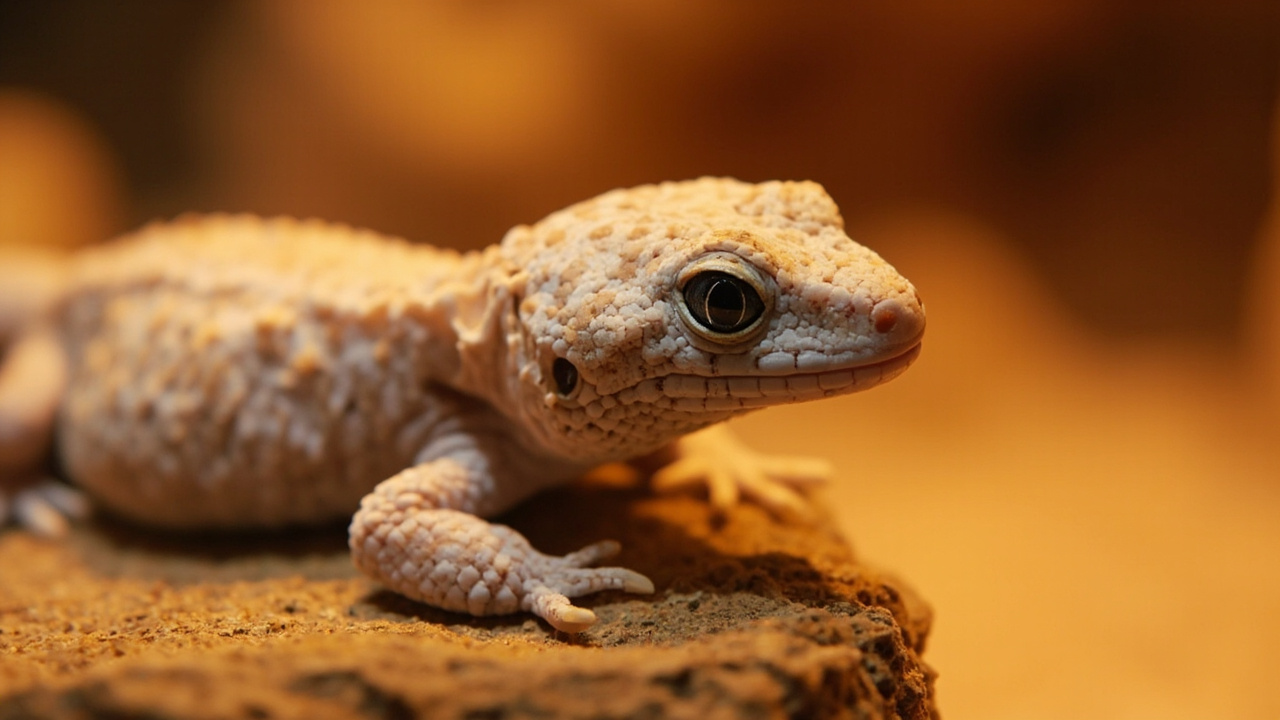
Leopard gecko shedding is one of the most frequent care questions new keepers have. Leopard geckos shed their skin regularly throughout their entire lives. Unlike mammals that shed gradually, reptiles shed in one piece — or at least they should. When a shed goes wrong, leftover skin can constrict toes, damage eyes, and restrict tail circulation. Understanding the leopard gecko shedding cycle and providing the right conditions prevents most problems before they start.
Quick Answer
Leopard geckos shed every 2-4 weeks as adults and weekly as hatchlings. The shed comes off in one piece when humidity is right (60-80% in a moist hide). Stuck shed on toes is the #1 preventable problem — soak the gecko in shallow lukewarm water for 10 minutes, then gently roll it off with a cotton swab. Never pull dry skin; this can rip live tissue. Safe stuck shed removal on toes, tail tips, and around the eyes follows the same warm soak + gentle roll method, but each spot has its own trap to avoid.
This guide covers how often leopard geckos shed, how to recognize the signs, what a proper moist hide looks like, and what to do when shed gets stuck. If you are brand new to leopard gecko ownership, start with our getting started guide — it covers the basics before you dive into leopard gecko shedding specifics.
The Shedding Cycle Explained
Leopard gecko shedding follows a predictable pattern once you know what to watch for. Let’s break down the timeline.
How Often Do Leopard Geckos Shed?
Adult leopard geckos shed roughly every 4 to 6 weeks. The exact timing depends on age, growth rate, diet quality, and overall health. Hatchlings and juveniles can shed as often as every 1 to 2 weeks because their bodies are growing at a rapid pace. Each shed represents a period of growth, so frequent shedding in young geckos is a positive sign.
As geckos age, the interval between sheds naturally increases. A healthy 5-year-old may only shed once every 6 to 8 weeks. Breeding females tend to shed slightly more often due to the physical demands of egg production.
Signs Your Gecko Is About to Shed
Before the actual shed begins, you’ll notice several changes:
- Dull or faded colors — The skin takes on a grayish or whitish appearance, sometimes described as the gecko looking “washed out”
- Cloudy or milky eyes — A milky blue-white film covers the eyes about 2 to 3 days before the shed begins
- Reduced appetite — Many geckos eat less during the pre-shed phase, which is normal
- Increased hiding — Your gecko may spend more time in its hides, especially the moist hide as shed approaches
- Restlessness or rubbing — The gecko may rub its body against rocks, branches, or the sides of the enclosure to loosen the old skin
The milky eye phase is called “in blue” and typically lasts 2 to 3 days. After that, the eyes clear up and the actual shedding process begins within 24 to 48 hours.
What Happens During the Shed
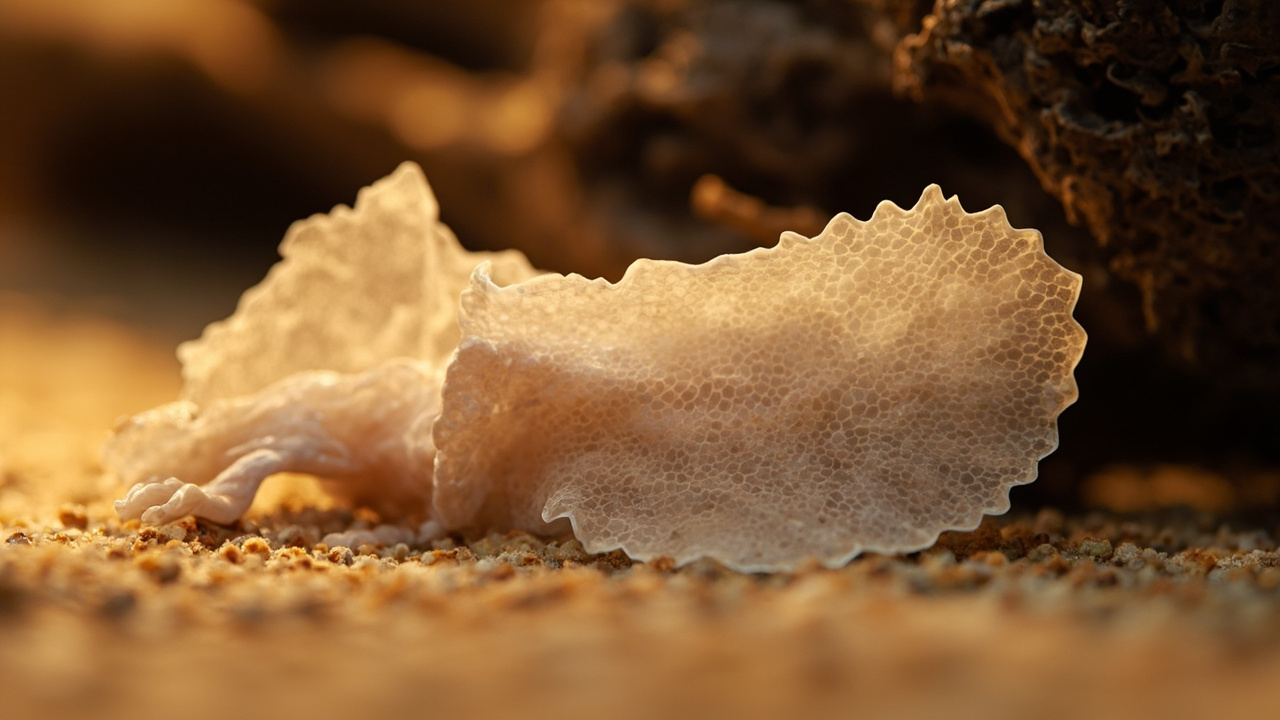
The gecko produces a fluid layer between the old skin and the new skin underneath. This fluid separates the two layers and allows the old skin to slide off. The gecko then pulls and rub against surfaces to peel the skin away, usually starting from the head and working down the body.
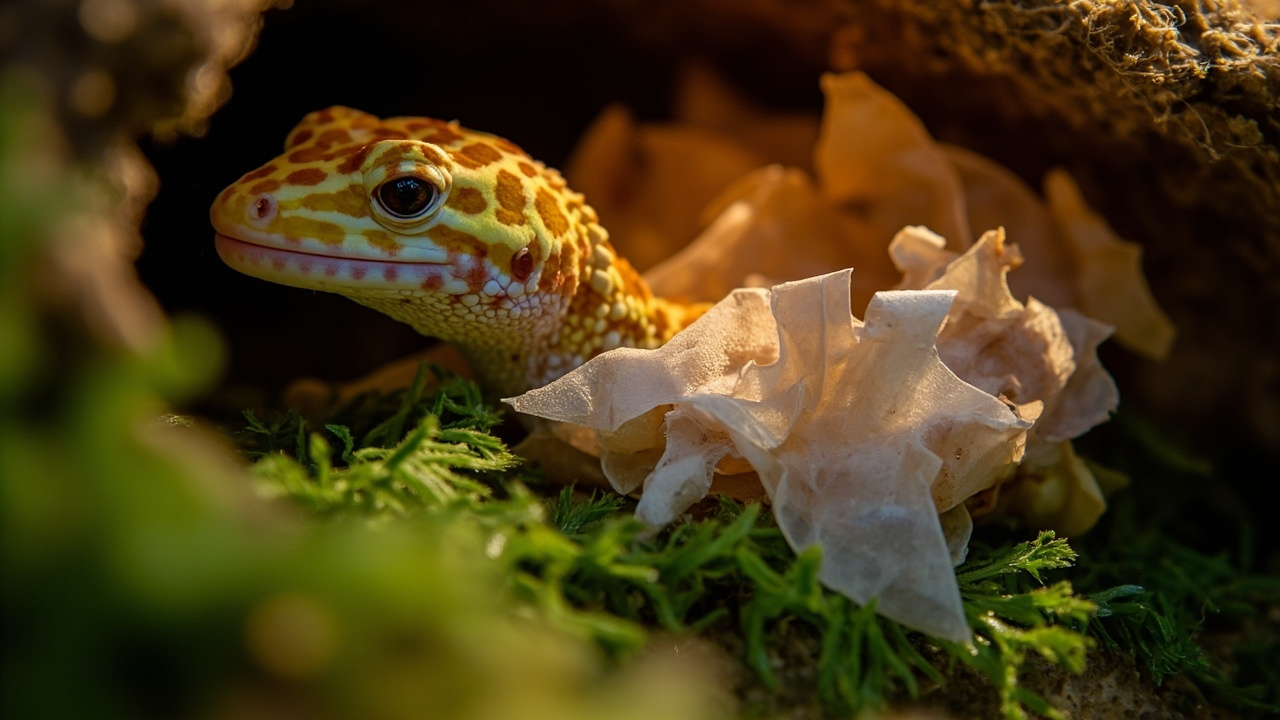
A healthy shedding cycle produces one large piece, similar to pulling off a sock. You’ll often find the shed skin in the enclosure — it looks like a thin, translucent replica of your gecko, often intact enough to see the shape of the toes and tail tip. The complete shedding process from pre-shed color change to final skin removal typically takes 3 to 7 days.
Your gecko will likely eat the shed skin. This is completely normal and actually beneficial — shed skin contains protein and minerals that get recycled back into the gecko’s body.
Setting Up a Moist Hide
A moist hide is the single most important tool for preventing leopard gecko shedding problems. Here’s why it matters and how to set one up correctly.
Why a Moist Hide Is Non-Negotiable
Leopard geckos come from arid regions of Afghanistan, Pakistan, and India where the ambient humidity is low — typically 20 to 40 percent. But even in these dry environments, geckos seek out micro-humid burrows and rock crevices when it is time to shed. A moist hide replicates these natural retreats.
Without a moist hide, the shed skin dries out and sticks to the body. The most common consequences are:
- Constricted toes — stuck shed cuts off circulation, leading to toe loss
- Tail tip damage — restricted blood flow can cause the tail tip to die and fall off
- Eye infections — retained eye caps prevent proper blinking and trap bacteria
- General stress — the discomfort of stuck skin affects appetite and behavior
Materials You Need
Setting up a moist hide doesn’t require much. Here’s what you need:
- A shelter — any enclosed plastic or resin cave with a single entrance works. The JIHAQUA Reptile Hide Cave is a durable resin shelter that provides a secure, enclosed space for your gecko to retreat and shed in privacy
- Moisture-retaining substrate — damp paper towel is the simplest option. Zoo Med New Zealand Sphagnum Moss is an excellent upgrade because it holds moisture longer and resists mold
- A misting bottle — a fine mist sprayer like the Ultra Fine Mist Spray Bottles keeps the substrate damp without flooding it
You can also use a simple Tupperware container with an entry hole cut in the side — this is the budget option and works just as well as commercial hides. Our setup cost calculator can help you plan your complete gecko habitat budget.
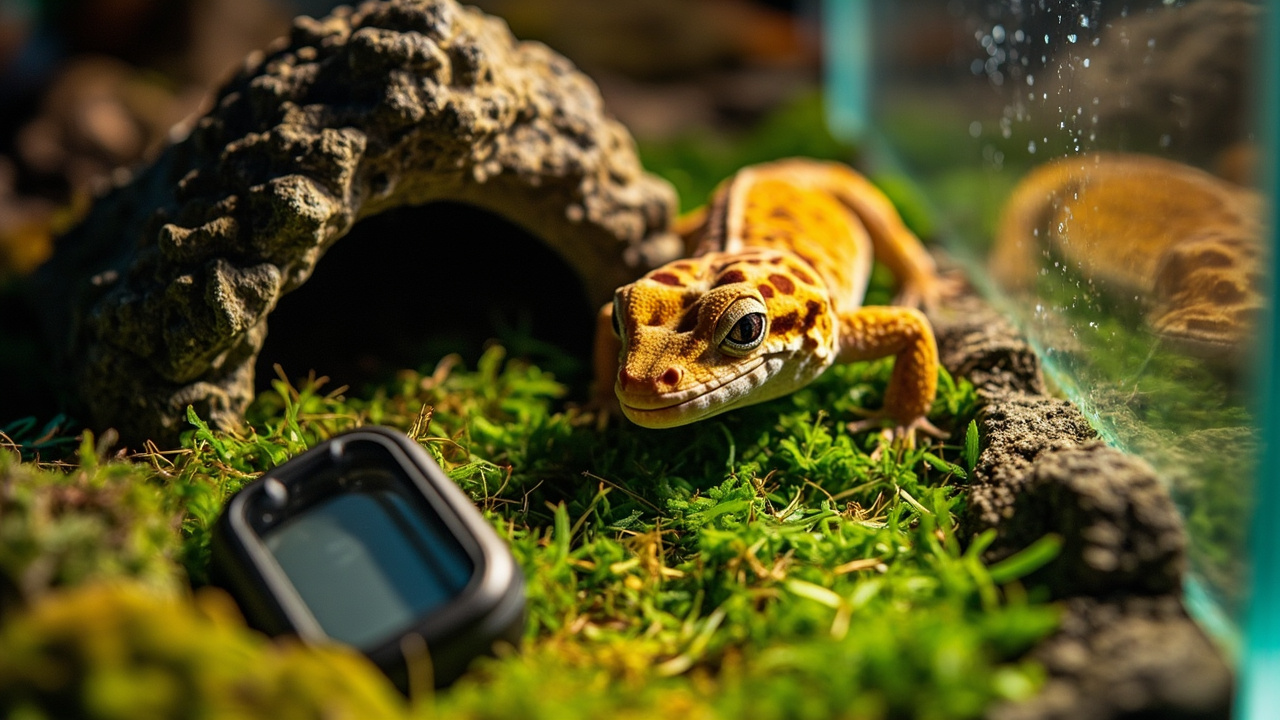
Step-by-Step Moist Hide Setup
-
Choose the location — place the moist hide on the warm side of the tank, over or near the heat mat. The warm temperature combined with humidity creates the best conditions for shedding. Avoid placing it on the cool side where moisture will not evaporate properly
-
Add the substrate — line the bottom with damp paper towel or sphagnum moss. The substrate should be moist but not dripping. Squeeze out excess water before placing it in the hide — think “wrung-out sponge” consistency
-
Position the entrance — face the entrance toward the open area of the tank so your gecko can see it easily. Geckos in pre-shed will actively seek out the moist hide if they can find it
-
Maintain daily — mist the substrate every day to keep it damp. Replace paper towel every 3 to 4 days to prevent bacterial growth. Sphagnum moss lasts longer but should still be swapped out every 1 to 2 weeks
-
Monitor humidity — aim for 70 to 80 percent inside the hide. You can check this with a small digital hygrometer placed inside. The rest of the tank should remain at the normal leopard gecko temperature range of 30 to 40 percent ambient humidity
Humidity Protocol for Healthy Sheds
Getting humidity right isn’t guesswork. Leopard gecko shedding success depends on a microclimate gradient — a dry main enclosure with a localized humid zone. Here’s how the numbers break down:
| Zone | Humidity Range | Purpose |
|---|---|---|
| Warm side (ambient) | 30-40% | Normal daily habitat |
| Cool side (ambient) | 20-30% | Prevents respiratory issues |
| Moist hide interior | 70-80% | Enables clean, complete sheds |
The key mistake beginners make is raising humidity across the entire tank. That’s not what geckos need — it can cause respiratory infections. Instead, create a humidity pocket inside the moist hide while keeping the rest of the enclosure dry.
How to Monitor and Adjust
Check the moist hide substrate daily by touch — it should feel like a wrung-out sponge, damp but not dripping. If it feels dry, mist it. If it feels soggy, replace the substrate and use less water.
For precise tracking, place a small digital hygrometer like the JEDEW 2 Pack Digital Hygrometer ($6.92) inside the hide. You can’t eyeball humidity accurately — a $7 gauge saves you from guessing. During active shed periods (the “in blue” phase through skin removal), bump the hide to the higher end of the range — closer to 80%. Between sheds, 70% is sufficient.
Seasonal Adjustments
Winter months bring dry indoor air from heating systems. You’ll likely need to mist the moist hide more frequently — sometimes twice daily. Summer humidity is naturally higher, so once-daily misting usually does the job. Watch the gecko’s behavior: if they’re spending extra time in the hide, the ambient humidity is probably too low.
How to Help a Shedding Gecko
Sometimes a leopard gecko shedding session needs a little assistance. The key is knowing when to step in — and what to do without causing harm.
Do Not Peel the Shed
This is the single most important rule of leopard gecko shedding care. Never pull or peel shed skin off your gecko, even if it looks like it is hanging loosely. The old skin is connected to the new skin underneath, and pulling can tear the delicate new layer, causing pain, bleeding, and infection.
Pulling stuck shed is the leading cause of toe loss in captive leopard geckos. Even experienced keepers should never force skin off a living animal.
Increase Humidity and Misting
If your gecko is in the middle of a shed, you can help the process along by:
- Misting the enclosure lightly — spray a few pumps of water onto the warm side of the tank once per day during the shed period
- Ensuring the moist hide is properly damp — check the substrate and re-mist if it has dried out
- Providing a shallow warm soak — place your gecko in a small container with 0.5 inches of lukewarm (85-88°F / 29-31°C) water for 10 to 15 minutes. This softens stubborn skin patches. The temperature converter can help you get the water temperature right. Supervise the entire time
Provide Rough Surfaces for Rubbing
Geckos need texture to pull the skin off. Make sure the enclosure has:
- Rough rocks or cork bark pieces
- Branches or driftwood
- Textured hides with uneven surfaces
Avoid smooth plastic or glass surfaces as the primary decor — your gecko cannot grip these well enough to pull the skin off efficiently.
Stuck Shed — Causes, Prevention, and Removal
Stuck shed is the most common leopard gecko shedding complication. If left untreated, retained skin causes serious damage — especially on toes, tail tips, and around the eyes. Most cases are preventable with proper husbandry and easy to treat at home when they aren’t.
Common Causes of Stuck Shed
The root cause is almost always insufficient humidity at shedding time. Other contributing factors include:
- Dehydration — geckos not drinking enough water or receiving inadequate misting
- Low vitamin A — vitamin A deficiency affects skin health and makes sheds stickier. A balanced diet with proper supplementation is key — see our leopard gecko diet guide for the basics
- Incorrect temperatures — if the warm side drops below 85°F, the gecko’s metabolism slows and the shedding fluid does not form properly
- Improper substrate — loose sand can dry out the skin further. Paper towel, tile, or slate are better choices for geckos prone to stuck shed
- Old age or illness — older or sick geckos may struggle to complete sheds even with proper conditions
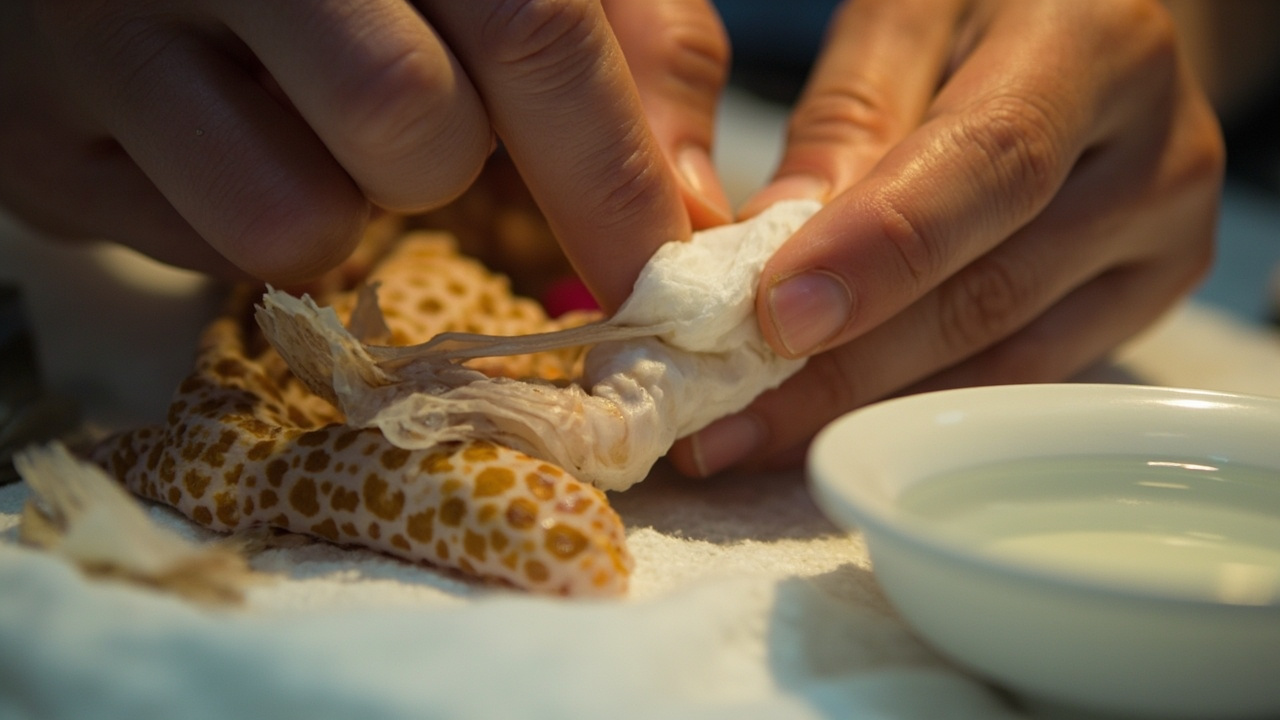
Stuck Shed on Toes — How to Remove Safely
Retained shed on toes is the most common shedding problem. If left untreated, the constricting skin acts like a tourniquet and cuts off blood flow, eventually causing the toe to die and fall off.
To treat stuck toe shed:
- Prepare a warm soak — fill a shallow container with lukewarm water (85-88°F / 29-31°C). The temperature converter helps you confirm the right range, deep enough to cover the gecko’s feet but not so deep that it has to swim
- Soak for 10 to 15 minutes — this softens the stuck skin. Supervise at all times
- Gently massage with a damp cloth — after the soak, use a soft, damp cotton swab or cloth to very gently roll over the affected toes. Do not pull — just apply light pressure and let the softened skin release naturally
- Apply a tiny amount of mineral oil — if the skin is still stuck after soaking, a single drop of mineral oil on the toe can help lubricate the area. Wipe off any excess after 30 minutes
- Repeat daily — most cases resolve within 2 to 3 sessions. If the shed does not come off after a week, consult a reptile veterinarian
Prevention is far easier than treatment. A properly maintained moist hide prevents 95% of stuck shed cases.
Stuck Shed on the Tail — When to Intervene
The tail is a common retention site because it is the last part of the body the gecko sheds during the shedding process. Minor stuck shed on the tail often resolves on its own if the gecko has access to a moist hide. Our terrarium guide explains how to choose an enclosure that supports proper humidity zones.
Intervene if:
- The retained skin forms a visible band or ring around the tail — this indicates constriction
- The tail tip appears discolored (dark, black, or purple) — this suggests restricted blood flow
- The gecko is biting at the tail or showing signs of distress
Follow the same warm soak and gentle massage approach used for toes. Never cut or snip retained shed.
When Stuck Shed Requires a Vet Visit
See a reptile veterinarian if:
- Multiple sheds have failed in a row despite proper moist hide setup
- The gecko has lost toes or tail tips from previous stuck sheds
- There are signs of infection: redness, swelling, pus, or a foul smell
- The gecko has stopped eating for more than two weeks combined with shedding problems — review our leopard gecko diet guide to rule out nutrition-related causes
- The eyes remain clouded for more than 5 days past the expected shed date
Chronic shedding problems often point to an underlying health issue such as metabolic bone disease, kidney disease, or a vitamin A deficiency that requires veterinary diagnosis and treatment.
Shedding Problems in Specific Situations
Leopard gecko shedding challenges vary depending on the gecko’s age, breeding status, and overall health. Here’s what to expect in different scenarios.
Hatchlings and Juveniles Shedding More Frequently
Young geckos shed every 1 to 2 weeks, which means they spend a significant portion of their early life in some phase of shedding. This is normal. The key is ensuring their small enclosures have a properly sized moist hide — a standard-sized cave may be too large for a hatchling. Use a smaller container or a half-coconut hide with damp paper towel for geckos under 3 months old.
Hatchlings are also more vulnerable to stuck shed because their small toes are easily constricted. Check their feet after every shed and address any retained skin immediately. Our leopard gecko species guide covers the full range of basic husbandry requirements for new keepers.
Breeding Females and Shedding Complications
Gravid (egg-carrying) females use significant calcium and vitamin A reserves for egg production, which can affect skin quality and shedding. Provide calcium supplementation with vitamin D3 and consider a diet rich in vitamin A sources like dusted feeder insects. Proper UVB lighting also supports calcium absorption — the UVB distance calculator can help you position your bulb correctly.
If a breeding female has repeated stuck sheds, she may need a break from breeding to recover her nutrient reserves.
Old Age and Slower Sheds
Senior geckos (10+ years) naturally shed less frequently and may take longer to complete each shed. Their skin produces less of the separation fluid, so the process is slower. A consistently maintained moist hide becomes even more important for older animals. Don’t handle them during sheds — their skin tears more easily and heals more slowly.
Common Shedding Mistakes
Even experienced keepers make leopard gecko shedding mistakes. Here are the three biggest errors and how to avoid them.
Handling Your Gecko During a Shed
The gecko’s vision is impaired during the “in blue” phase and the skin is fragile. Handling during this time causes stress and can tear the loosening skin, creating patches that get stuck. Don’t handle your gecko unless it’s absolutely necessary. Limit contact to essential tasks like health checks or habitat maintenance.
Using Dry Substrate Without a Moist Hide
Some keepers use dry sand or paper towel substrate across the entire enclosure without providing any humid retreat. This works for ambient conditions but fails completely at shedding time. Even desert species need access to humidity for healthy shedding. A moist hide isn’t optional — it’s a basic requirement, as essential as maintaining the correct thermal gradient described in our temperature guide.
Pulling Shed Skin Off
This mistake causes more damage than any other shedding-related error. Even when the skin appears to be hanging off, the connection to the new skin underneath is still intact. Forcing it off tears the new skin, exposes raw tissue, and invites infection. Patience and proper humidity are the only correct approach. If you’re tempted to pull, stop — that’s when you need to re-mist the moist hide and wait another day.
For more details on maintaining the correct thermal gradient that supports healthy shedding, see our leopard gecko temperature guide. If you are new to leopard gecko care, our leopard gecko species guide covers all the basics of husbandry and setup. For the lighting side of that same setup, see our leopard gecko UVB setup guide covering bulb strength and distance.
Sources
- Merck Veterinary Manual: Overview of Reptiles — type: authority; access-year: 2026