Cloudy blue eyes look alarming on a ball python, but it’s the most routine event in snake keeping — a shed coming, not an illness. Whether that shed slides off in one clean piece comes down to one number: humidity held at 50-60% normally and pushed to 70-80% until the old skin is off.
For informational purposes only. Not a substitute for veterinary advice. Consult your veterinarian for specific medical decisions.
Shedding is a normal process, not a disease — but stuck shed around eyes, toes, or the tail tip can turn medical fast. Follow product labels, watch the animal closely, and get qualified veterinary help when signs persist or worsen.
Quick Answer
| Question | Fast answer |
|---|---|
| How often do ball pythons shed? | Adults every 4-6 weeks; juveniles every 3-4 weeks |
| How long does a full shed take? | Blue eyes 2-4 days, clear-up 1-3 days, the shed itself minutes to a few hours |
| Humidity between sheds | 50-60% |
| Humidity during the shed window | 70-80% |
| Inside the moist hide | 70-80% — spikes to 80-90% right after misting are fine |
| Stuck shed rule | Never pull. Raise humidity first; soak only in shallow, supervised 85°F water |
| Call an exotic vet when | Residue sits for 2+ weeks, eye caps stick through two sheds, or toes or the tail tip turn dark or shrunken |
The Ball Python Shedding Cycle Explained
The ball python shedding cycle runs on a clock you can learn to read — four stages, each with its own look, length, and to-do list. Learn them and most shedding problems announce themselves days before they become stuck shed.
Why Ball Pythons Shed
Shedding — ecdysis — is how a snake replaces its entire outer skin layer in one go. Mammals shed dead skin cells constantly and invisibly; snakes can’t, so the old layer builds up and comes off all at once. That’s why a shed is really a growth event: the snake sloughs the old skin because it has outgrown it. A snake that eats well and grows quickly sheds more often, and that’s a good sign, not a bad one. For the full care picture — enclosure size, heat, and feeding — see our ball python species profile.
How Often Do Ball Pythons Shed?
Frequency tracks growth rate more than age alone. The ranges below come from species guides and match the cycle our ball python care guide uses across the species pages.
| Life stage | Typical shed interval | Why |
|---|---|---|
| Adult | Every 4-6 weeks | Growth has slowed; meals come every 10-14 days |
| Juvenile | Every 3-4 weeks | Fast growth phase |
| Hatchling | More often than juveniles | Growing faster than at any later stage |
Treat those numbers as a normal band. A juvenile shedding more often than every 3-4 weeks, or an adult more often than every 4-6 weeks, can point to a skin problem rather than healthy growth. Think mites, a burn healing, or scalding from a wet substrate. Constant shedding with poor condition is a vet conversation, not a humidity tweak.
The Complete Timeline: Stage by Stage
The whole process from blue eyes to a finished shed usually runs 4-10 days. This ball python shedding timeline breaks it into the stage durations you’ll actually observe:
| Stage | What you see | Typical duration | What to do |
|---|---|---|---|
| In blue | Eyes turn milky blue, scales dull and darken, belly looks pinkish | 2-4 days | Stop handling; raise humidity toward 70-80% |
| Clear-up | Eyes return to normal, skin looks almost back to normal | 1-3 days | Keep humidity high — the shed is days away, sometimes hours |
| Shed day | Old skin peels off, usually head-first, often in one piece | Minutes to a few hours | Leave the snake alone; inspect the shed afterward |
| After the shed | Fresh, bright scales; behavior returns to normal | Appetite back within 24-48 hours | Check toes, tail tip, and eye caps for residue |
Ball python shedding timelines vary a little between guides — ExoPetGuides puts the blue phase at 1-3 days and Terrarium Quest at 2-4 — so read the table as a typical band rather than a countdown.
Pre-Shed Signs and Behavior
Ball python shedding signs arrive in a predictable order — color first, then eyes, then behavior. Catch them early and you have days, not hours, to get the enclosure ready.
Physical Signs of an Upcoming Shed
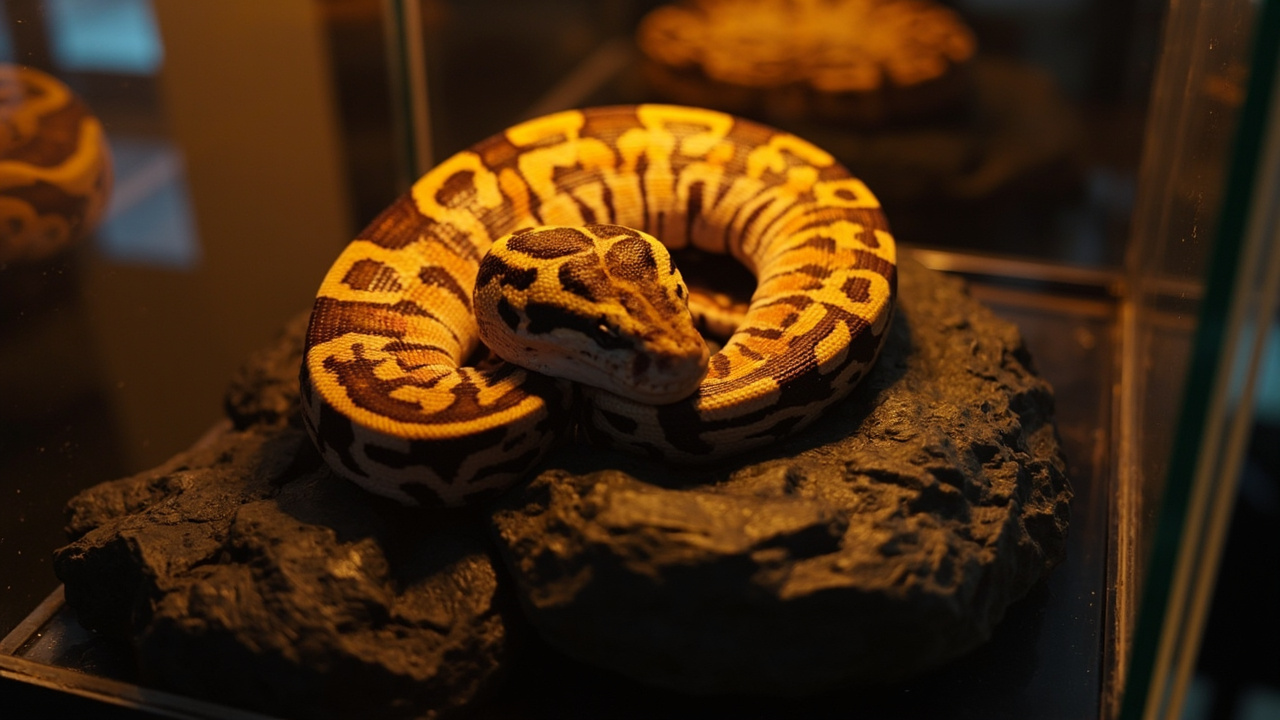
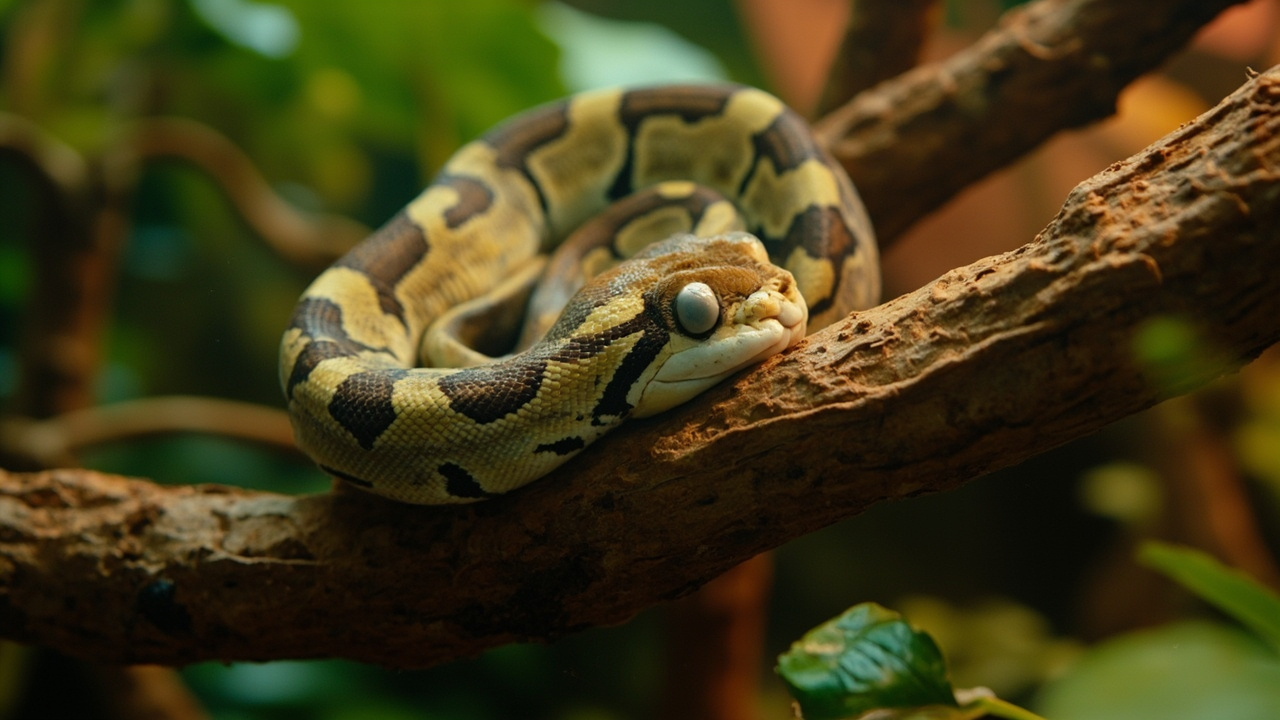
The first sign is usually color: the whole snake darkens and loses its sheen, as if someone turned the brightness down. Then come the eyes. Fluid builds between the old spectacle and the new one forming underneath, which turns them milky blue-gray and opaque. Some snakes also show a pinkish flush along the belly and faintly wrinkled skin along the flanks. Blue eyes worry new keepers more than anything else on this page, and it’s pure biology. The fluid sits between two transparent layers of scale and clears on its own before the shed.
Behavioral Changes During the Blue Phase
Expect a snake that hides more than usual, isn’t interested in food, and seems jumpier when you move near the enclosure. Their vision is genuinely blurred during the blue phase, so they can’t judge distance the way they normally do. Two behaviors you’ll want to encourage rather than stop. The first is rubbing the face and body against rough surfaces like rocks, branches, or the hide edge — that’s how they start the peel. The second is soaking in the water bowl, which softens the old skin from the outside. All three are normal parts of the ball python shedding process.
Humidity Setup for a Clean Shed
Humidity Requirements by Phase
| Phase | Target humidity | Notes |
|---|---|---|
| Between sheds | 50-60% | The baseline the whole enclosure holds year-round |
| Blue phase until shed complete | 70-80% | Bump it and hold it until the old skin is fully off |
| Inside the moist hide | 70-80% | Spikes toward 80-90% right after misting are normal |
Published guides don’t agree on one number — ExoPetGuides calls 60-80% acceptable ambient humidity for the species, while the site-wide ball python care guide works to 70-80% for the shed window. The safe move is to aim high: hygrometers often read a few points low, and a shed fails at the dry end of any of these ranges, not the wet end. Humidity doesn’t act alone, either — the warm side dries substrate faster than the cool side, so run the numbers together with our ball python temperature guide.
Monitoring Humidity
You can’t eyeball humidity, and dial-style analog gauges drift badly enough to be decoration. Get a digital unit with a remote probe. Take one reading on the cool side, and a second inside the moist hide — during a shed the hide reading matters more than the ambient one. Calibrate now and then: a probe sealed in a saturated salt slurry should read about 75% after several hours, and most cheap probes land within a few points of that. The Zoo Med Labs Digital Thermometer Humidity Gauge ($12.99) handles temperature and humidity in one unit. That’s enough for a single-enclosure setup if you’re willing to move the probe between the two reading spots during shed week.
Raising Humidity When Numbers Drop
Work the ladder from cheap to involved:
- Bigger water bowl, moved partly onto the warm side. Evaporation does quiet, constant work, and a bowl the snake can curl in doubles as a soaking station.
- Switch to moisture-holding substrate. Cypress mulch or coconut fiber hold water for days; aspen is a dry-terrain bedding and the wrong tool for this species. Our substrate guide compares the options.
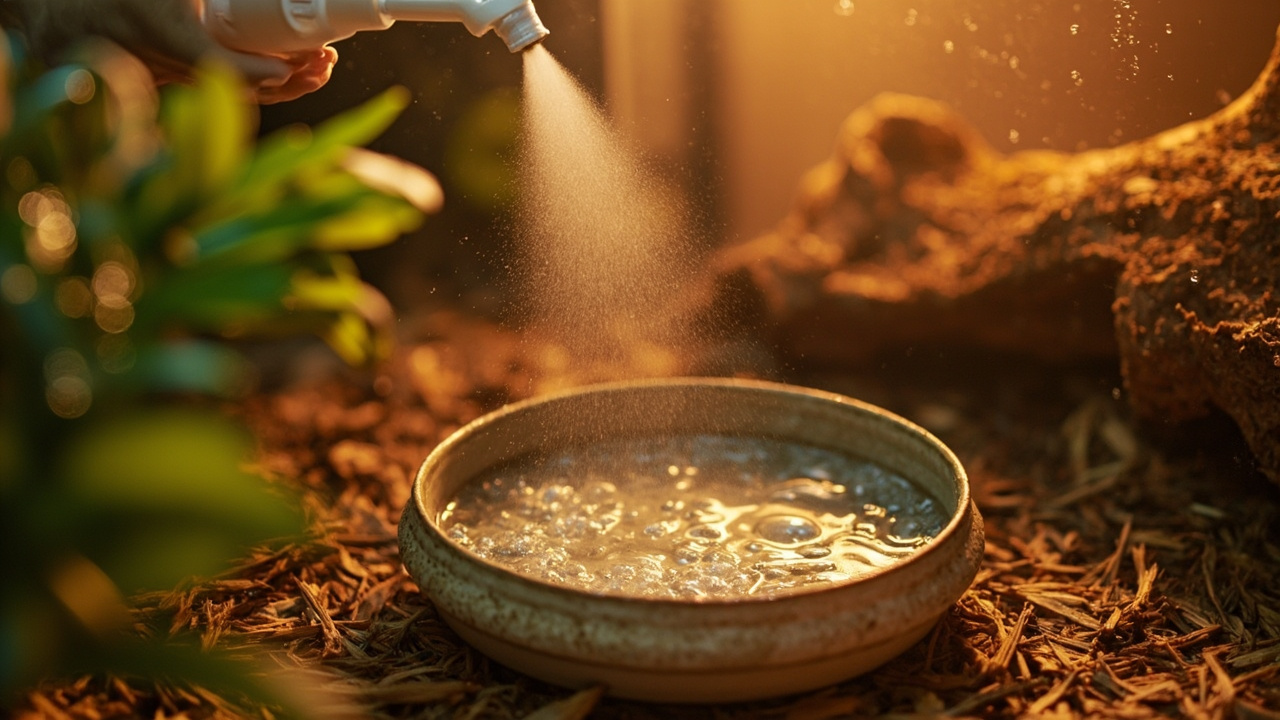
- Add mechanical help. Misting raises humidity in bursts that evaporate fast; a fogger holds a floor. If the room itself is dry — air conditioning, baseboard heat — misting alone won’t hold. A unit like the Evergreen Pet Supplies Reptile Fogger ($44.99) with a 2-liter tank keeps a large enclosure out of the danger zone between refills.
Ball python shedding humidity failures are the root cause behind most stuck sheds, so this section is where prevention actually lives. One caution: a fogger doesn’t rescue a leaking enclosure. If the top screen vents are wide open or the substrate dries within hours, fix the enclosure first and let the fogger do fine-tuning. Timing matters too — mist in the morning so the enclosure dries gradually through the day instead of sitting soaked overnight.
The Moist Hide: Step-by-Step Setup
Why a Moist Hide Works
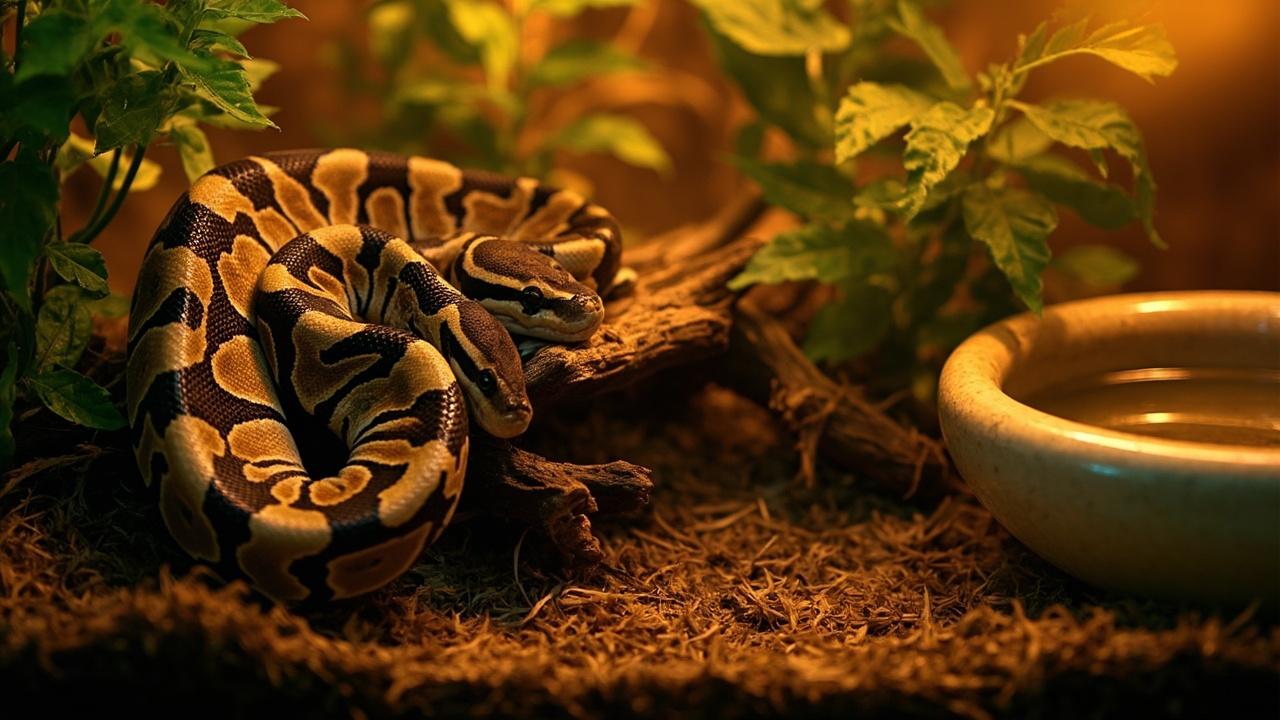
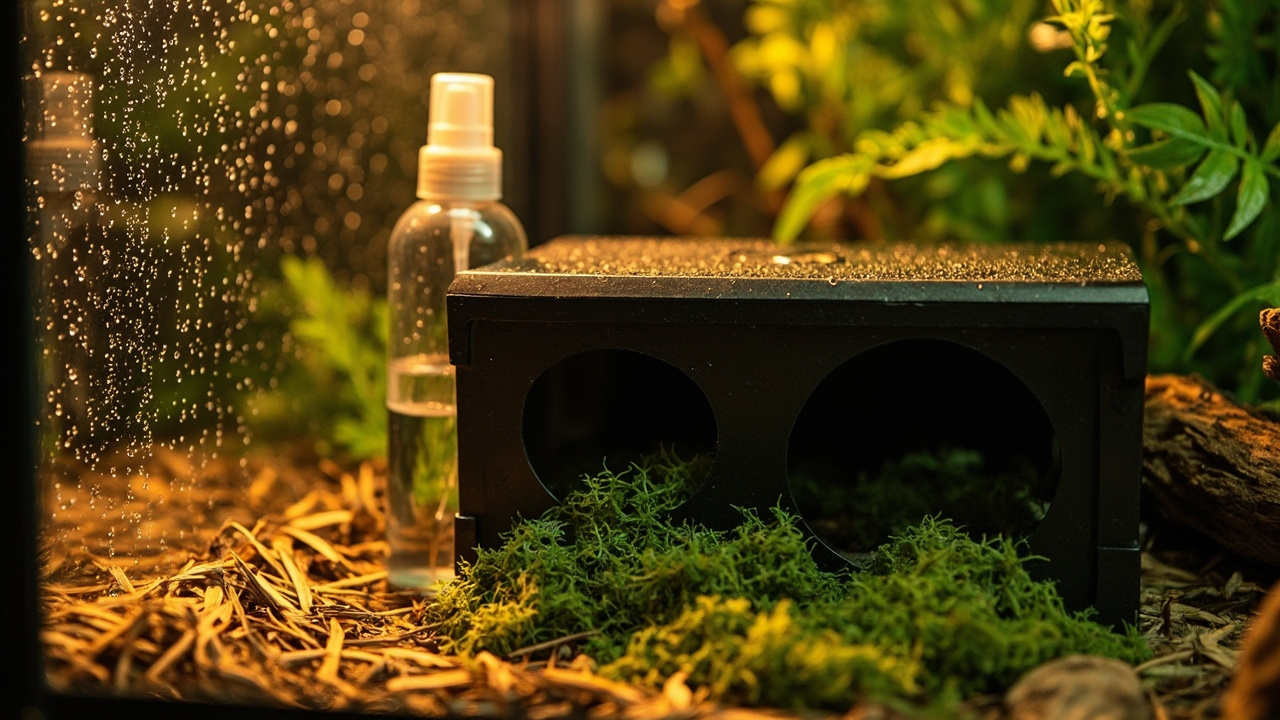
A moist hide is a small humidity chamber inside the enclosure — a closed box with damp substrate that the snake can enter and leave at will. It beats wetting the entire enclosure because the dry zone stays dry: constant whole-enclosure soaking is how scale rot and respiratory trouble start. The snake self-doses, spending the last days of the shed cycle in the damp box and leaving when it’s done. A working moist hide is the most valuable ball python shedding equipment you’ll ever buy. Leopard gecko keepers rely on the identical trick — our leopard gecko shedding guide covers the same setup for a desert species. It works even more naturally for a tropical snake that already wants the moisture.
What You Need
- An enclosed hide with one narrow entrance — the LEOTERRA Large Snake Hide ($19.99) is sized for adult ball pythons and traps moisture instead of venting it
- Moisture-holding substrate — a couple of handfuls of Galápagos sphagnum moss ($12.14) holds water far longer than paper towel and resists molding
- A spray bottle — a fine mist wets moss evenly without flooding the box
Setup Steps with Parameters
- Place it on the warm side, between the warm hide and the water bowl. Warmth plus moisture is the exact combination a pre-shed snake is looking for.
- Fill with damp moss to a depth of 2-3 cm. Wring it out first so it clumps when squeezed but doesn’t drip.
- Mist daily until the moss is evenly damp and the inside of the hide reads 70-80% on your probe.
- Replace the moss weekly — more often in warm months. Damp substrate left wet for weeks grows mold and invites mites, which undo everything the hide is for.
- During the blue phase, check it daily and keep it damp around the clock. A hide that dries out mid-shed is the most common reason a snake that “had a moist hide” still sticks.
Stuck Shed: First Aid and Vet Thresholds
What a Healthy Shed Looks Like
A clean shed comes off as one connected piece — often inside out, like a sock — with the eye caps and tail tip included. The eye caps are the transparent scales covering the eyes, and finding them in the shed is the single best confirmation that nothing stuck. A shed that comes off in fragments is common and isn’t automatically a failure. The test isn’t whether it’s in one piece; it’s whether any old skin remains on the body an hour after the snake finishes.
Safe First Aid for Stuck Shed
Most ball python shedding problems trace back to the dry end of the humidity ranges above, so first aid starts there, not with tools. Work in this order:
- Humidity first. Run the moist hide around the clock, mist twice a day, and give the snake 24-48 hours. Most minor stuck shed releases on its own once the humidity holds. ReptiFiles goes further and warns against soaking a troubled shedder at all — ball pythons stress badly in water, and unsupervised soaks have drowned snakes.
- If a soak is needed, make it shallow, warm, and watched. Site practice for this species is 85°F water in a shallow container for 20-30 minutes, deep enough for the lower half of the body and never deeper, with you watching the entire time. If you work in Celsius, our temperature converter does the math. A snake that thrashes in water is telling you it’s too stressed — stop and go back to the hide method.
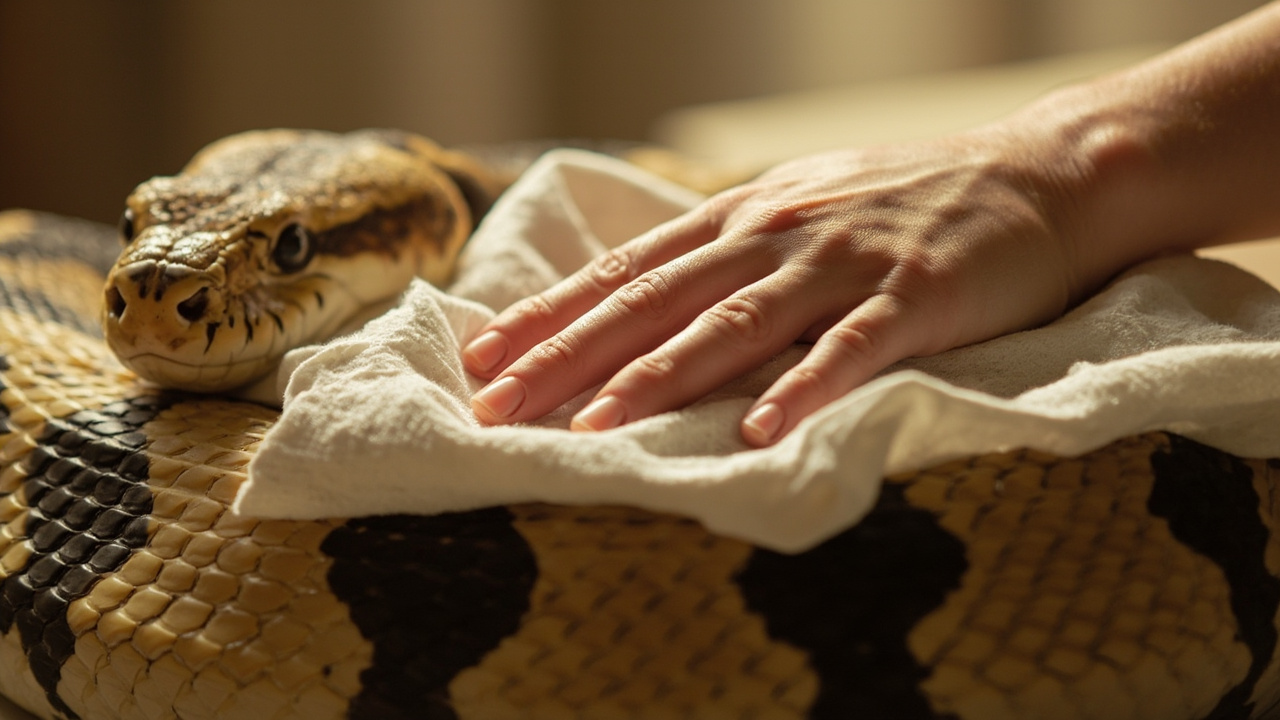
- Damp cloth on softened residue. Lay a warm, damp cloth over the patch for a few minutes, then let the snake rub the loosened skin off itself. If you wipe, follow the direction the skin peels and stop at the first resistance.
- Never pull. Dry skin tears live tissue underneath, and the tail tip and toes are where a small tear turns into real damage. Tape, forceps, and “just one quick tug” all belong in the never column.
Eye caps deserve their own rule: never pry or peel one. Warm damp compresses soften them, and most come off with the next successful shed. Bearded dragon keepers run full bath routines for stuck shed — our bearded dragon shedding guide covers that approach. But dragons tolerate water far better than ball pythons do, so for this species lean on the hide first.
When to Call an Exotic Vet
Most ball python shedding emergencies start on an extremity — a toe, the tail tip, or an eye. Some thresholds aren’t negotiable at home. Get an appointment when any of these is true:
- A patch of old skin hasn’t budged after two weeks of correct humidity and hide work
- Eye caps are still on after two consecutive complete sheds
- Toes or the tail tip look dark, hard, or shrunken — that’s circulation being cut off, and it’s the most urgent item on this list
- The snake refuses food well past the shed window alongside lethargy or labored breathing
Stuck shed is usually a husbandry story, but it doesn’t have to stay one. Chronic low humidity rides alongside deeper systemic problems, and our metabolic bone disease overview explains how husbandry gaps compound into conditions no humidity fix can touch.
Handling and Feeding Around the Shed
Should You Handle a Shedding Ball Python?
Handling is the most misunderstood part of ball python shedding — keepers read a hiding, jumpy snake as a handling problem and make it worse. Skip it. From the day the eyes go blue until the shed is fully off, the snake’s vision is blurred and its skin is sensitive. Handling is genuinely stressful for them and riskier for you — even docile snakes snap when they can’t see what’s reaching for them. Resume gentle handling about 24 hours after the shed finishes, and keep the first session short. You’re not punishing the snake by waiting; you’re matching its own calendar.
Feeding Before, During, and After a Shed
Appetite drops in the blue phase for most ball pythons, and refusing a meal during a shed is normal, not a red flag. Don’t force the issue — leave the routine intact and try again once the shed is done. Most snakes take food again within 24-48 hours after a clean shed. Offer the meal on your normal schedule, and if the snake skips it, wait for the next one rather than stacking prey into the enclosure. A refusal that stretches well past the shed window with no shed in sight is a different problem — recheck enclosure temperatures first, then work through our ball python diet guide for feeding specifics.
Sources
- ReptiFiles: Ball Python Shedding — type: authority; access-year: 2026
- ExoPetGuides: Ball Python Shedding — type: authority; access-year: 2026
- Terrarium Quest: Ball Python Shedding — type: authority; access-year: 2026
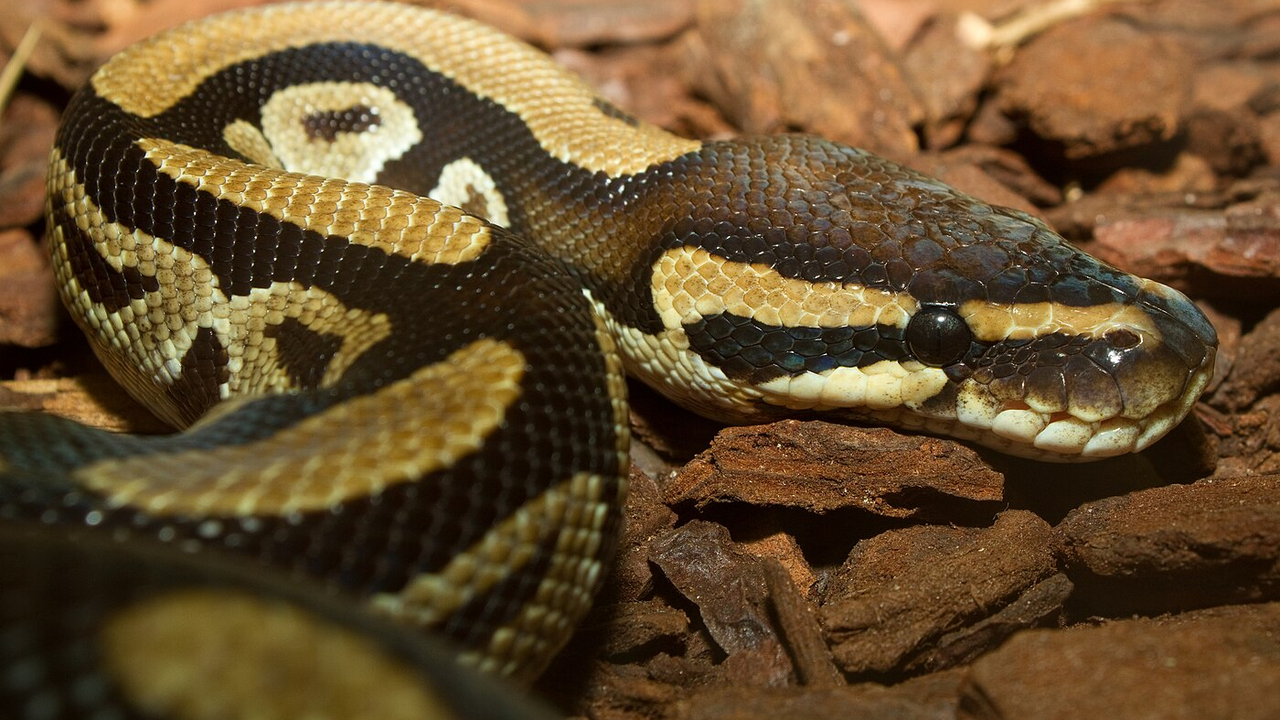
- Cover photo: Python regius - ball python by Brian Gratwicke, CC BY 2.0, cropped